On this page
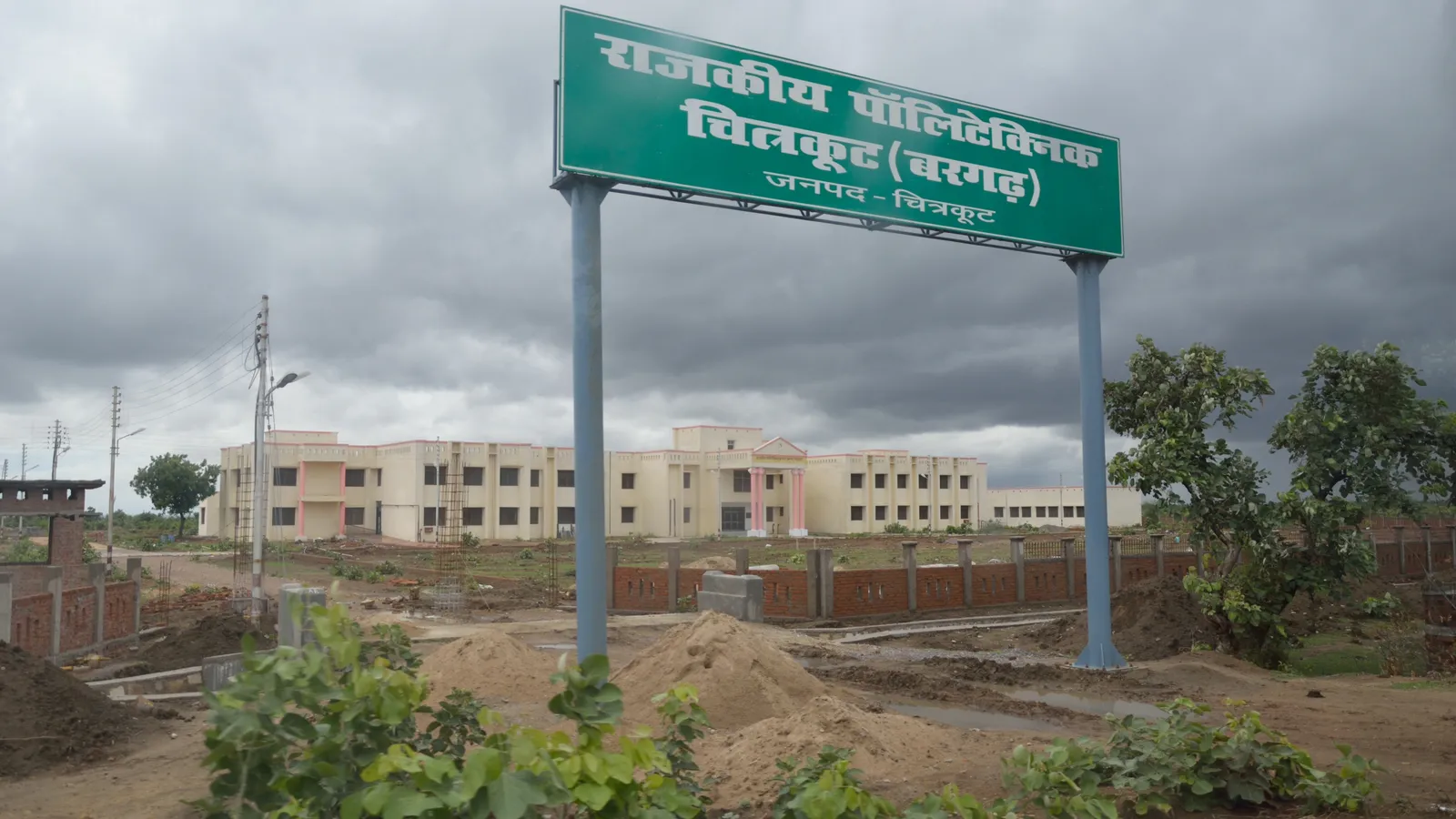
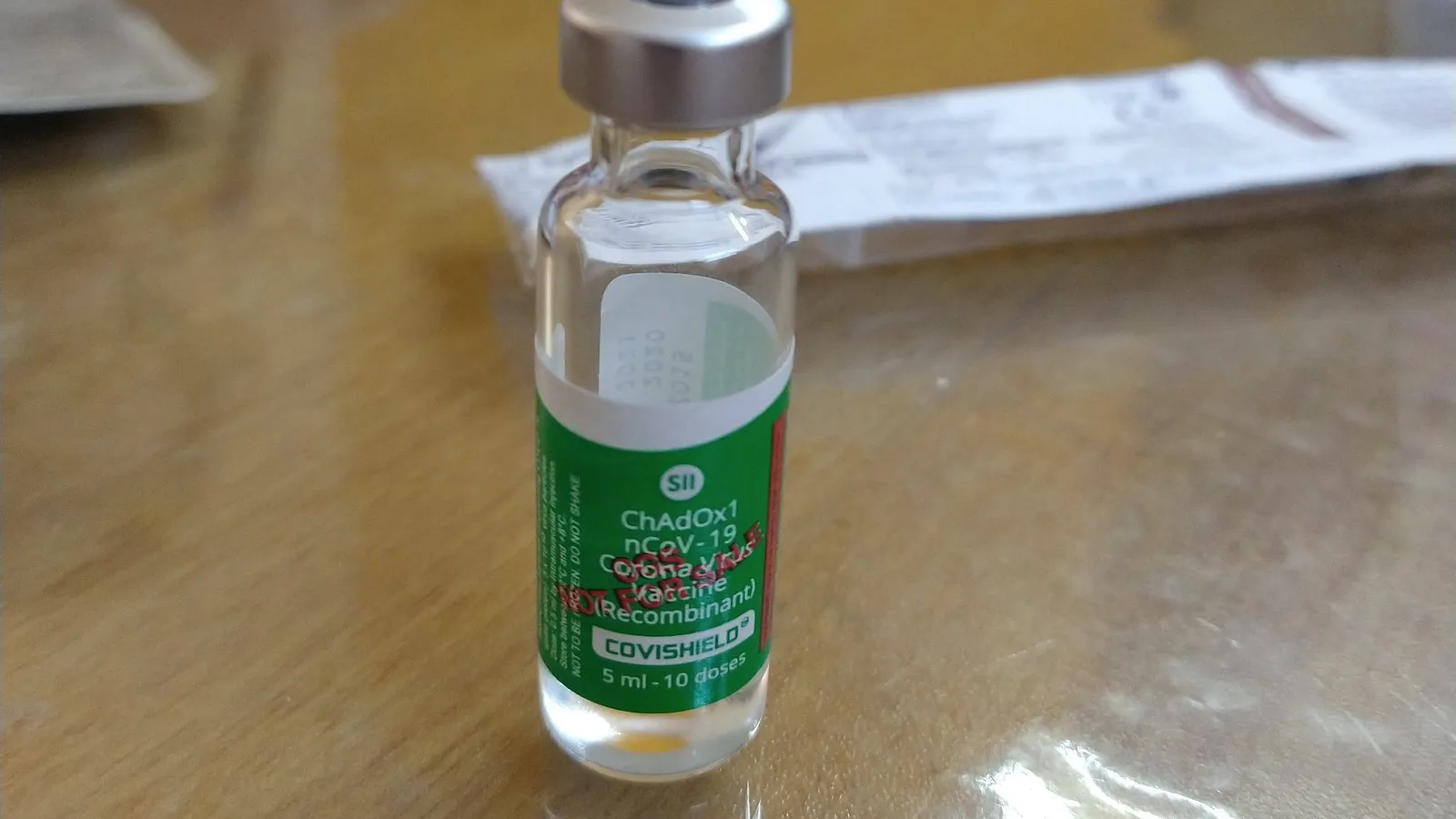
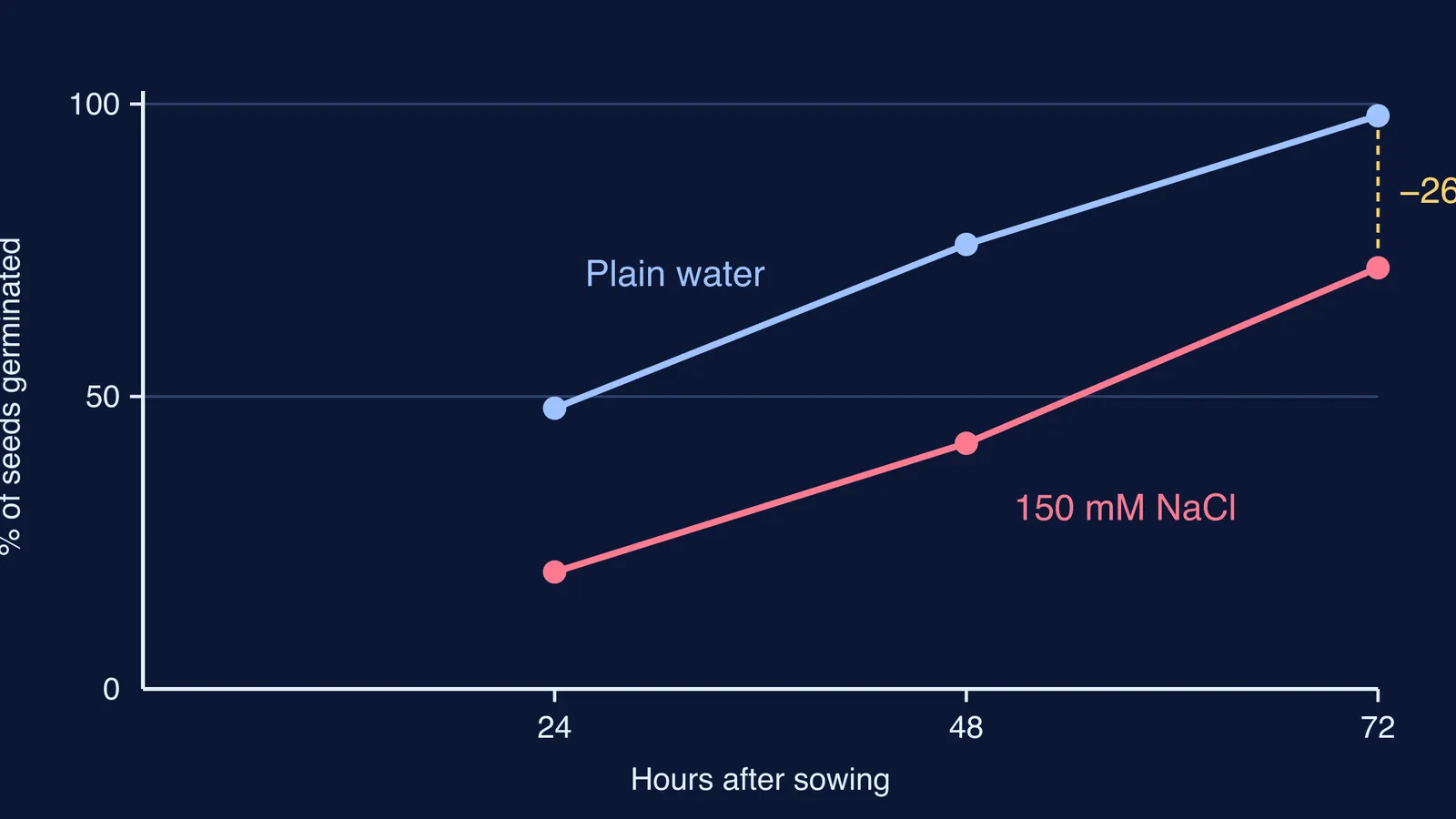
A new crop variety starts with a cross between two parent plants, then years of growing, measuring and discarding most of the offspring. In May 2025, Agriculture Minister Shivraj Singh Chouhan launched two genome-edited rice varieties developed by ICAR institutions, DRR Dhan 100 (Kamala) and Pusa DST Rice 1, according to All India Radio's news service. Kamala, derived from the popular Samba Mahsuri, matures 15 to 20 days earlier and yields 25% more, and Pusa DST Rice 1 yields 30% more under saline conditions, the report says.
What does a plant breeder actually do?
A breeder's work runs in a loop:
Pick a goal: more grain, earlier maturity, tolerance of salt, drought or a disease.
Find parents that carry the trait, often in old landraces or wild relatives.
Cross them and grow the offspring.
Measure, select the best plants and grow their seed again, generation after generation.
Test the best lines in many fields and seasons before a variety is released.
Norman Borlaug's career shows what the loop can do. He received the 1970 Nobel Peace Prize "for having given a well-founded hope - the green revolution", and in the mid-1960s he introduced dwarf wheat into India and Pakistan, after which "production increased enormously", the Nobel Foundation records.
How much genetics do you need for plant breeding?
More than school biology, but it builds directly on it: Mendelian inheritance and probability, statistics for field trials, and quantitative genetics for traits like yield that many genes control. Modern programmes add molecular markers and genome editing.
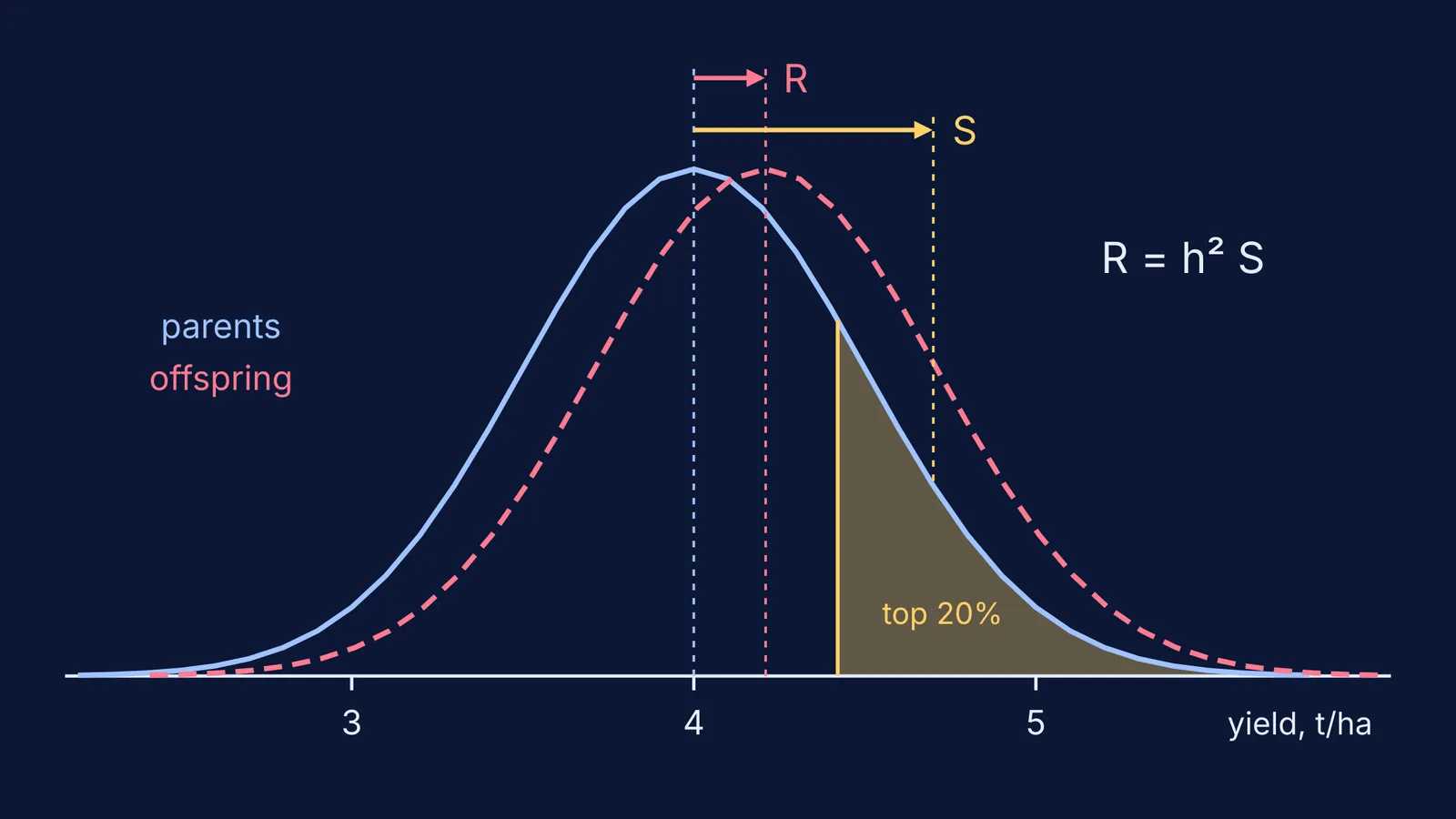
The core idea of quantitative genetics fits in one line. The breeder's equation, R = h²S, says the response to selection (R) equals the heritability of the trait (h²) times the selection differential (S), as this quantitative-genetics textbook chapter explains. Heritability here measures how much of the variation you see is passed from parents to offspring. The selection differential is how far the parents you pick sit above the population average.
A worked example with wheat plots, using illustrative numbers chosen to show the arithmetic:
Your wheat lines average 4.0 tonnes per hectare, with a standard deviation of 0.5 t/ha.
You keep the top 20%. For a normal distribution, the top 20% average 1.40 standard deviations above the mean, so the selected parents average 4.70 t/ha and S = 0.70 t/ha.
If heritability is 0.3, then R = 0.3 × 0.70 = 0.21 t/ha.
The next generation averages about 4.21 t/ha, not 4.70.
That gap is the lesson. Much of what made your chosen plants look good was weather, soil and other effects that seed does not pass on. So breeders measure across several fields and seasons, and statistics matters as much as biology.
If heritability or Mendelian ratios still feel shaky, the Fermi Concept Library has its own lesson for every concept in biology and mathematics, so you can patch the gap before it shows up in an exam hall.
What is the route from BSc Agriculture to plant breeder in India?
Bachelor's degree. For master's admission in the ICAR-AU system, you need a four-year bachelor's degree in agriculture, horticulture, forestry or a related field after Class 12, according to the ICAR AIEEA (PG) 2026 information bulletin. The bulletin accepts three-year degrees only at IARI and NDRI.
MSc. The same bulletin lists Genetics and Plant Breeding as a sub-subject under Plant Sciences, alongside Seed Science and Technology and Plant Genetic Resources.
PhD. NTA also runs the ICAR AICE-JRF/SRF (Ph.D.) exam, for junior and senior research fellowships for doctoral admissions, as its official page describes.
Dates, eligibility and subject lists change every year, so read the current bulletin on the NTA page, and each employer's current notice, rather than a third-party summary.
Where do plant breeders work?
ICAR and agricultural universities. The ICAR-AU system comprises 74 agricultural universities, including state agricultural universities and ICAR deemed universities such as IARI, according to NTA.
International centres. ICRISAT, a CGIAR research centre in Patancheru, Telangana, works on chickpea, pigeonpea, groundnut, sorghum, pearl millet, finger millet and small millets.
Seed companies. The National Seed Association of India states its vision as a "research based industry producing high performance, high quality seeds", and that research needs breeders.
What can you do in Class 11 or 12 to prepare?
Learn the inheritance chapters in your biology textbook until you can derive every ratio, not just recall it.
Practise probability and basic statistics: mean, standard deviation, the normal curve.
If a problem set on genetics trips you up, work through it on the Fermi Problem Library, whose step-by-step solver explains the reasoning rather than printing an answer.
Visit an agricultural university or research station and ask a breeder three questions: Which trait are you working on? How long does one breeding cycle take? What do you wish you had studied earlier?
During your BSc, pick genetics and statistics electives and learn some coding for data analysis.
Tonight, work one dihybrid cross out by hand: a breeder planning a cross uses the same probability.