

On this page
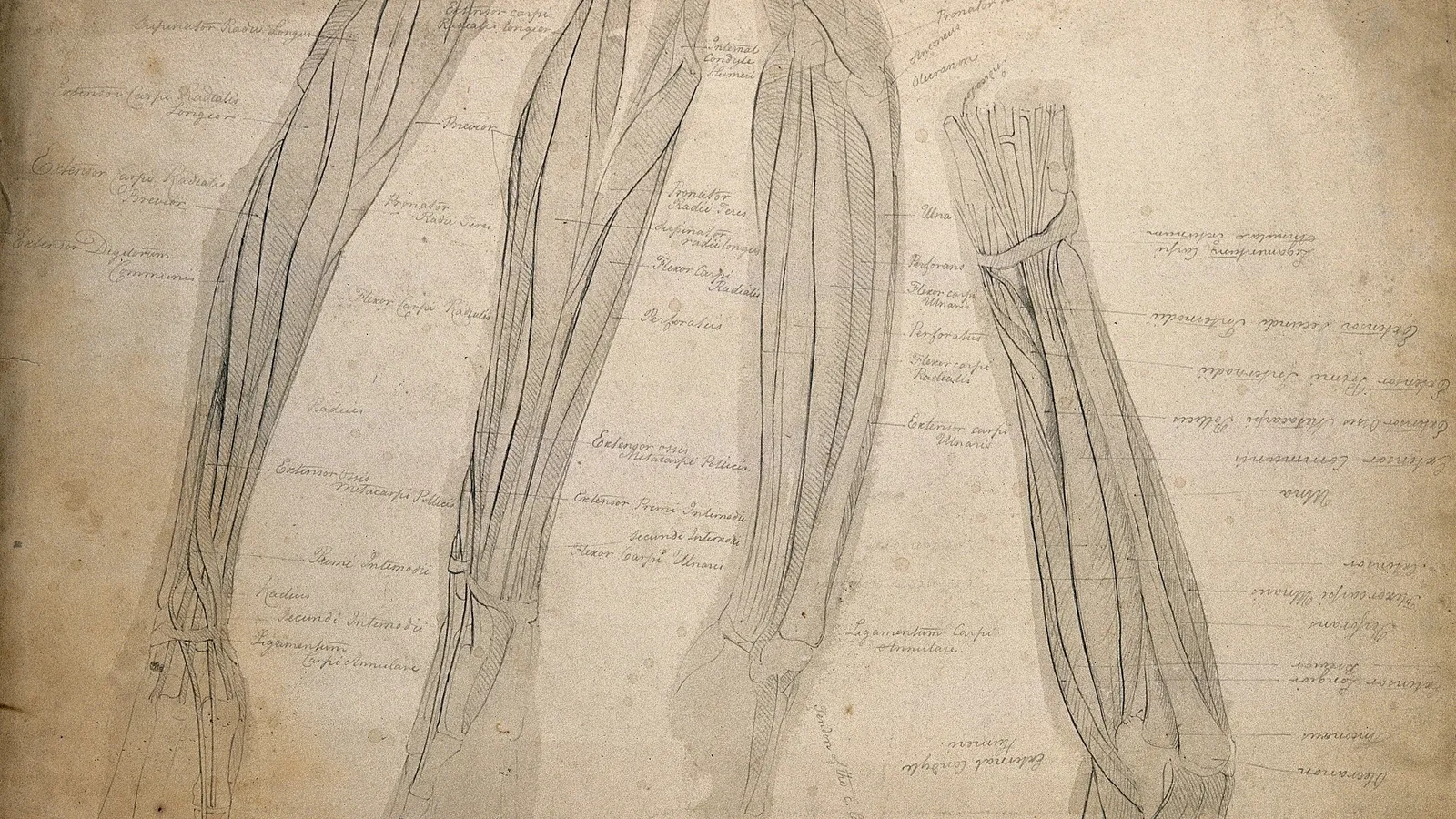
Every labelled diagram in your biology textbook, from the heart to the nephron, was drawn by someone. Drawings like these are the daily work of medical illustrators, who understand the science well enough to decide what to show and draw well enough to make it clear. If you love biology and keep sketching in the margins, this career asks for both.
What does a medical illustrator actually do?
The Association of Medical Illustrators (AMI) defines a medical illustrator as "a professional artist with advanced education in both the life sciences and visual communication." According to AMI, medical illustrations and animations appear in textbooks and journals, animations of processes inside cells, patient education, courtroom exhibits, interactive learning and mobile health apps.
AMI also notes "an expanding need" for illustrators who can design e-learning apps, AR/VR platforms and games. The Johns Hopkins master's programme shows the mix. Students take a human anatomy course with cadaver dissection that is taught to first-year medical students, sketch in the operating room, illustrate surgical procedures, and build 3D animations and an interactive teaching module in a game engine.
What should you study to become a medical illustrator?
Most medical illustrators hold a master's degree from a two-year accredited graduate programme, AMI says. Five graduate programmes in North America are accredited by CAAHEP: Augusta University, the University of Illinois Chicago, Johns Hopkins, the University of Toronto and the Rochester Institute of Technology, according to AMI's programme list. Each accepts 20 or fewer students a year, so entry is competitive (AMI).
In the UK, the University of Dundee's 12-month MSc Medical Art, accredited by the Institute of Medical Illustrators, teaches anatomy with cadavers alongside drawing, 3D modelling and animation.
For your first degree, AMI prefers a major in art with a minor in biological sciences, or a science major with an art minor. Its suggested science courses are general biology or zoology, vertebrate anatomy, developmental biology, physiology, chemistry and cell biology. On the art side: drawing, life drawing, painting, colour theory, graphic design, illustration and computer graphics.
In Indian school terms, PCB in Class 11 and 12 keeps the science door open, and a steady drawing habit keeps the art door open. You need not choose between a BSc and a design degree at 17; later, you must show both.
How much do medical illustrators earn, and where do they work?
AMI's careers page, citing its 2022 survey data, puts the median US salary for a medical illustrator or animator at $83,500. The median gross income for a self-employed medical illustrator is $85,000, and about 32% of salaried illustrators also take freelance work. Employers include universities and academic medical centres, hospitals, research institutions, publishers, pharmaceutical, device and biotech companies, and the US federal government.
Two cautions. These are US figures, not a guide to Indian pay. And the field is small, with "fewer than an estimated 2,000 trained practitioners in the world" (AMI), so expect fewer openings than in larger professions.
Certification is optional. A Certified Medical Illustrator (CMI) has passed exams in business practices, ethics, biomedical science and drawing, plus a portfolio review, run by the independent Board of Certification of Medical Illustrators; AMI states the credential is "not necessary or required" to succeed (AMI).
How can you build a medical illustration portfolio while still in school?
Graduate programmes generally require a portfolio, and at Johns Hopkins it is the first step of the application. The Johns Hopkins programme asks for 20 pieces, including at least 4 general drawings, 5 figure drawings, 2 in colour media, 2 digital pieces, 2 graphic design pieces and 2 sketchbook pages. A 12-month plan:
Months 1-3: draw from life three times a week (your hand, a cleaned chicken bone, a leaf) and date every page.
Months 4-6: pick one chapter you are studying, such as the human heart. Read it until you can explain the blood flow aloud, draw it from memory, check it against the textbook, and redraw. If a concept is shaky, read it in the Fermi Concept Library first, because you cannot simplify what you do not understand.
Months 7-9: make one piece in colour and one digitally (free software is fine). Try a three-panel sequence, such as the stages of mitosis, the way a textbook would show it.
Months 10-12: design a one-page explainer for a 10-year-old reader, for example how a vaccine trains the immune system. Ask a biology teacher to check the facts, then choose your best 20 pieces.
Is medical illustration a good fit for you?
It may suit you if:
You redraw textbook diagrams because you want them right, not just to finish homework.
You enjoy biology practicals, including slides and specimens.
You can take corrections on your drawing from a scientist who knows more than you.
You are willing to learn software, including 3D tools.
If two or three ring true, talk to your biology and art teachers together, and check current prerequisites on the programme pages above. Parents can help simply: a sketchbook, time to draw, and science kept open through Class 12.


