

On this page
If you are applying to universities in the US from India, the money question runs alongside the admission question. Your family fills in a financial form, sends proof of income, and does it on a deadline that usually matches your application deadline. Miss that step and, at some universities, you cannot fix it later.
What is need-based aid for international students?
Need-based aid is money a university gives because your family cannot pay the full cost, not because of your marks. The university works out what your family can pay and covers some or all of the gap.
The form many US private universities use to collect this information is the CSS Profile, run by the College Board, which says the CSS Profile gives access to more than $14 billion in nonfederal aid each year.
Policies for international students differ, so read each university's own aid page. Two examples:
Harvard says "International students are eligible for exactly the same aid as American students" and that it meets 100 percent of demonstrated need.
Stanford's aid office says international applicants who do not request aid when they apply "will not be eligible to apply for aid at Stanford throughout their undergraduate years."
Which forms do international students fill in?
For many US private universities, it is two pieces:
The CSS Profile, an online form about your parents' income, savings and property. You list each university by its code; Harvard's aid application page gives its code as 3434.
Proof of income, uploaded through the College Board's IDOC service or sent directly to the university, depending on the university and where your parents live. Dartmouth's international page asks parents living outside the US and Canada to send their income and tax documents to its aid office.
International students do not file the FAFSA, the US government's aid form. Harvard says only US citizens, permanent residents and other eligible non-citizens file it, and the University of Rochester says international students do not need to complete it.
The CSS Profile costs $25 for the first university and $16 for each additional one. Harvard offers alternate instructions to international students who cannot afford the fee or live where the College Board cannot take payments.
What documents does your family need?
MIT's aid office lists what to gather for the CSS Profile. Here it is as a checklist for an Indian family, with a few points from Harvard's instructions:
Parents' income-tax returns or wage statements from two years before the year you would start
Records of any other money earned, such as a business, farm or rent
Current bank account balances
Records of investments, such as fixed deposits, mutual funds and shares
Records of untaxed income
For a parent who does not file a return: Harvard accepts "a wage statement, salary certificate, or letter from their employer(s) stating annual income"
English translations of anything in another language; MIT says these can be done "by you, your family, or someone you know"
MIT warns it "can take up to two weeks" for tax returns to reach the university, and asks families to allow 10 business days for documents to show up in its portal.
When are financial aid deadlines for international students?
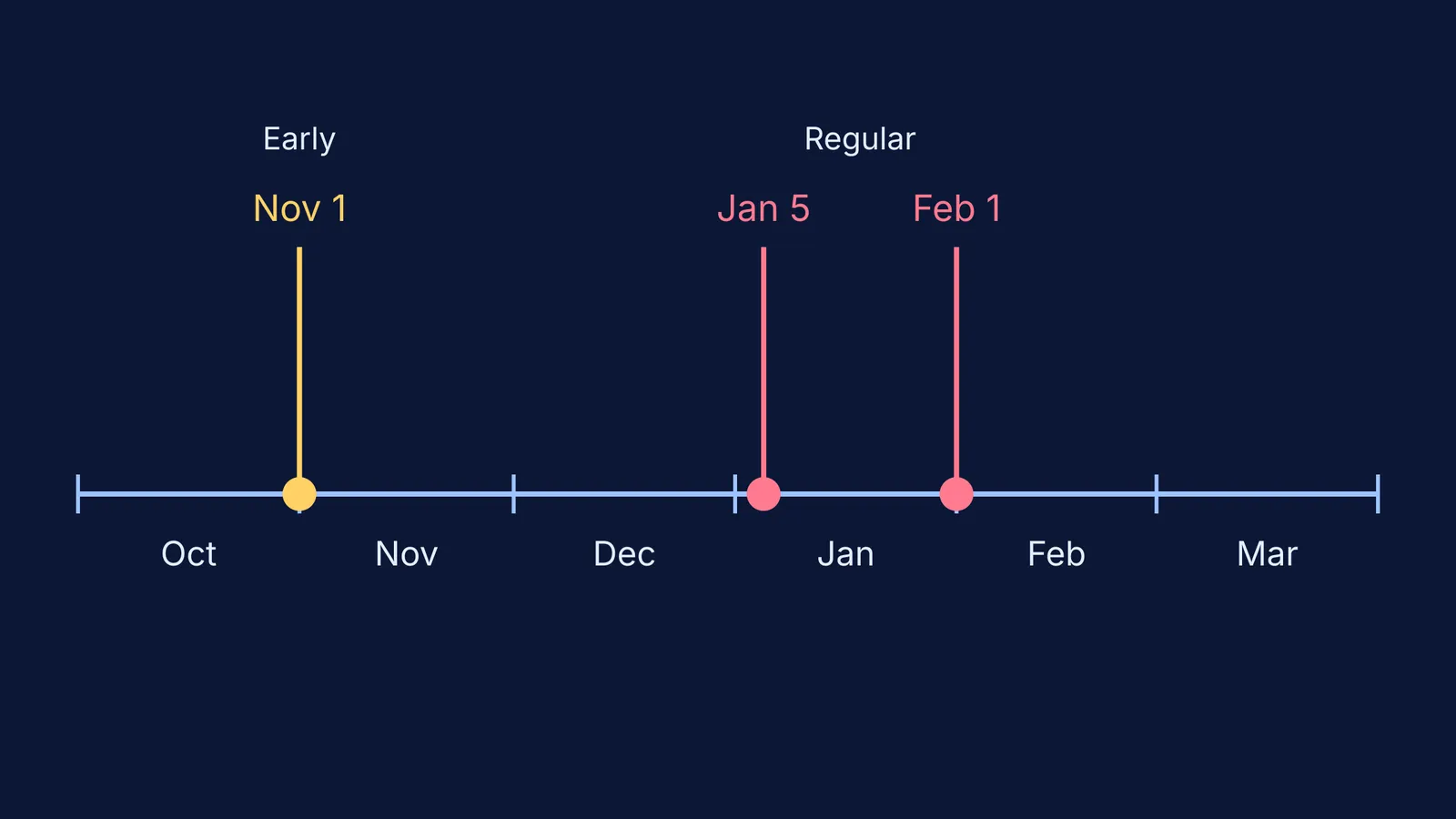
Aid deadlines usually sit on or near admission deadlines. On Harvard's page, the CSS Profile and IDOC documents are due November 1 for Restrictive Early Action, February 1 for Regular Decision and March 1 for transfer applicants. Rochester asks international students for the CSS Profile by November 1 for Early Decision and January 5 for Early Decision II and Regular Decision.
Here is a backwards plan for an early application due November 1:
August: list every university, its aid policy for international students and its CSS Profile code.
Early September: parents collect the papers on the checklist and get translations done.
Late September: fill in the CSS Profile together.
By mid-October: submit the Profile and upload documents, leaving about two weeks for the transfer time MIT describes.
After submitting: check email and the portal weekly for requests.
If income does not fit the form, email the aid office: "I am an international applicant from India for the first-year class. My father's income is from agriculture and is not taxed. Which document should we send to show it?"
This paperwork lands in the same months as Class 12 and entrance-exam preparation, so put aid tasks on the calendar first; our guide to balancing board exams with JEE preparation shows how to block out a week. When you sit down to study after a paperwork evening, Fermi's AI tutor can work out what you already know and build a plan for the session, so you start with a clear next step.
Many families apply in India at the same time; for that, read scholarships for science students in India, and if moving away is part of the decision, questions families weigh before a child studies away from home.


