

On this page
When you turn to the reading comprehension section of an English exam, the clock is ticking. Most students start at the top of the passage and read every word. By the time they reach the questions, they have forgotten the details and have to read the text again.
You can solve an unseen passage much faster by reading the questions first and scanning the text for keywords.
Why is normal reading too slow for exams?
Reading every word of a passage takes more time than you think. A 2019 meta-analysis by Marc Brysbaert found that the average silent reading speed for non-fiction is 238 words per minute. At that rate, reading and understanding a 700-word passage takes about three minutes before you have even seen the first question.
When you read the questions first, you create a map. You know exactly which facts, dates or names matter, and you can ignore the rest of the text until you need it. By skipping the initial full read-through, you leave yourself more time to write clear, well-thought-out answers.
What is the difference between reading and scanning?
Once you know what to look for, you do not need to read normally; you need to scan.
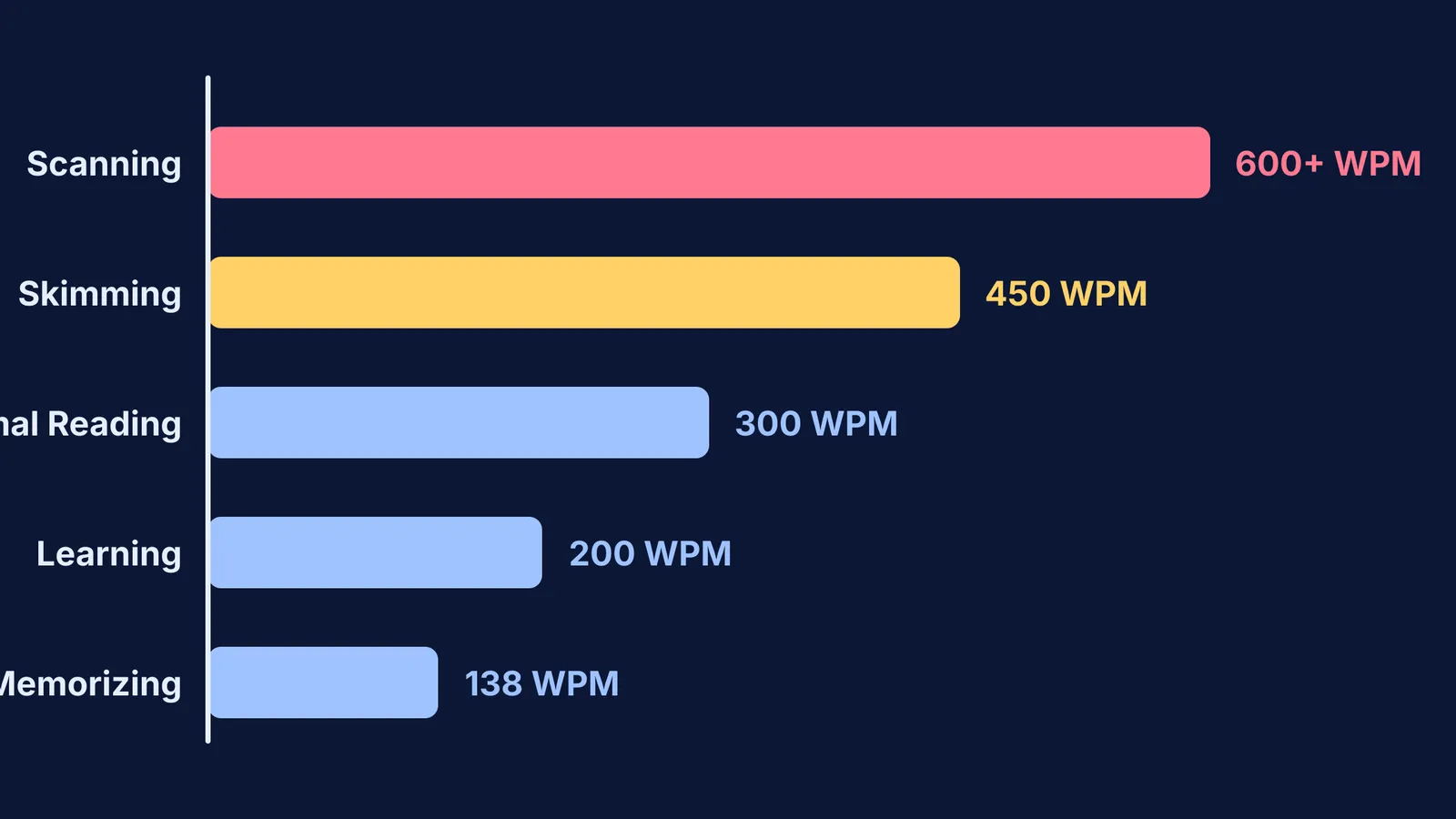
In 1992, researcher Ronald Carver outlined five "gears" of reading, finding that scanning for specific targets operates at 600 words per minute or higher. He showed that while normal reading, which he called "rauding", sits in the 200 to 300 word-per-minute range, scanning is much faster because it is a visual search rather than a reading exercise.
Carver argued that proficient readers do not have one fixed speed. Instead, they shift gears depending on the difficulty of the text and their goal. His five gears range from "memorizing" at around 138 words per minute, up to "scanning" at over 600 words per minute. When you scan, you are not trying to understand the writer's argument. You are letting your eyes jump over the lines to spot a specific target, such as a capital letter, a number or an unusual noun from the question.
How to scan and solve quickly?
Scanning finds the sentence, but you still need to understand it to write your answer. Research by Keith Rayner and his colleagues in 2016 showed that trying to read at "super speeds" results in a severe loss of text understanding. They concluded that there is a fundamental trade-off between speed and accuracy.
This means you should combine high-speed scanning with normal-speed reading. Here is a framework for doing it in an exam:
Read the questions first: If the questions are multiple-choice, read only the question stem, not the options. The options can confuse you when you scan.
Circle the keywords: Pick out proper nouns, dates or unusual words. "What year did the author move to London?" gives you the keyword "London".
Scan for the target: Run your eyes quickly over the passage looking only for your keywords. Do not stop to read the sentences in between. Let your eyes move in a Z-pattern or track straight down the centre of the paragraph.
Read the surrounding sentence normally: Once you spot the keyword, slow down. Shift back into a normal reading gear. Read the sentence before it, the sentence itself, and the sentence after it at your normal pace so that you fully grasp the context.
Answer in your own words: Never copy the sentence directly from the passage. Board exams award marks for comprehension, which you show by translating the text into your own words.
When should you slow down completely?
This scanning strategy saves time in English and biology passages where answers are often tied to specific keywords. But when you face a dense maths or physics word problem, you cannot scan; you have to read every single word to understand the setup. If you bring a problem set or a scanned assignment, Fermi's AI tutor works out what you already know, builds a plan for the session, and teaches through it — drawing the figure and checking understanding as it goes.
By matching your reading gear to your task, you save time where you can, leaving you more time for the questions that need careful thought.
More on reading and learning:


