On this page
Most advertising money in India now goes to digital. In 2025 digital media became the single largest segment of India's media and entertainment industry, and digital advertising grew 26% to INR 947 billion, nearly two-thirds of all advertising revenue, according to the FICCI-EY report as summarised in EY's press release. The good news for a college student: you can practise almost all of it free, before anyone hires you.
Which digital marketing skills should a college student learn first?
Learn them in the order they depend on each other. Paid ads only make sense once you can write a page, get it found and measure what happened.
Writing for the web. Headlines, short descriptions, a clear next step for the reader. Every channel runs on it.
Search engine optimisation (SEO). Google defines SEO as "helping search engines understand your content, and helping users find your site and make a decision about whether they should visit" in its free SEO Starter Guide.
Analytics. Reading where visitors came from and what they did next. Google's Analytics Academy courses and Analytics IQ exam are free, and the qualification stays current for 12 months after you pass.
Social content. Planning, making and scheduling posts, then checking which ones worked and why.
Paid search and social ads. Keywords, budgets and bids. Learn the theory first through the free Google Ads courses on Skillshop, and spend real money only when someone else's budget and permission are behind it.
Analytics is mostly school maths: percentages, averages and ratios. If those feel shaky, the Fermi Concept Library has every concept in mathematics with its own lesson, so you can close the gap before the numbers start to matter.
What free tools can you practise on?
Google Search Console is a free Google service that helps you monitor, maintain and troubleshoot your site's presence in Google Search results. Connect it to any small site you make.
The Google Analytics demo account is a fully working Analytics account that any Google user can open, with data from sources such as the Google Merchandise Store. You can practise on real reports without owning a busy website.
How do you build a digital marketing portfolio in 60 days?
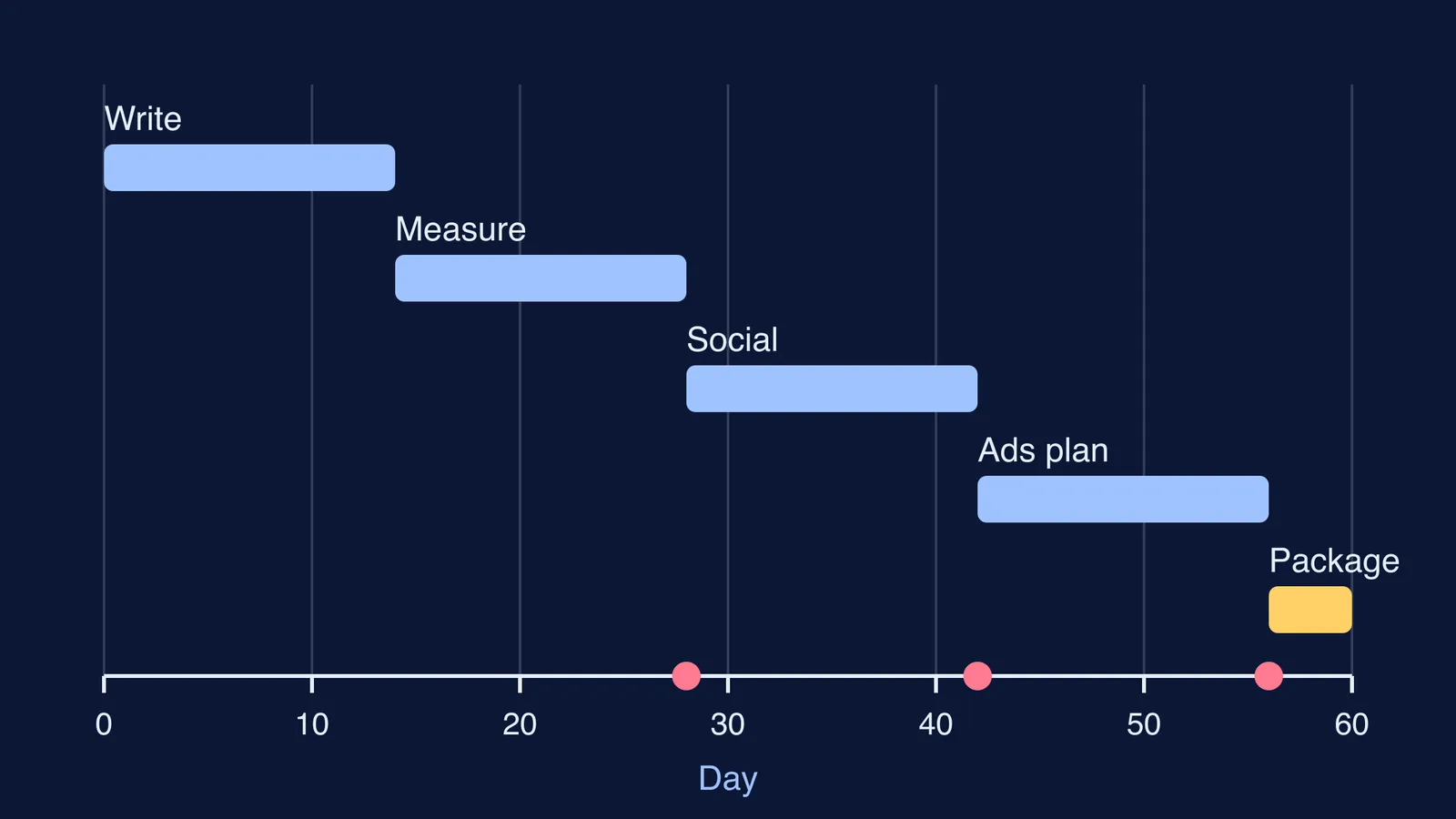
Give it about an hour a day and aim for three short case studies by day 60. Every course and tool below is free: the Skillshop courses, the Analytics Academy and Search Console.
Days 1-14, write and publish. Make a free one-page site or blog on something you know well, such as your city's street food or a hobby, and publish three short posts. Give each a title that is "unique to the page, clear and concise, and accurately describes the contents of the page", the test in Google's SEO Starter Guide. Add Search Console.
Days 15-28, measure. Finish the beginner Analytics Academy course. In the demo account, answer three questions in writing: which channel brings the most visitors, which page holds them longest, and where shoppers drop out before buying. One page with screenshots is case study one.
Days 29-42, run social content for someone real. Offer to run posts for a college fest, your NSS unit or a relative's shop for two weeks. Plan ten posts in a simple calendar, note the reach of each, and write down what you would change. That is case study two.
Days 43-56, plan a campaign without spending. Work through the Google Ads Search certification training on Skillshop. Write a mock search campaign for the same shop or club: the keywords, three ads, the daily budget you would suggest and how you would judge success. That is case study three.
Days 57-60, package it. Put the three case studies on your site and start applying. The government's National Internship Portal run by AICTE has a Design, Media and Marketing stream and is free for students.
What should a student case study look like?
Keep each one to four lines a recruiter can read in a minute. Here is the shape, filled in for a college club:
Problem: The photography club's fest posts reached few people outside the club.
What I did: Planned a two-week calendar, rewrote captions around one clear call to action, and posted at the times our insights showed members were online.
What happened: Your reach and sign-ups before and after, taken from the account's own insights.
What I would do next: The one thing that did not work, and what you would try instead.
The last line matters most: it shows you can read results honestly.
Start this week with the first post on your own page.