

On this page
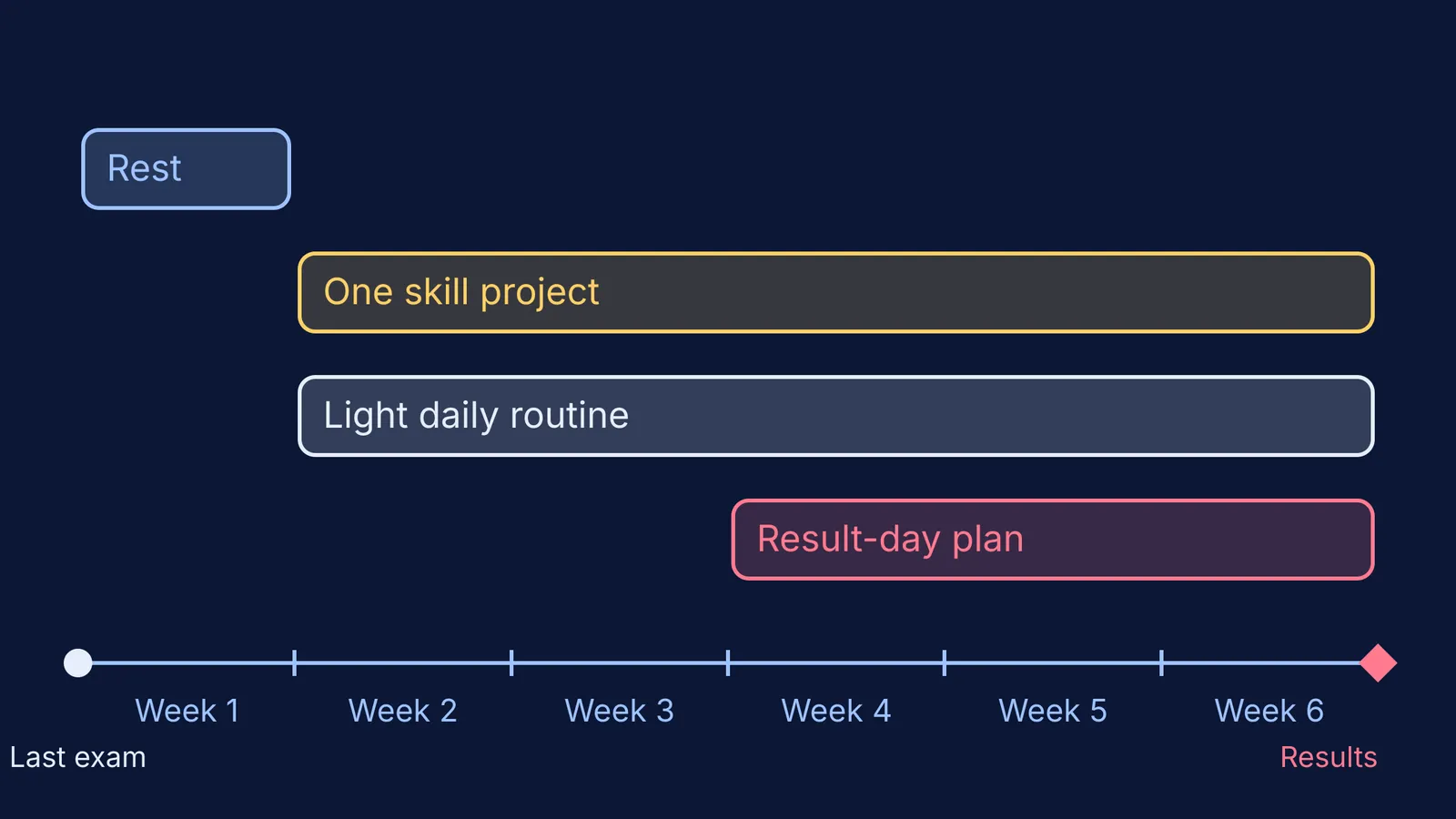
The last board paper is done, and results are still weeks away: no timetable, no syllabus, and one big date nobody controls. The weeks go better with a simple shape: a short stretch of real rest, one skill to build, a light routine that keeps sleep and mood steady, and a result-day plan agreed long before the day.
What should my child do right after the last exam?
Rest, on purpose, for about a week. Months of revision often eat into sleep, so let them catch up without guilt.
Teenagers aged 13 to 17 need 8 to 10 hours of sleep a night, according to the CDC's sleep guidance, which is based on the American Academy of Sleep Medicine consensus statement. A few late mornings are fine. What helps is letting the wake-up time settle back to a fixed hour by the end of the first week, so the body clock is not upside down when college forms and counselling start.
Friends, family meals and a trip to grandparents are part of the reset too. For ideas on how long a break should be and what to do with it, see our post on planning a break after the Class 10 boards.
How can you use the waiting weeks without turning them into more exams?
Pick one skill, not five. A single project with a visible result beats a list of courses that fizzle out. Some that work well:
Cooking three family meals from start to finish, including the shopping list and budget
Learning to swim, cycle longer distances or play a sport properly
Typing, spreadsheets or a first coding project
Reading two books chosen for fun, not for marks
A small science build or experiment at home, written up like a lab notebook
Movement deserves a daily slot. The WHO 2020 guidelines on physical activity say that for children and adolescents, an average of 60 minutes a day of moderate-to-vigorous aerobic activity across the week provides health benefits.
If your child is curious about a Class 11 topic, a light look ahead is fine, as long as it stays curiosity and not a second exam season. Fermi's AI tutor can work out what a student already knows and build a plan for the session, so an hour of exploring has a clear starting point. For ideas that are easier to see than read, the Fermi Simulation Lab has interactive simulations to play with.
What does a light daily routine look like?
Here is a sample day for weeks two onward. Adjust the times, but keep the anchors.
Wake up at the same time every day, say 7:30.
Movement before it gets hot: a walk, a game, a swim.
A focused block on the skill project in the late morning.
Lunch and an unplanned afternoon: friends, rest, screens within limits you agree together.
One household job they own, such as dinner twice a week or the vegetable shopping.
Phones out of the bedroom well before a fixed bedtime.
How do you handle result-day nerves before the day comes?
Nerves grow when the day is vague. Make it specific, well before the day, in one calm family conversation. Agree on:
Who checks the result, where and on which device, and whether the student wants to see it alone first.
Who will be told, and when. Relatives can wait until the student is ready.
Plan A, plan B and plan C for admissions. Boards publish processes for rechecking and supplementary exams each year, so read the current official circular rather than relying on forwarded messages.
What the family will do that evening whatever the marks are, such as a meal out or a film.
Parents, a short script helps. Before the day: "Whatever the number is, we will look at it together and make a plan. You worked hard, and that does not change." On the day, if the marks disappoint: "Let's take tonight off. Tomorrow we will look at the options." Our board result-day checklist covers the practical steps, and talking to an anxious child about results has more on the conversation itself.
Where can you get help if worry gets heavy?
Some worry is normal. If your child stops eating or sleeping, withdraws completely, or talks about not wanting to be here, speak to a doctor or counsellor straight away.
Tele MANAS, the Ministry of Health and Family Welfare's free 24x7 mental-health helpline, is reachable on 14416 or 1800-891-4416. CBSE runs annual free psycho-social counselling for Class 10 and 12 examinees. According to the CBSE press release, its first phase in 2026 ran from 6 January to 1 June, with a 24x7 toll-free recorded-guidance line (1800-11-8004) and weekday tele-counselling. Check cbse.gov.in for the next session's dates.


