On this page
In 2024, the Indian Ministry of Education released guidelines prohibiting coaching centres from enrolling students below the age of 16. This move aims to reduce academic pressure, but it has led many families to seek private home tutors for their younger children. Unlike registered schools and institutes, the private home tuition sector is completely unregulated. Ensuring a safe learning environment at home requires you to set firm boundaries, verify credentials, and actively supervise every session.
What are the essential safety rules for a home tutor with a child?
The UK's National Society for the Prevention of Cruelty to Children (NSPCC) provides a standard framework for private tutoring safety. Because the sector lacks a central regulatory body, parents must take on the role of vetting and monitoring the tutor.
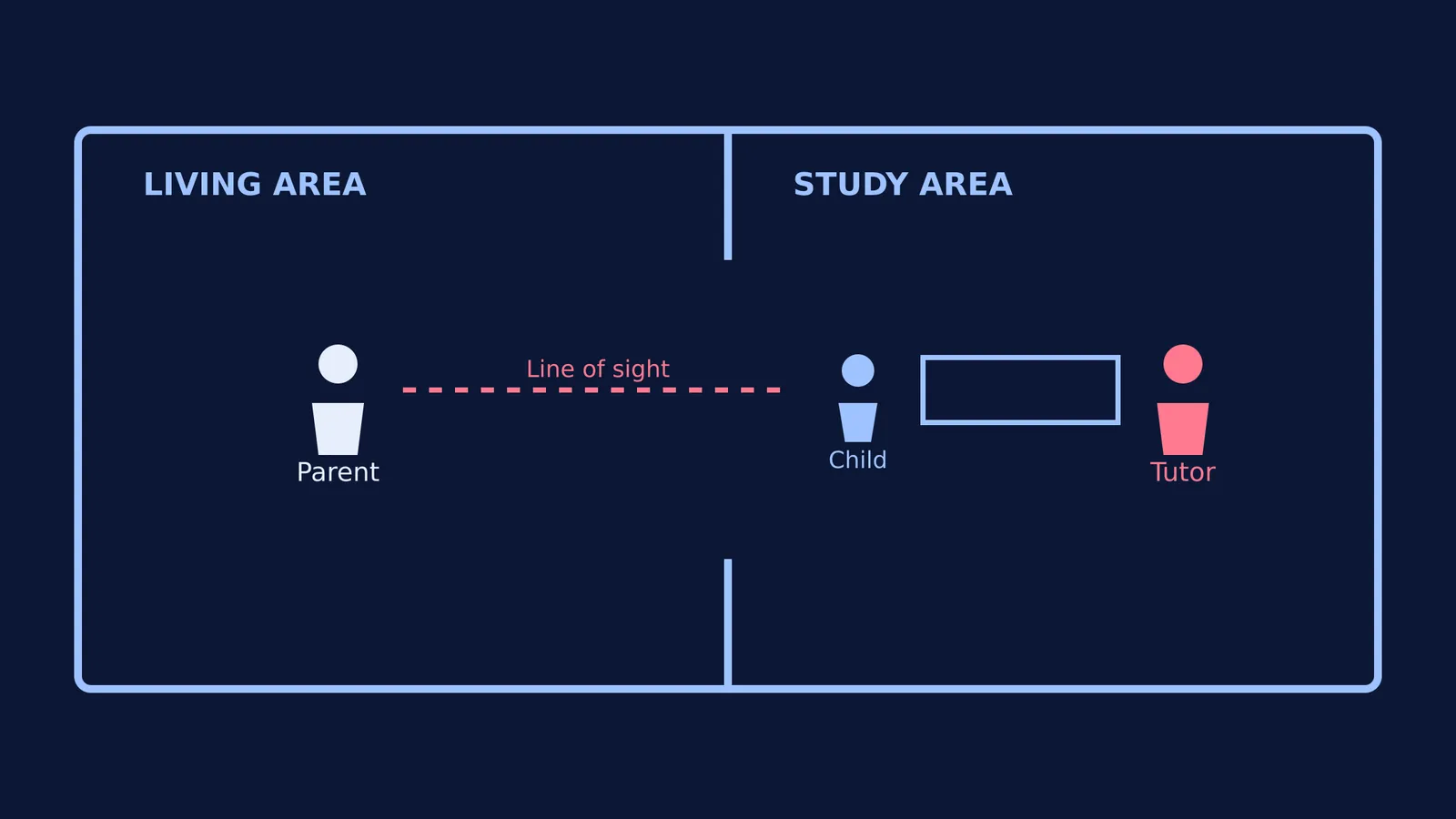
Keep doors open: Tutoring should always take place in a communal area, such as a living room or a dining room. The NSPCC advises never holding sessions in a child's bedroom.
Stay on the premises: A parent or trusted adult must be present in the house at all times and within earshot of the lesson.
Maintain professional boundaries: Tutors should not give personal gifts, and all communication about homework or scheduling must go through you. A tutor must never have your child's personal phone number or social media details.
How do you check a private tutor's background?
Before a tutor steps into your home, you must verify their identity and history. A well-qualified professional will expect this and should have their documents ready.
Request a police verification: Ask for a recent police clearance certificate. While a background check does not guarantee future behaviour, it confirms they have no recorded criminal history.
Verify their references: Ask for at least two professional references from other parents or schools. Call these references yourself—do not rely solely on written letters.
Check their qualifications: The Ministry of Education requires tutors at coaching centres to have at least a graduation degree. Apply this same standard to your home tutor, and ask to see their certificates.
If you are currently looking at options outside the home, the same rigour applies when evaluating a coaching institute before you pay the fee.
Should parents stay in the room during home tuition?
You do not need to sit at the same desk, but you must be visible and accessible. When setting up a good study space at home, choose an open area where you can easily drop in.
Leave the door wide open and make a habit of walking past or offering water halfway through the session. This continuous, low-level supervision keeps the environment professional. It also gives you a chance to listen to the teaching style—are they explaining concepts patiently, or are they just telling your child the answers? At the end of the lesson, spend two minutes talking to the tutor about your child's progress.
What are safer digital alternatives to home tutoring?
If you cannot guarantee an adult will always be home, or if you live in an area where verifying independent tutors is difficult, online options provide a safer environment.
When using human tutors online, the same rules apply: keep the computer in a shared space and ensure all links are sent to your email. Alternatively, Fermi's AI tutor can supplement self-study. It works out what your child already knows, builds a plan for the session, and explains the reasoning step-by-step rather than just printing an answer. This provides a focused, one-to-one learning experience in a fully controlled digital space, completely removing the physical safety risks of private tuition.