

On this page
When a teenager is binge watching a web series at night, the immediate result is a groggy morning and a struggle to focus at school. But the issue runs deeper than simply staying up late. For many teenagers, the constant autoplay of streaming platforms creates a cycle that actively disrupts their natural sleep architecture, making it harder to fall asleep even after the screen is finally turned off. Understanding the science behind this behavior is the first step in helping your child build healthier nighttime habits.
How does binge-watching affect sleep?
It is easy to blame the blue light emitted from phones and laptops, but the content itself is often the primary culprit. A 2017 study in the *Journal of Clinical Sleep Medicine* found that 80.6% of young adults identify as binge-watchers, and this behavior was associated with poorer sleep quality, increased fatigue and more symptoms of insomnia compared to regular television viewing.
The researchers identified "cognitive pre-sleep arousal" as the main mechanism driving this sleep disruption. Unlike casually watching a familiar sitcom on television, binge-watching suspenseful, serialized dramas keeps the brain in a state of high alertness. As viewers anticipate the resolution of a cliffhanger, their heart rate can remain elevated and their mind continues to process complex narratives. This intense mental engagement makes it significantly harder for the nervous system to wind down, leading to persistent insomnia symptoms and severe daytime fatigue.
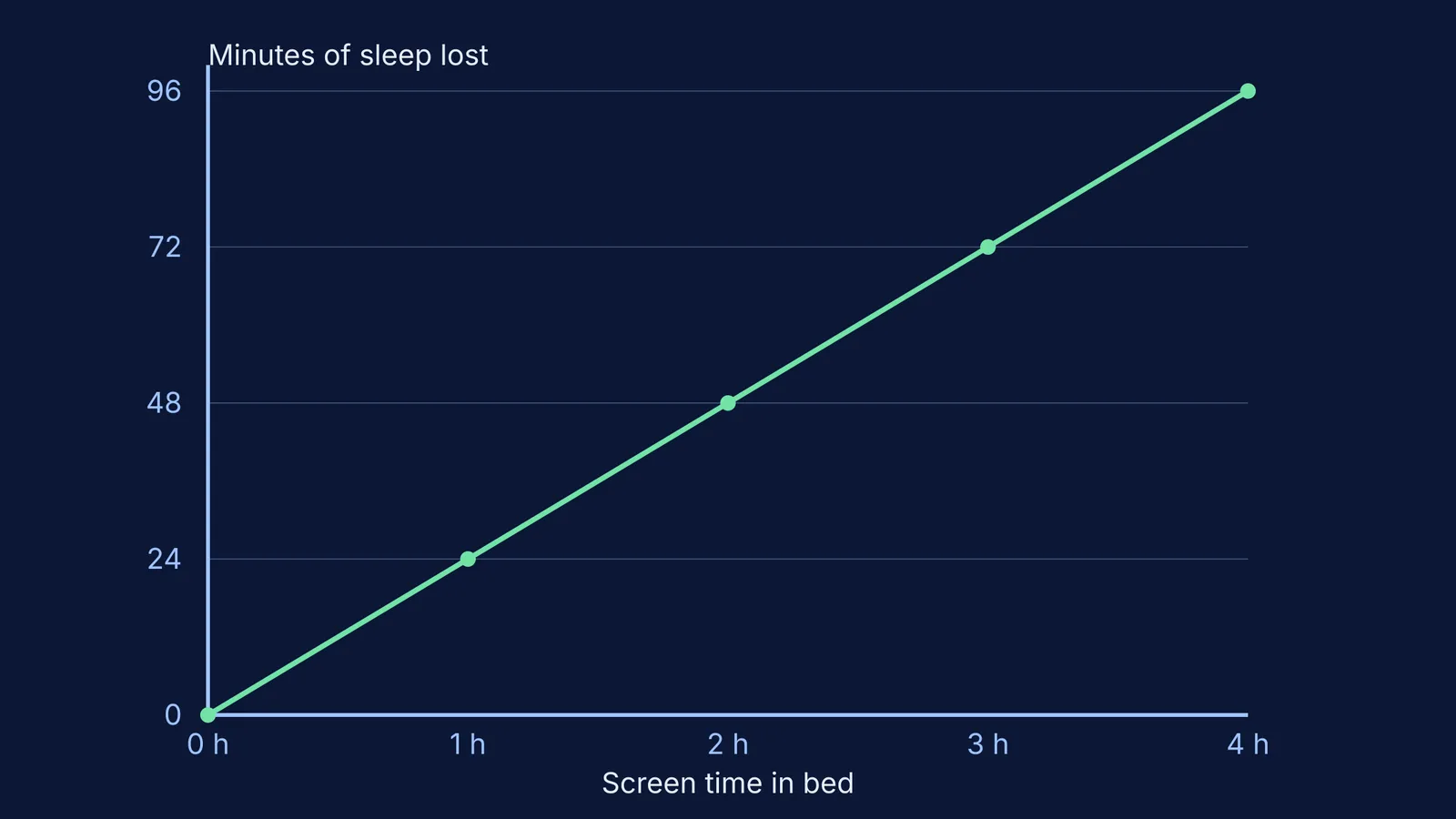
Furthermore, screen time actively displaces the critical hours a teenager would normally spend resting. A large 2025 study of young adults published in *Frontiers in Psychiatry* found that for every extra hour of screen use after going to bed, individuals lose an average of 24 minutes of sleep per night. The same study noted that each additional hour of in-bed screen time was associated with a 59% higher risk of experiencing insomnia symptoms. This displacement is particularly damaging because adolescents still require substantial rest to support brain development. You can learn more about these developmental requirements in our guide on How much sleep teenagers need, and how parents can help.
How can parents set episode limits on school nights?
Telling a teenager to "stop watching TV" rarely works, as they often view it as their primary, independent way to unwind after a stressful day of studying or socializing. Instead, parents should negotiate concrete, mutually agreeable limits that respect their child's need for downtime while prioritizing their long-term health.
Rather than setting a strict time limit—which can be incredibly hard to track if episodes vary drastically in length—agree on a specific episode count. For example, you might agree to one episode on a school night, and two on the weekend. This provides a clear, undeniable boundary that prevents the "just one more" trap caused by autoplay features.
Does the type of content affect a teenager's sleep?
The cognitive arousal that keeps teens awake is often driven by mature or intense content. Checking age ratings is not just about filtering inappropriate material; it is fundamentally about managing the emotional intensity of what your teenager is processing right before bed. A psychological thriller or a violent drama rated for adults will spike their adrenaline far more than a lighthearted comedy, thereby exacerbating their pre-sleep arousal. Encourage your child to save intense, serialized dramas for weekend afternoons rather than late-night viewing.
Should devices be kept out of the bedroom at bedtime?
To combat both the mental stimulation and the overwhelming temptation of autoplay, the single most effective strategy is separating the device from the bed. Encourage your teenager to do their viewing in the family room or living room rather than their bedroom. Your bed should be a cue for sleep, not an entertainment center.
When academic anxiety drives these late-night screen habits, having a clear, supportive study structure can make a massive difference. When using an educational tool, Fermi's AI tutor works out what the student knows and builds a plan for the session, holding a line of reasoning until they completely understand the concept. This structure helps students finish their daily work with a genuine sense of closure, making them far less likely to use prolonged binge-watching as a coping mechanism for study-related stress.
Combined with a firm family rule that smartphones and tablets stay on a charging station outside the bedroom at night, these habits ensure that when teenagers finally lie down, they are genuinely ready to rest. A well-rested brain performs far better under pressure, as explored in our post detailing why Sleep before an exam beats an all-nighter: what research shows.


