

On this page
One swing in the park, four children, and nobody wants to get off. Waiting and taking turns feel like manners, but they rest on self-control, a skill that grows with practice in the preschool years just as early reading does.
Why does waiting matter as much as letters?
Self-control in early childhood is linked to how children cope at school. In a Child Development study of 141 children aged 3 to 5 from low-income homes, inhibitory control (the ability to stop yourself acting on the first impulse) was closely linked to kindergarten maths and reading, independently of general intelligence.
The effects can last. A PNAS study that followed about 1,000 children in Dunedin, New Zealand from birth to age 32 found that childhood self-control predicted adult health, finances and criminal offending, even after accounting for intelligence and social class.
One caution keeps this in proportion. A 2018 replication of the famous marshmallow test found that the link between waiting at age 4 and achievement at 15 was half the size first reported, and shrank by about two-thirds once family background and early ability were taken into account. Waiting is a skill you practise together, not a test your child passes or fails.
What can a 3- to 5-year-old realistically manage?
Less than you hope, and more each month. Harvard's Center on the Developing Child notes in its executive function activities for 3- to 5-year-olds that younger children need a lot of support in learning rules, and that the goal is to reduce that support as the child seems ready.
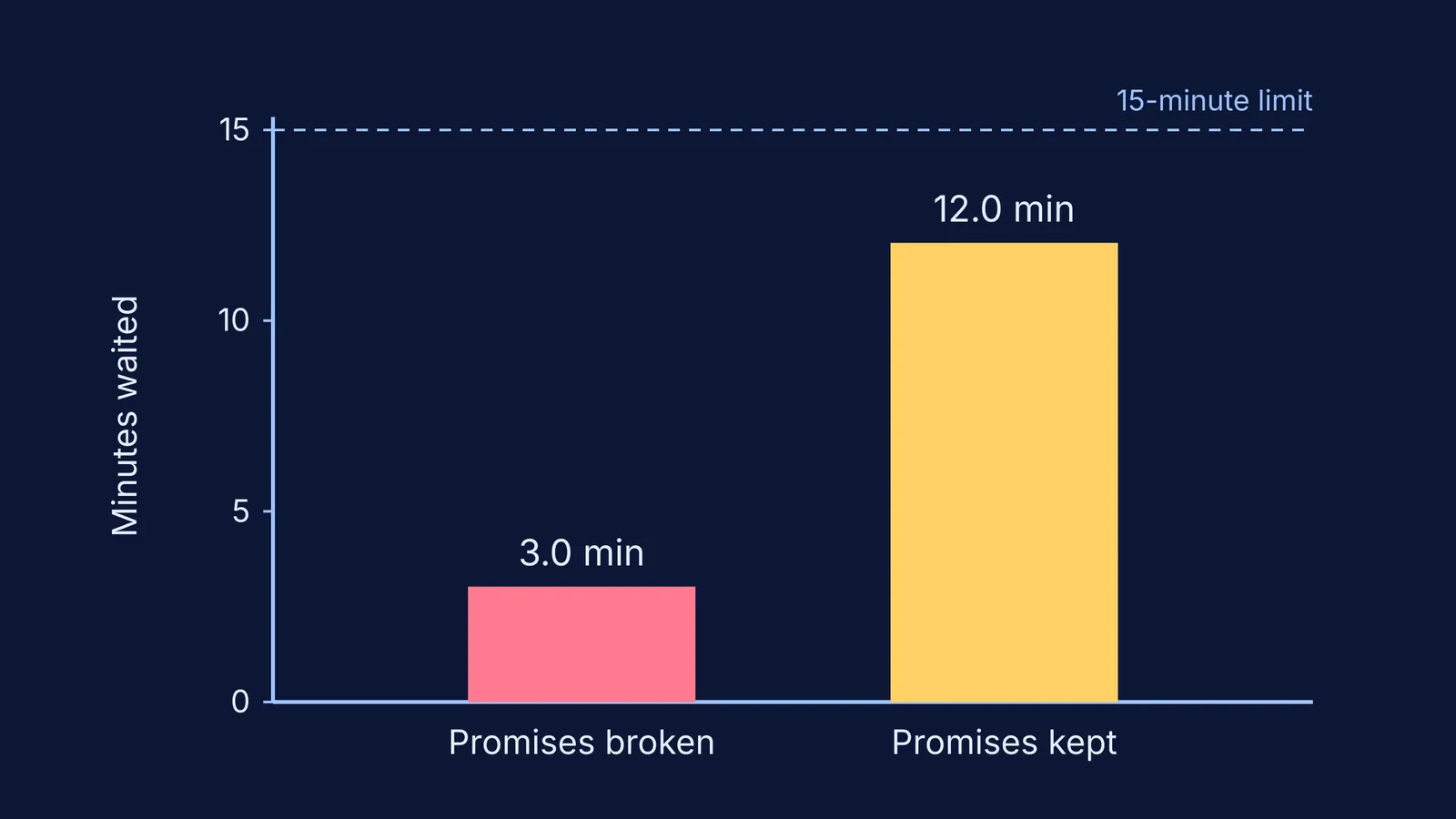
Trust matters too. In the 2013 "rational snacking" study of 28 children aged 3 to 5, an adult first either kept or broke two small promises. Children who had seen promises kept waited about 12 minutes on average for a bigger treat, out of a possible 15; children who had seen promises broken waited about 3. Children wait when waiting has paid off before, so "after your bath" has to actually mean after the bath.
Which games teach a preschooler to take turns?
The Harvard guide lists games that make children hold back an impulse while remembering a rule. Several work well at home:
Freeze dance. Play music, stop it, and everyone freezes. Harder version: freeze in the pose shown on a stick-figure picture.
Group stories. One person starts a story, and each person adds a line. Your child has to listen and wait for their turn to speak.
Cooking. Children practise inhibition while waiting for the next instruction. Let them add the dal or stir the batter only when you say "now".
Play plans. Before pretend play, your child decides who they will be and draws the plan, so they think first and act second.
Add any game with a clear "my turn, your turn" rhythm: Saanp-Seedhi (snakes and ladders), or building a block tower one block each. Our guide to helping children learn to lose at games covers what to say when the snake bites.
How do you use a visual timer with a young child?
A three-year-old cannot feel "five minutes", but they can watch sand fall.
Start with 1 minute, an easy win, and say "when the sand is finished, it is your turn".
Hand over the timer, so your child can watch it.
When it ends, give the turn at once. This is the kept promise.
Stretch the time by a minute every few days, not every day.
Pictures work the same way for the day's order of events; see our step-by-step picture routine chart for kids.
What should you say while your child waits?
Short, calm and the same every time:
Before: "Riya has the swing. You are next. Let's count ten pushes together."
During: "Waiting is hard. You can hold my hand, or we can find a red car."
After: "You waited, and now it is your turn." Name the effort, not the child ("you waited" rather than "good boy").
When it goes wrong: "You wanted it now. It is still Arjun's turn. You can be angry and still wait."
A one-week starter plan
Days 1-2: one turn-taking game a day, 5 to 10 minutes.
Days 3-4: add the 1-minute timer for one real wait, such as the swing or the tablet.
Days 5-6: add freeze dance or a group story at dinner.
Day 7: notice one moment your child waited without help, and tell them.
If sitting still is the harder problem, read what to do when a young child cannot sit in one place.
Thinking before acting carries into study later. When your child is older, Fermi's AI tutor works out what a student already knows and builds a plan for the session, so they sit down to a clear next step. For now, one game and one kept promise a day is enough.


