

On this page
Asking for help is one of the most important study skills a student can build. Yet, for many teenagers, approaching a teacher with a doubt feels like navigating a social minefield.
Why do teenagers hesitate to ask for help?
While it seems like a simple step, research shows a large gap between needing help and seeking it. A YouthTruth survey found that only 46% of high school students feel comfortable asking questions when they need help in math class. For high schoolers preparing for competitive exams like JEE or NEET, the pressure to appear smart can make asking a question feel like a risk.
Teenagers often weigh the emotional cost of looking foolish in front of their peers. This fear is a major barrier, especially in highly competitive academic environments where students feel they must know everything immediately. This social pressure can lead them to seek expedient help—like searching for a quick answer online or copying from a friend—rather than instrumental help, which focuses on mastering the underlying concept. As teenagers transition to high school, the workload increases significantly. The concepts in chemistry, biology, and mathematics become more abstract. When a student falls behind on a foundational concept, it can quickly snowball into a larger problem. Teaching them to ask for help early prevents this frustration from building up.
How do I teach my teen to write an email to a teacher?
If your teen is reluctant to ask questions in a crowded classroom, email is an excellent alternative. It removes the audience of their peers and allows them the time to carefully word their doubt. However, many students stare at a blank screen, unsure of how to strike the right tone or what exactly to say. They might worry about bothering the teacher or sounding disrespectful.
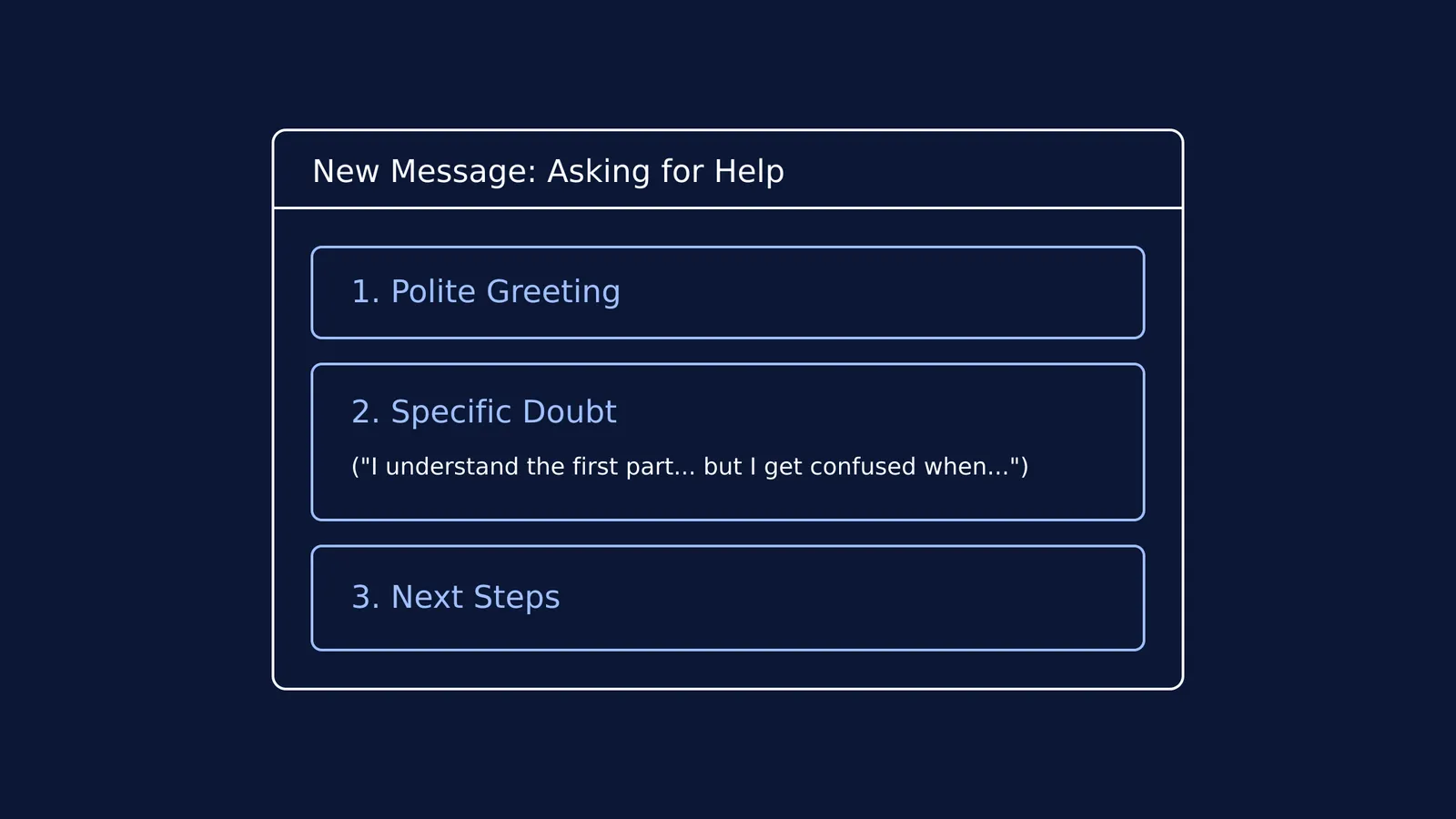
Teach them a simple three-part framework for writing to a teacher:
The polite greeting: Start with a respectful "Dear" followed by the teacher's name. It sets a professional tone.
The specific doubt: Instead of sending a vague message like "I don't understand physics," they should pinpoint the exact step where they get stuck. This shows they have tried to do the work.
The next steps: Ask for a specific action. They can request a five-minute review during office hours, after class, or ask for a specific resource to read.
What should a student say in an email to a teacher?
Having a concrete template makes the process much less intimidating. You can share this specific script with your child to adapt for their own academic doubts:
"Dear [Teacher's Name],
I hope you are having a good week. I am currently reviewing the material on [Topic/Chapter], and I am stuck on [Specific Question or Concept].
I understand the first part up to [What they already know], but I get confused when [Where they are stuck].
Could we please review this for a few minutes after class tomorrow, or whenever you have office hours? Alternatively, if there is a specific worksheet I should re-read, please let me know.
Thank you for your time, [Student's Name]"
This script works effectively because it clearly shows the teacher that the student has already put genuine effort into solving the problem. It transitions the conversation from a frustrating complaint to a targeted learning opportunity. Encouraging this kind of proactive communication is a great way to help them take ownership of their learning and build a study routine that lasts.
How should they handle the teacher's reply?
Once the email is sent, the next step is handling the response. If the teacher replies with a time to meet, help your teen prepare for that short meeting. They should bring their notes, the specific problem they mentioned, and a pen to write down the teacher's explanation.
If the teacher replies with a written explanation or a link to a resource, encourage your teen to read it carefully and send a brief "Thank you, this helped" reply. This builds a positive relationship with the teacher, making it much easier to ask for help the next time they face a challenge. It also demonstrates maturity. A student who follows up and shows they value the teacher's time will often find that the teacher is even more willing to assist them during the next challenging topic.
How can AI and boundaries build confidence?
Sometimes, a student just needs immediate, low-stakes feedback to build their confidence before speaking up. Fermi's AI tutor works out what the student knows and builds a plan for the session. By helping them articulate exactly where they are stuck, Fermi makes it easier for them to ask their teacher for targeted help later.
Finally, remind your teen that teachers have busy lives and may not reply immediately. The goal is not just to get a single answer, but to establish a habit of proactive communication, a critical skill for university life and beyond. By coaching them through their first few emails and setting up a supportive home study space, you give them the tools for lifelong learning.


