

On this page
You sit down after the parent-teacher meeting. The teacher's feedback was not what you hoped for, and now you have to go home and tell your child. A bad report can feel like a disaster, especially during high-pressure years like Class 10 or 12. Sometimes these meetings happen in crowded school halls where other parents can overhear, adding embarrassment to the disappointment. But the way you frame this conversation when you get home decides whether your child shuts down completely or starts fixing the problem.
What makes negative feedback so hard to hear?
When a student hears that they are failing or falling behind, it often feels like a direct attack on who they are rather than an observation of how they work. The difference between hearing "you are not smart enough" and "your current strategy is not working" is enormous, yet teenagers frequently blur the two together.
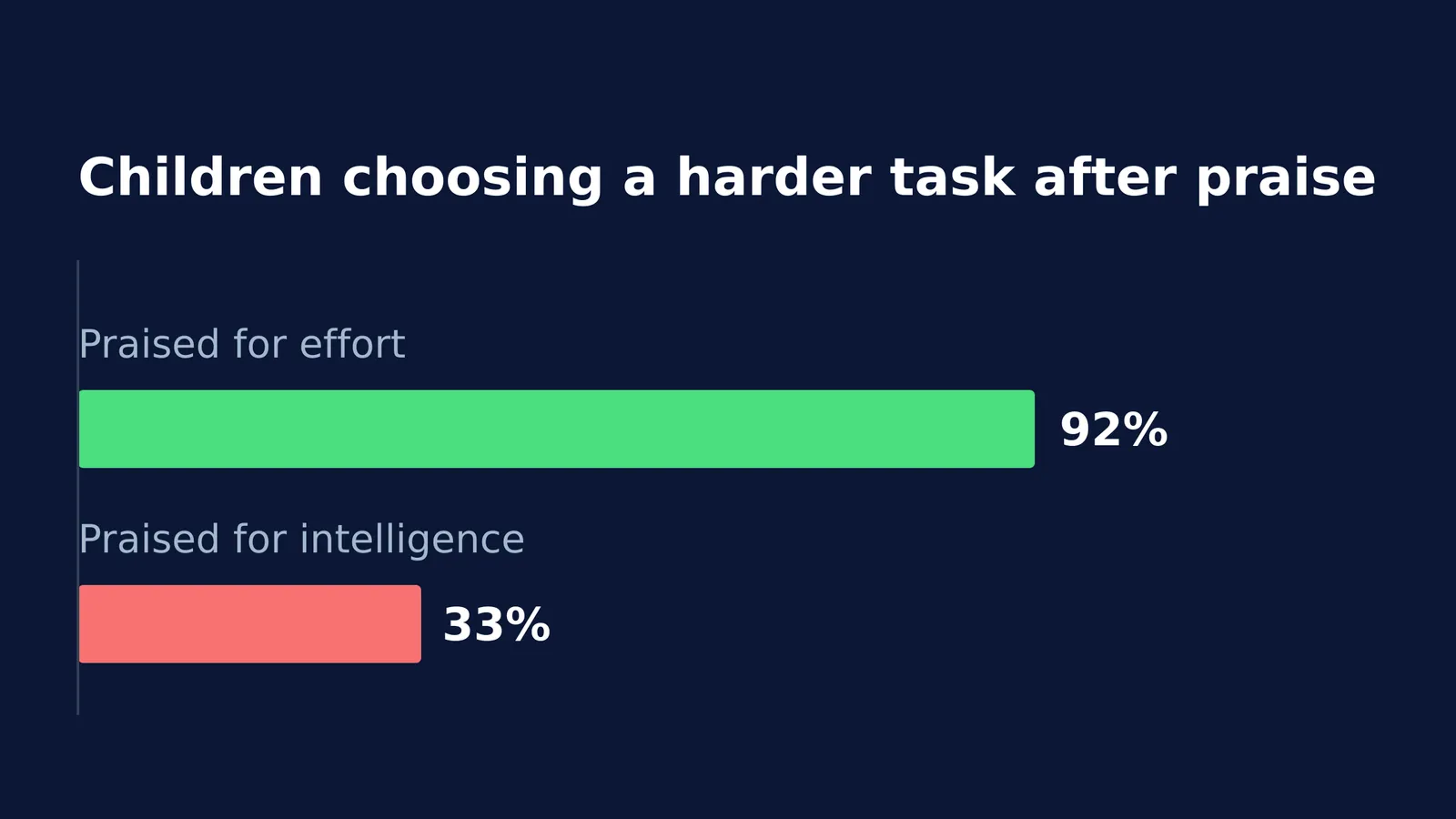
In a landmark 1998 study published in the *Journal of Personality and Social Psychology*, 92% of children praised for their effort chose a harder task next, compared to just 33% of those praised for their intelligence (https://doi.org/10.1037/0022-3514.75.1.33). The researchers also found that focusing on the process—the effort and the strategy—helped students improve their performance by 30% after a setback.
This means that focusing on the *process* makes children far more resilient to mistakes. If you tell a child they are "lazy," they naturally feel defensive and cornered. If you tell them their method of studying physics is missing the mark, they have something concrete and actionable to change. You can read more about how to use process praise vs 'you're so smart' to keep them engaged without damaging their self-esteem.
What to tell your child after bad PTM feedback?
The primary goal is to separate the student from the academic struggle. You want to share the teacher's observations as neutral facts, not as character flaws or personal failings. Approaching the topic with curiosity rather than anger keeps the lines of communication open.
Here is a step-by-step script for the conversation that avoids placing blame:
State the facts plainly: "Your teacher said you missed three homework assignments this month and struggled to finish the maths test on time."
Ask for their view: "What makes those assignments difficult to start? Is it the topic, or finding the time?" Listen carefully without interrupting or offering immediate solutions.
Validate the difficulty: "It makes sense that you avoid the homework if the concepts feel overwhelming during the evening."
Shift to methods: "Let's look at how you prepare for that subject. Are you getting stuck on understanding the core concepts, or are you just running out of time during the exam?"
How can we build a better study plan?
Once the emotions settle, you need a structured plan. Identify the exact gap in their knowledge so you know what needs fixing. Are they struggling because they do not understand the foundational ideas, or because they make careless errors under pressure and lack test practice?
If the gap is conceptual, this is where Fermi's AI tutor can step in. A student brings a topic, a course, or a scanned assignment, and Fermi works out what they already know, builds a plan for the session, and teaches through it. This means you and your child can sit down to a clear next step instead of staring blankly at a textbook.
Sometimes, the feedback highlights that your child cannot solve problems independently, even if they nod along in class. Parents often feel anxious trying to step in and teach subjects like calculus or organic chemistry that they haven't seen in years, which can add unnecessary tension to the household (read more about what to do about parents' maths anxiety). Instead of taking over the teaching role yourself, point them to the right tools. The Fermi Problem Library has worked problems with a step-by-step solver that explains the reasoning rather than printing an answer.
A bad parent-teacher meeting does not have to be the end of the road. By keeping the feedback entirely process-focused and relying on structured, reliable support, you can turn a highly stressful evening into the start of a much better study habit. Support them consistently in building that habit, and look into ways to manage exam stress in teenagers if the academic pressure becomes too much to handle alone.


