On this page
Many parents say it with a laugh: "I was never good at maths." For a parent who felt panic in maths class, helping a child with fractions or algebra can bring that feeling straight back. Research shows that this anxiety can pass to children, but it also shows exactly where it passes and what breaks the link. This post explains both, with steps you can use at the homework table this week.
Can a parent's maths anxiety affect a child?
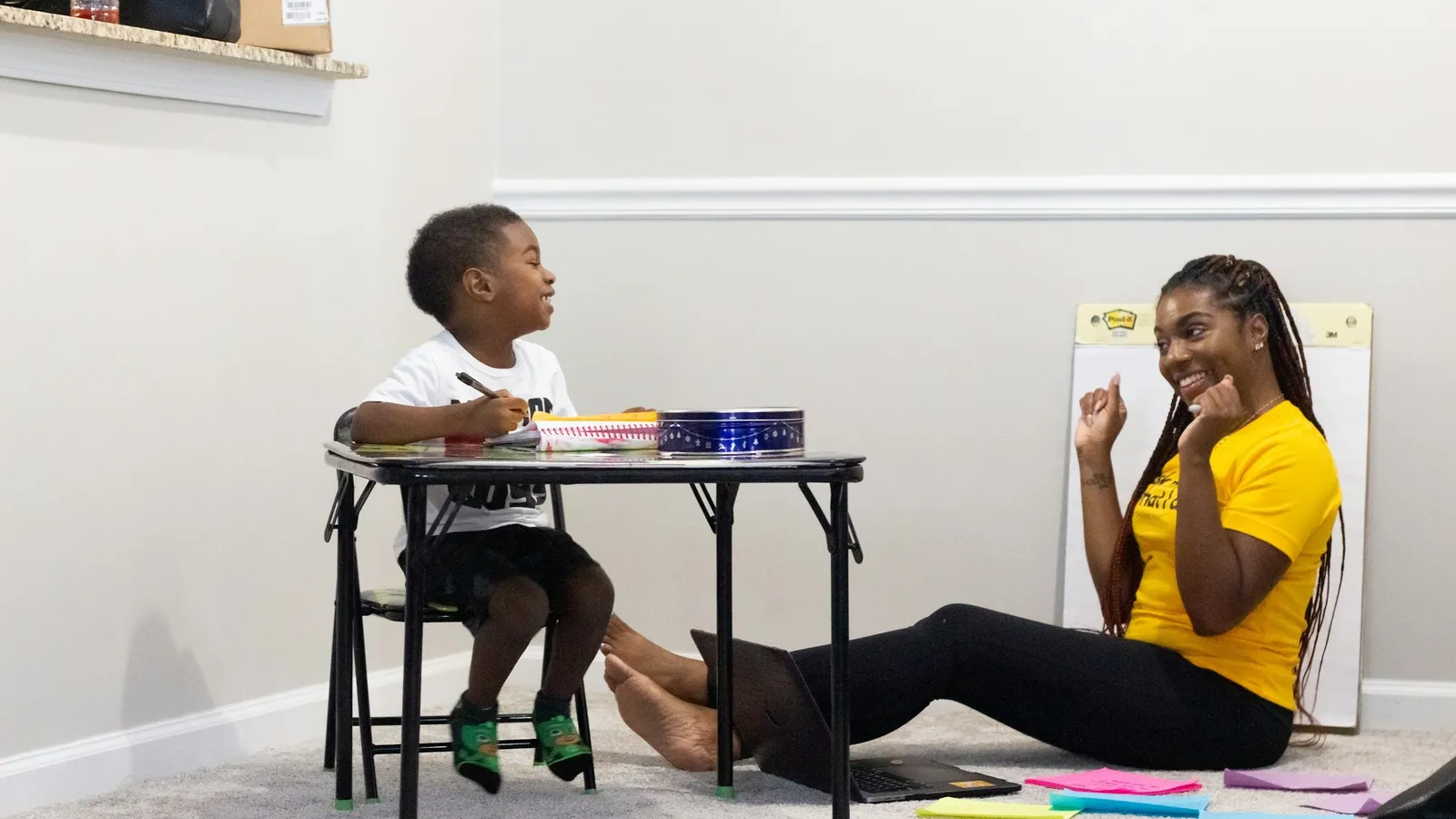
Yes, in a specific way. Maloney and colleagues (2015) followed children in first and second grade in the United States across a school year. When parents were more anxious about maths, their children learned significantly less maths over the year and ended the year more anxious about it, but only when those parents reported helping often with maths homework. When anxious parents helped less often, children's maths results were not related to the parents' anxiety. Parents' maths anxiety did not predict children's reading results, which suggests the effect is about maths itself.
The likely message for parents is not "stop helping". It is that the way an anxious adult helps can carry the anxiety with it: rushing to the answer, showing frustration, or explaining a method in a way that differs from school.
Do teachers' attitudes matter too?
A related study by Beilock and colleagues (2010) looked at first and second grade female teachers. By the end of the year, the more anxious a teacher was about maths, the more likely girls in her class were to agree that "boys are good at math, and girls are good at reading", and the lower those girls' maths achievement. There was no link at the start of the year. Children notice adults' feelings about maths and draw conclusions about who maths is for. Our post on girls' confidence in maths and physics covers this in more depth.
What helps break the link?
A randomised field experiment by Berkowitz and colleagues (2015) with 587 first graders gave families a tablet app with short numerical story problems to do together, a kind of maths story time. Compared with a reading-app control group, children who used the maths app made significantly greater gains in maths achievement across the school year, especially children whose parents were habitually anxious about maths.
The point is not the app. It is that short, structured, low-pressure maths conversations helped most in exactly the families where maths talk was likely to be hardest.
What should you say, and what should you avoid?
Avoid "I was bad at maths too". It is meant kindly, but it suggests maths ability is inherited and fixed. Try "This took me a while to learn as well. Let's look at it together."
Let your child explain first. Ask "What is the question asking?" and "What have you tried?" before you say anything about method.
Do not take the pencil. If you solve it for them, they learn that they cannot.
Use the school's method. If you learned a different way, ask your child to teach you theirs. Explaining is good practice for them.
Keep sessions short. Ten focused minutes are better than an hour that ends in tears.
Notice your own body. If your voice rises or you feel tense, pause. It is fine to say, "Let's come back to this after dinner."
How can you make maths talk part of everyday life?
Children benefit from maths that is not homework. Ask them to work out a shop bill, compare unit prices, estimate travel time or halve a recipe. For older children, talk through a cricket run rate or a phone data plan. Our post on maths talk with young children has more ideas for the early years.
What if the homework is beyond you?
By Class 8 or 9, many parents no longer remember the methods, and that is normal. You do not need to be the teacher. You can still sit with your child, ask them to explain, and help them write a clear question for their teacher. Our guide to helping with maths you have forgotten shows how. If you want to refresh an idea yourself before a homework session, the Fermi Concept Library has every concept in mathematics with its own lesson, so you can read the one your child is working on.
At the next homework session, ask your child to explain their method before you say anything at all.