

On this page
When Class 6 to 10 students first encounter Sanskrit grammar, the sheer volume of memorisation can feel overwhelming. Instead of conversational sentences that naturally build on each other, they are handed extensive tables of *shabd roop* (noun declensions) and *dhatu roop* (verb conjugations).
The instinct for many students is to stare at these tables until they feel familiar, or to copy them out ten times the night before an exam. But these common methods are highly inefficient.
By replacing passive reading with active testing and reading aloud, you can help your child master Sanskrit in short, 15-minute daily sessions that actually stick in their memory.
Why does silent reading fail for Sanskrit grammar?
When your child stares at a grid of words like *Bālakaḥ, Bālakau, Bālakāḥ*, their brain recognises the shapes and sounds, creating an "illusion of competence". Because the information is right in front of them, it feels easy, but that fluency vanishes once the textbook is closed.
A 2013 review of 10 learning techniques by John Dunlosky at Kent State University and colleagues evaluated popular study habits and rated rereading and highlighting as having "low utility". The researchers found that passive reading does not force the brain to actively retrieve information, which is the mechanism that actually builds long-term memory. Instead, the review rated "practice testing" and "distributed practice" (spacing out study sessions) as the only two strategies with high utility for student learning.
In the context of Sanskrit, this means putting the textbook away and forcing your child's brain to recall the word from scratch.
How to practice shabd roop and dhatu roop with flashcards?
To move away from silent reading, turn the grammar tables into physical or digital flashcards. On one side, write the prompt (for example, "Rama, masculine, nominative plural"), and on the other side, write the correct answer ("Rāmāḥ").
The goal is to answer the prompt before turning the card over. If the child gets it wrong, they should look at the correct answer, say it, and put the card back in the pile to be tested again shortly.
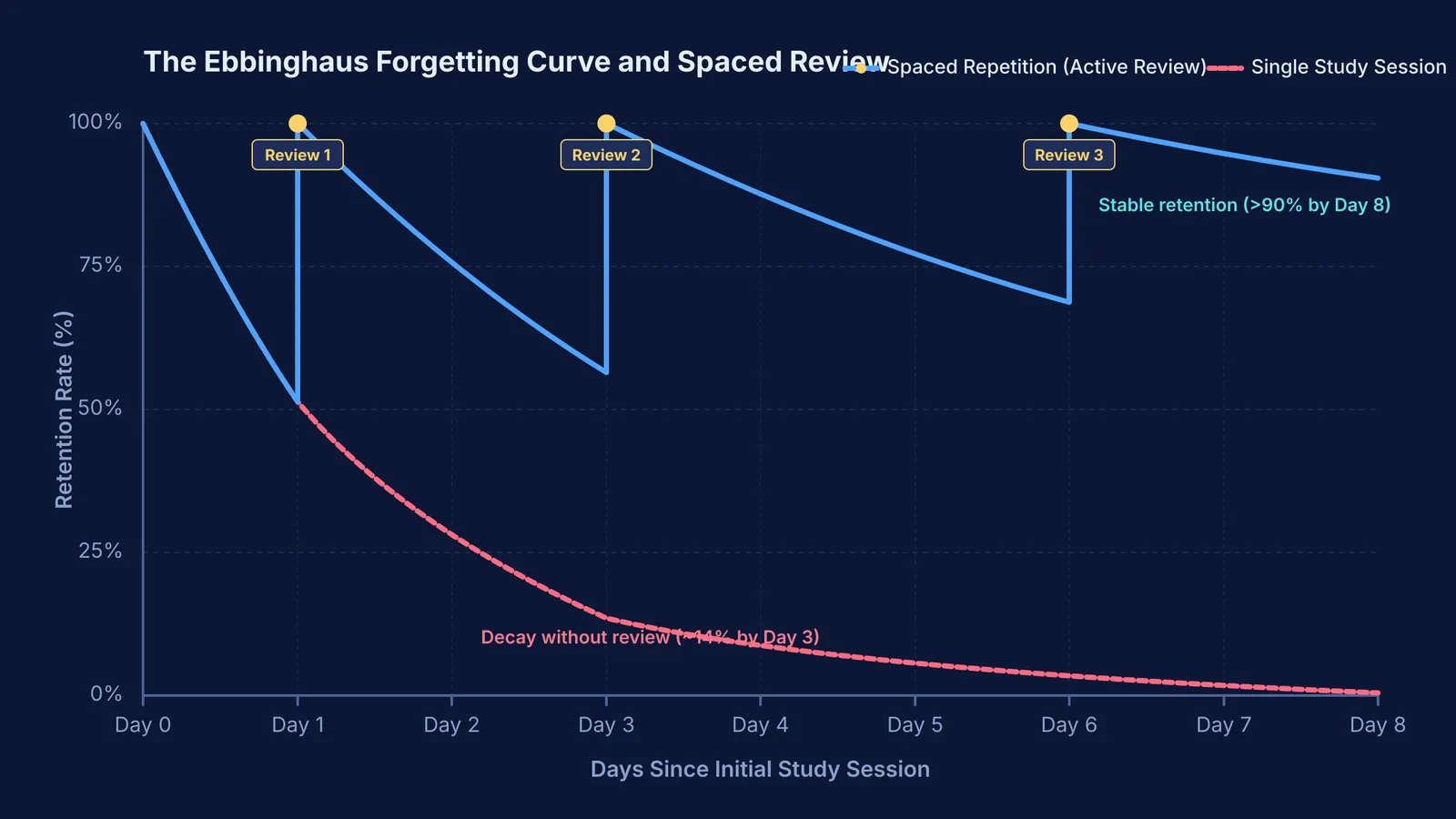
This method forces active recall. Furthermore, spreading this practice out over several days—what researchers call spaced repetition—slows down the natural decay of memory. Instead of cramming all the verb forms in an hour, setting up shared study and reading time for just 15 minutes a day will yield substantially better retention over a month.
Does reading aloud help memory?
Sanskrit is an intensely phonetic language, where strict pronunciation rules (like *sandhi*) govern how words combine. Practicing silently misses half the point of the language and robs the student of a powerful memory aid.
A 2017 study in the journal *Memory* by Noah Forrin and Colin MacLeod tested 95 participants and found that reading words aloud made them significantly easier to remember than reading them silently or listening to a recording of someone else. The researchers concluded that the dual action of speaking and hearing one's own voice makes the information more distinct in long-term memory—a phenomenon known as the "production effect".
When your child studies a passage of Sanskrit text, recites a *shabd roop*, or memorises vocabulary, encourage them to read it clearly and loudly.
How to build a 15-minute daily study routine?
The best way to support your child in Sanskrit is to help them build a study routine that lasts. Because the workload involves repetitive grammar rules, keeping sessions short prevents frustration and burnout.
Make the cards (5 minutes): Focus on one new noun or verb table. Say each form aloud while writing it down on a card.
Daily Practice (10 minutes): Cycle through the flashcards. The child must say the answer aloud before flipping the card.
Reading Practice (5 minutes): Have the child read a short paragraph from their textbook aloud, focusing on clear pronunciation rather than immediate translation.
Once students build these habits for Sanskrit vocabulary, they learn how to master any complex system of rules. When they need to apply that active learning to science or mathematics, Fermi's AI tutor can help: it notices where a student is stuck, holds a line of reasoning across a session, and checks understanding as they work through problems. Combining a quiet home study space with a commitment to daily practice will make the rest of their school years far easier to manage.


