

On this page
According to the World Health Organization (WHO), road traffic injuries are the leading cause of death for children and young adults aged 5 to 29 years. Cycling to school gives children independence and physical exercise, but the transition from riding in a park to navigating morning traffic requires careful preparation.
Before you let your child cycle to school, you need to assess their developmental readiness, check their safety gear, and ensure they know how to interact with vehicles.
When is a child ready to cycle to school?
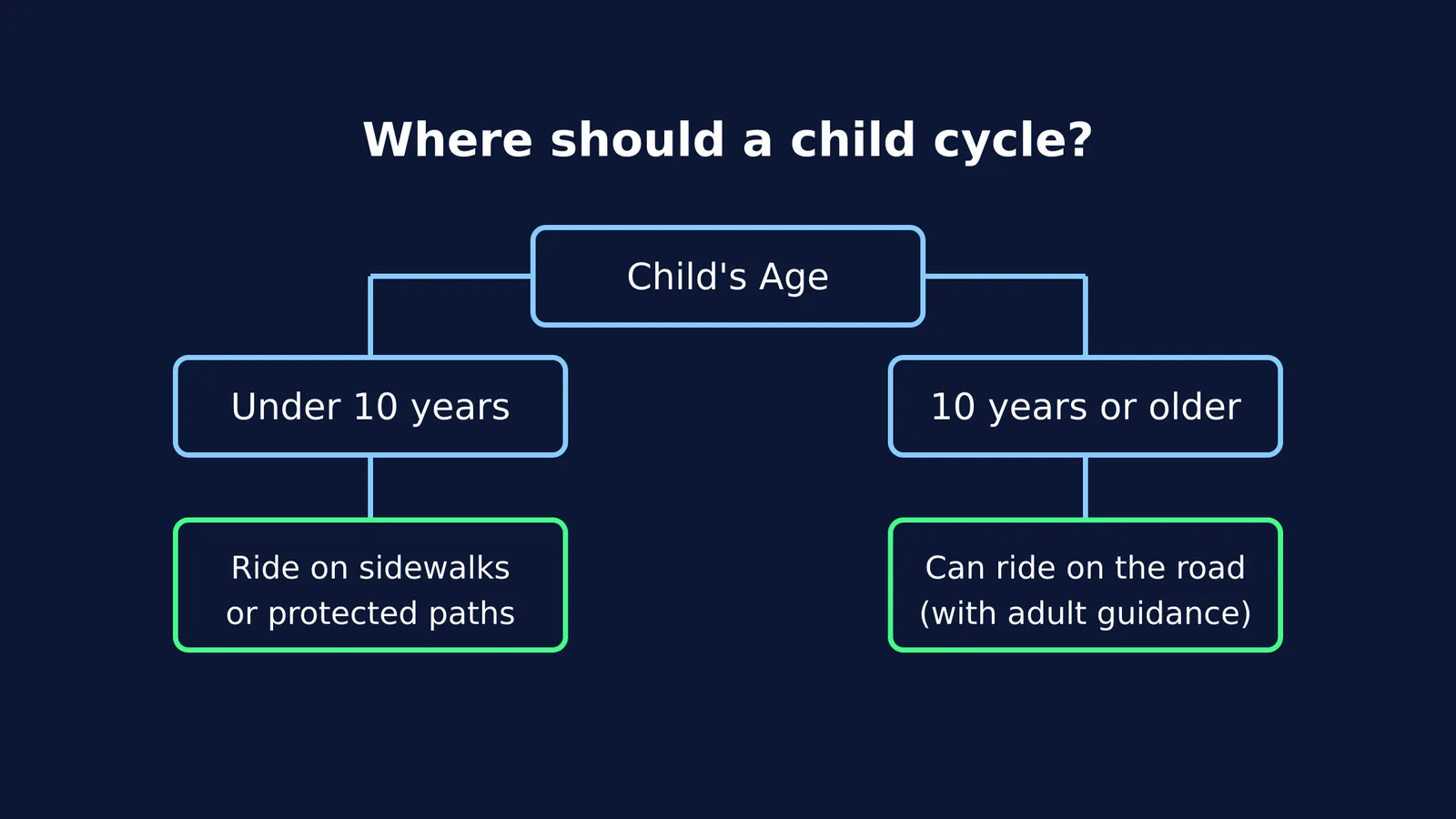
The National Highway Traffic Safety Administration (NHTSA) states that children under 10 are not ready to ride in the street and should ride on the sidewalk or dedicated paths.
Before the age of 10, most children lack the cognitive development and peripheral vision needed to judge the speed and distance of oncoming cars accurately. They can also be impulsive, struggling to integrate visual information while maintaining their balance. If your child is younger than 10, they should only cycle to school if the entire route consists of pavements or protected cycle paths, and an adult is supervising them.
When they reach age 10, the decision to let them ride on the road should depend on their individual maturity, their ability to follow rules, and the complexity of the local traffic environment.
What essential safety gear does a child need?
A bicycle helmet is non-negotiable. The WHO notes that a correctly worn helmet reduces the risk of brain injury in a crash by up to 74%. A helmet must sit level on the head, covering the forehead, and the straps should form a V-shape around the ears.
Visibility is just as important as head protection. Children should wear bright, fluorescent colours during the day. If they are riding in low light, they need reflective materials on their clothing or backpack, a white front light, and a red rear reflector or light on the bicycle. If your child goes out after dark, you might also want to review safety habits for teens walking to evening coaching.
If your child is learning about forces in school, they can see how mass and acceleration affect momentum in the Fermi Simulation Lab. On the road, those same physical laws mean that safety gear is the only thing protecting them from a moving vehicle.
How should you prepare the bicycle for the commute?
A safe ride starts with a well-maintained bicycle. The bicycle must be the right size; a child should be able to sit on the seat with their hands on the handlebars and place the balls of both feet flat on the ground. Buying a larger bike for them to "grow into" makes it harder for them to control and stop safely.
How should you practise the route together?
Before the first day of school, parents should plan the safest possible route. Choose roads with designated bike lanes, lower speed limits, and minimal heavy traffic, even if it makes the journey slightly longer.
Ride the route together with your child multiple times on a weekend when traffic is light. This helps them build confidence and allows you to identify specific hazards, such as blind corners, busy intersections, or "door zones" where parked cars might suddenly open their doors.
Just as the Fermi Problem Library explains the reasoning behind a physics problem step by step rather than just giving the answer, you should explain the reasoning behind road rules to your child. Knowing exactly why they must stop and look left-right-left makes them much more likely to remember to do it when you are not there.
What road rules must a child follow?
By the time a child rides on the road, they must understand that a bicycle is a vehicle, and they must follow the same rules as motorists.
Ride with traffic: Always cycle on the correct side of the road, moving in the same direction as the cars.
Obey signals: Stop at all red lights and stop signs without exception.
Make eye contact: At intersections, ensure drivers have seen you before proceeding.
Use hand signals: Teach them to use clear arm signals before turning or stopping to communicate their intentions to other road users.
Avoid distractions: No mobile phones or earphones while riding.
Once your child masters these rules, cycling becomes a safe, healthy habit. If they eventually ask to upgrade to a motorised vehicle, read our guide on whether you should let your teenager ride a scooter to coaching.


