On this page
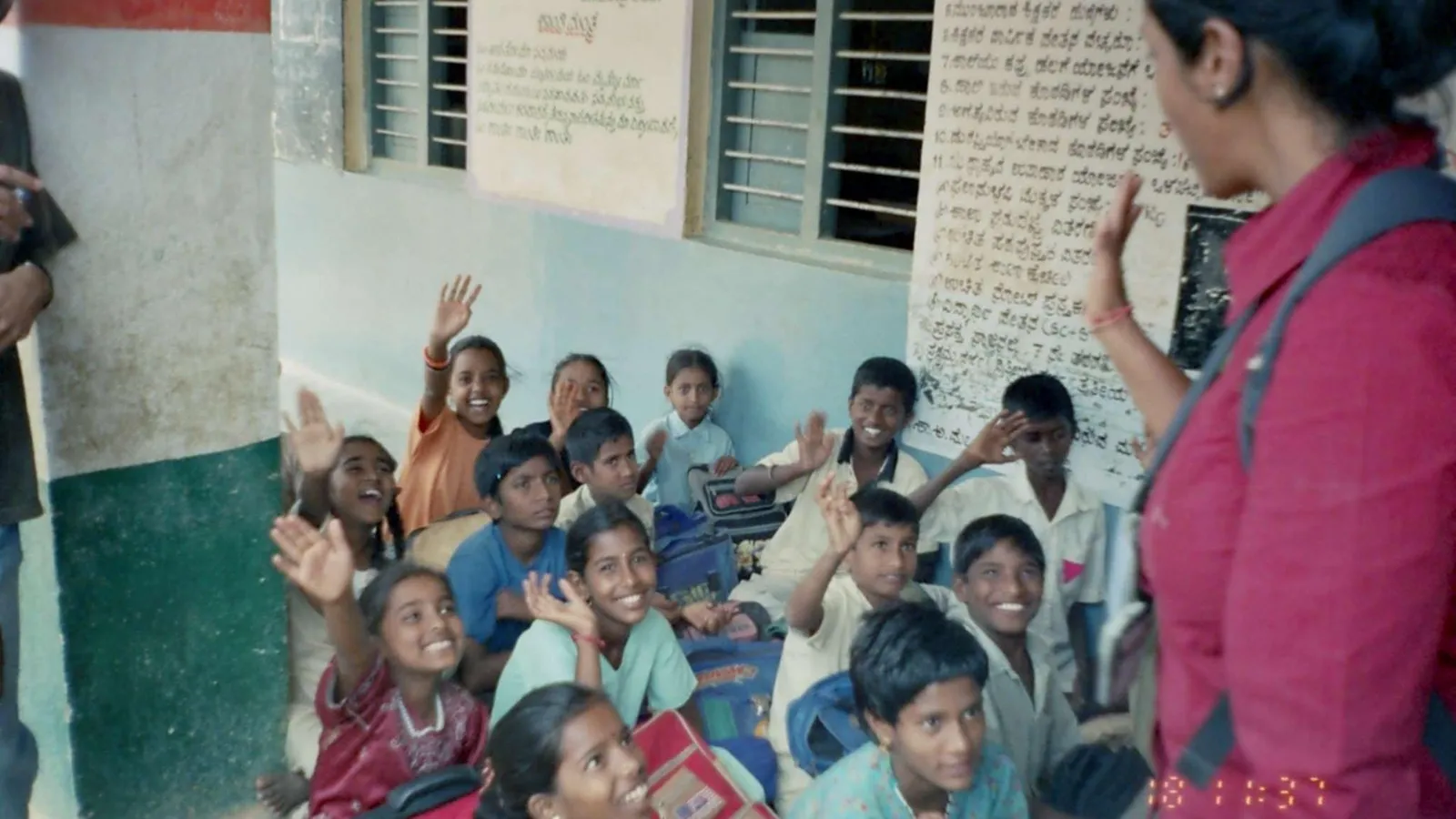
"How was school?" asks a tired child to sum up a whole day in one word, and "fine" is the cheapest word available. Specific questions work better because they point at one moment the child can picture. Here are twenty, grouped by age, plus a script for quiet days.
Why does my child just say "fine"?
Much of what parents know about a child's day seems to come from what the child chooses to tell them, more than from how hard the parent asks. That was the reading Margaret Kerr and Håkan Stattin gave of their 2000 study of Swedish 14-year-olds and their parents, and a 2009 study in Developmental Psychology sums up their view: parental knowledge may be more related to adolescents' self-disclosure than to parenting practices such as asking.
So ask questions that are easy and safe to answer, and react calmly so the next answer comes more easily.
What should I ask my child after school instead?
Pick one or two, and rotate them.
For ages 5 to 8:
What was the funniest thing that happened today?
Who did you sit next to at lunch? What did they bring?
What did your teacher read or show the class?
Was there a moment you felt proud? Show me what you did.
If you were the teacher tomorrow, what would you change?
For ages 9 to 12:
What is one thing you learned that I probably don't know?
Which part of maths or science felt easy, and which part felt like a wall?
Who was kind to someone today? Who wasn't?
What question did someone ask in class that made you think?
Which teacher's period goes fastest, and why?
For ages 13 to 15:
What topic are you on in science right now? Explain it to me like I'm in Class 5.
Did anything in class today connect to something you care about?
Who are you hanging out with these days? What do you like about them?
Is there a teacher you could ask for help if you got stuck?
What's one thing about school you'd fix if you could?
For ages 16 and up:
Which chapter is giving you the most trouble, and where exactly does it go wrong?
What did you work out on your own today?
Is anything about friends or group chats taking up a lot of your head?
Which teacher explains things in a way that clicks for you?
What would make tomorrow a little easier?
Why do questions about learning help?
Asking a child to explain what they learned is a small piece of retrieval practice. In Roediger and Karpicke's 2006 experiments, students who recalled a prose passage from memory remembered it better two days and a week later than students who simply restudied it. Questions 6, 11 and 16 do the same job at the dinner table.
Talking about learning also beats doing the homework for them. Nancy Hill and Diana Tyson pooled 50 studies of parental involvement in middle school and found that involvement was positively linked with achievement, except for parental help with homework. The strongest link was with "academic socialization", which a Harvard Graduate School of Education article on their work describes as linking what children learn in school to goals and interests.
If your child often cannot recall the lesson at all, read our guide on why your child cannot tell you what was taught today.
How do I keep the conversation going without it feeling like an interrogation?
Try this script for a week.
Wait. Snacks first, questions later.
Go side by side. Car rides, walks and cooking feel less like questioning than sitting face to face.
Ask one specific question from the list above.
Reflect, don't judge. "That sounds annoying" keeps the door open; "Why didn't you tell the teacher?" often closes it.
Share your own day, so it is a conversation, not a report.
Here is how it can sound with a 14-year-old:
You: "What are you doing in physics right now?"
Child: "Electric fields. It's confusing."
You: "Confusing how? Which bit?"
Child: "The arrows. I don't get what they mean."
You: "Want to look at it together after dinner, or try asking your teacher tomorrow?"
When the gap is one idea, the Fermi Concept Library has a lesson for every concept in physics, chemistry, biology, mathematics and computing, so your child can read up on the exact bit that confused them.
If an older child has gone quiet in general, see low-pressure ways to reconnect with a teenager who doesn't talk. If one teacher keeps coming up, read what to do when your child says the teacher hates them.
If answers point to bullying, lasting sadness or fear of school, talk to the class teacher or school counsellor. Tele MANAS, the government's free 24x7 mental-health helpline, is on 14416 or 1800-891-4416.
Tonight, pick one question from your child's age group and ask it once. Then listen.