

On this page
Children often find historical monuments boring when they are just told to look at them. However, a local fort, temple or old market can become an open-air classroom for history, geography and even science. Taking the school syllabus outdoors through place-based learning transforms a passive tour into an active investigation, giving students a reason to look closer.
Why does place-based education work better than textbooks?
Place-based education connects the classroom curriculum directly to the local community and environment. When students can touch, measure and observe what they are studying, the material sticks in their memory far better than when they read it on a page.
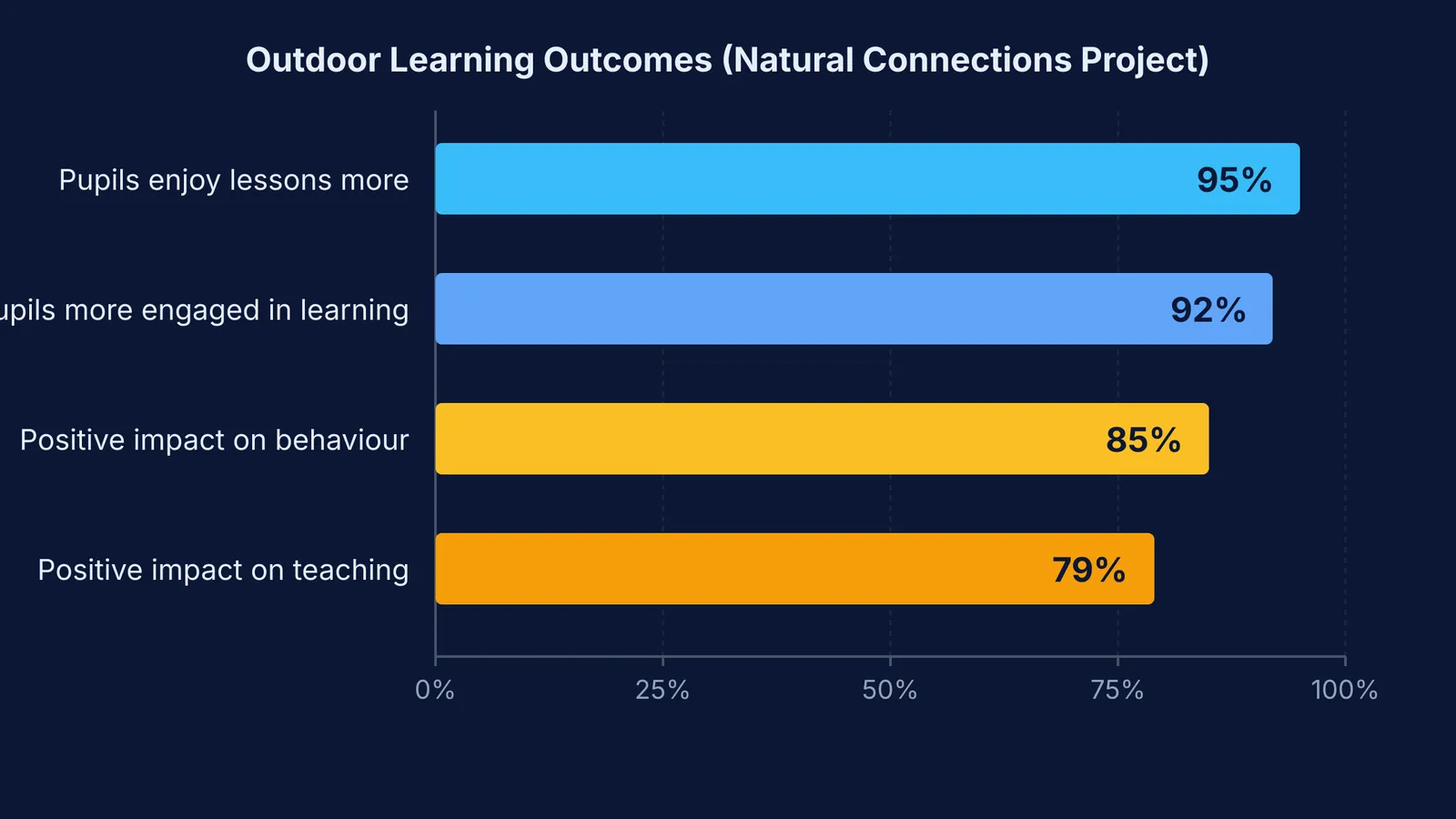
The Natural Connections Demonstration Project (2012–2016), a major four-year initiative across schools in England, evaluated the impact of moving lessons outdoors. The project's final evaluation found that 92% of teachers reported their pupils were more engaged with their learning when outdoors (Natural England, NECR215). It also found that 85% of participating schools saw a positive impact on pupil behaviour during these sessions.
These numbers show that changing the physical environment forces the brain to process information differently. Instead of relying on rote memorisation, students use observation and critical thinking. They are no longer just receiving information; they are actively seeking it out in the world around them.
How to turn an Indian heritage walk into an active lesson?
Indian cities are filled with medieval forts, colonial-era markets and ancient stepwells. You do not need to be a historian or an architect to use them; you just need to guide your child's curiosity. Here is how you can tie local sites to their school subjects:
Physics at the fort: Forts like Golconda in Hyderabad or the great gateways of Mughal architecture were designed with acoustics and defense in mind. Have your child clap under a dome and measure the time it takes for the echo to return, introducing the speed of sound and wave reflection. You can also discuss the mechanical advantage of the pulleys used in ancient stepwells (baolis) to lift heavy buckets of water.
Geometry in temples: Ancient Indian temple architecture relies heavily on symmetry, repeating motifs and fractal patterns. Ask your child to spot mirror symmetry in the carvings or the layout of the pillars. Older students can even try to calculate the surface area of the complex, interlocking shapes they see on the walls.
Geography in old markets: A walk through a traditional spice market or a colonial-era port area is a living lesson in trade routes. Discuss why certain cities grew around rivers, coasts or mountain passes. This ties local geography directly to their social studies syllabus and shows them how the physical landscape shaped human history.
What is a simple plan for your next heritage walk?
To get the most out of a visit, it helps to add a little structure to the day. This approach works well whether you are planning a weekend outing to a monument or getting more from science museum and planetarium visits.
Pre-walk preparation: Before you go, look at a map together. Read one short story or historical fact about the site. Setting the context helps children know what to look for and builds anticipation.
Give them a job during the walk: Active learning requires a concrete task. Give your child a notebook to sketch a pillar, or a phone camera to document three different types of arches. Giving them a mission prevents them from just wandering aimlessly and focuses their attention on the details.
Follow up at home: When you return, discuss what you saw and what surprised them. This is a great time to introduce a family quiet hour: setting up shared study and reading time. If your child comes back with difficult questions—like how the acoustics in a fort actually work, or the exact physics of an old water-lifting wheel—Fermi's AI tutor can help them explore the science behind the architecture. The tutor will guide them through the reasoning rather than just giving a flat answer, keeping the spirit of discovery alive.
By turning a weekend outing into an active learning experience, you show your child that education is not confined to the pages of a textbook. Asking questions and exploring the local environment together is one of the most effective ways of encouraging curiosity at home.


