On this page
Many Class 8 students who struggle with chemical formulas are not bad at chemistry. They are memorising dozens of formulas as separate facts, when they need only a short list of valencies and one method. Depending on the board and textbook edition, formula writing appears in Class 8 or Class 9, so check the school syllabus. This plan takes about ten minutes a day and needs only paper, a pen and you.
Why do chemical formulas feel so hard in Class 8?
A formula needs two things: the combining capacity (valency) of each part, and a rule for turning those into subscripts. Children who skip the first step guess. The usual mistakes:
Guessing the small numbers instead of working them out.
Forgetting brackets around a group, writing CaOH₂ instead of Ca(OH)₂.
Not reducing, writing Mg₂O₂ instead of MgO.
Mixing up which valency belongs to which symbol.
What should my child memorise first?
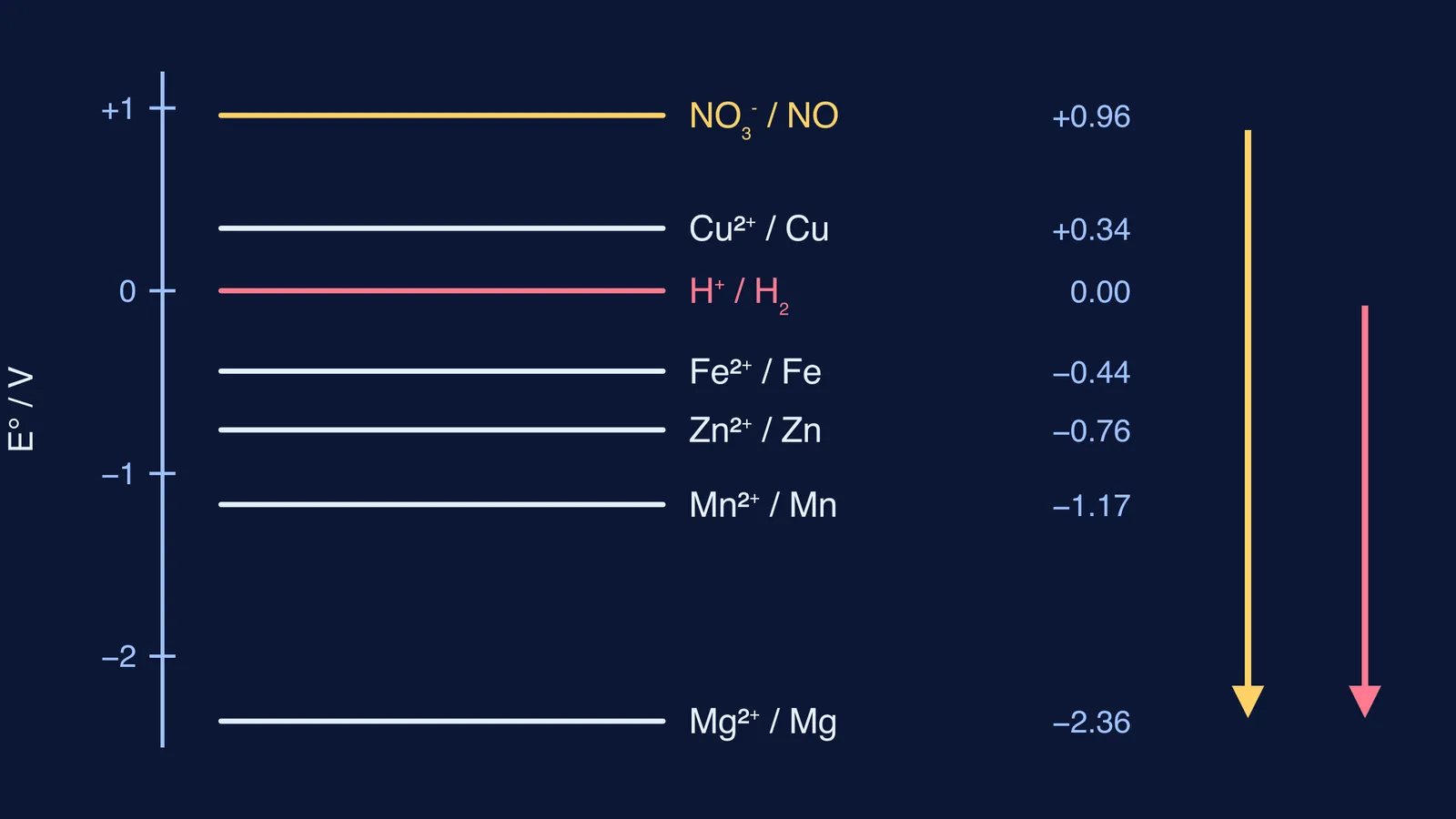
Start with valency cards. For ions, the valency used in criss-crossing is the size of the ion's charge. Ions made from group 1 metals such as sodium carry a 1+ charge, group 2 metals such as calcium carry 2+, and halogens such as chlorine carry 1−, according to this LibreTexts chapter on main-group ions, which also lists Al³⁺, O²⁻, S²⁻ and N³⁻. The charges of common groups of atoms, such as hydroxide (OH⁻) and sulphate (SO₄²⁻), are listed in a LibreTexts table of polyatomic ions.
Make 14 cards from index cards or cut-up notebook pages, with the symbol on the front and the valency on the back:
Valency 1: Na, K, Cl, ammonium (NH₄), hydroxide (OH), nitrate (NO₃)
Valency 2: Mg, Ca, O, S (as sulphide), sulphate (SO₄), carbonate (CO₃)
Valency 3: Al, N (as nitride)
Each day, your child says the valency before flipping each card. Wrong ones go back into the deck until it is empty. Elements with more than one valency, such as iron and copper, can wait until these feel easy.
How does the criss-cross method work?
In the criss-cross method, the number on each ion's charge crosses over to become the subscript of the other ion, and the signs are dropped, as set out in this LibreTexts guide to writing ionic formulas/05%3A_Molecules_and_Compounds/5.05%3A_Writing_Formulas_for_Ionic_Compounds). The same guide says to reduce to the lowest ratio and to put a group of atoms in brackets when more than one is needed.
Write the metal (or ammonium) first, then the other part.
Write each valency above its symbol.
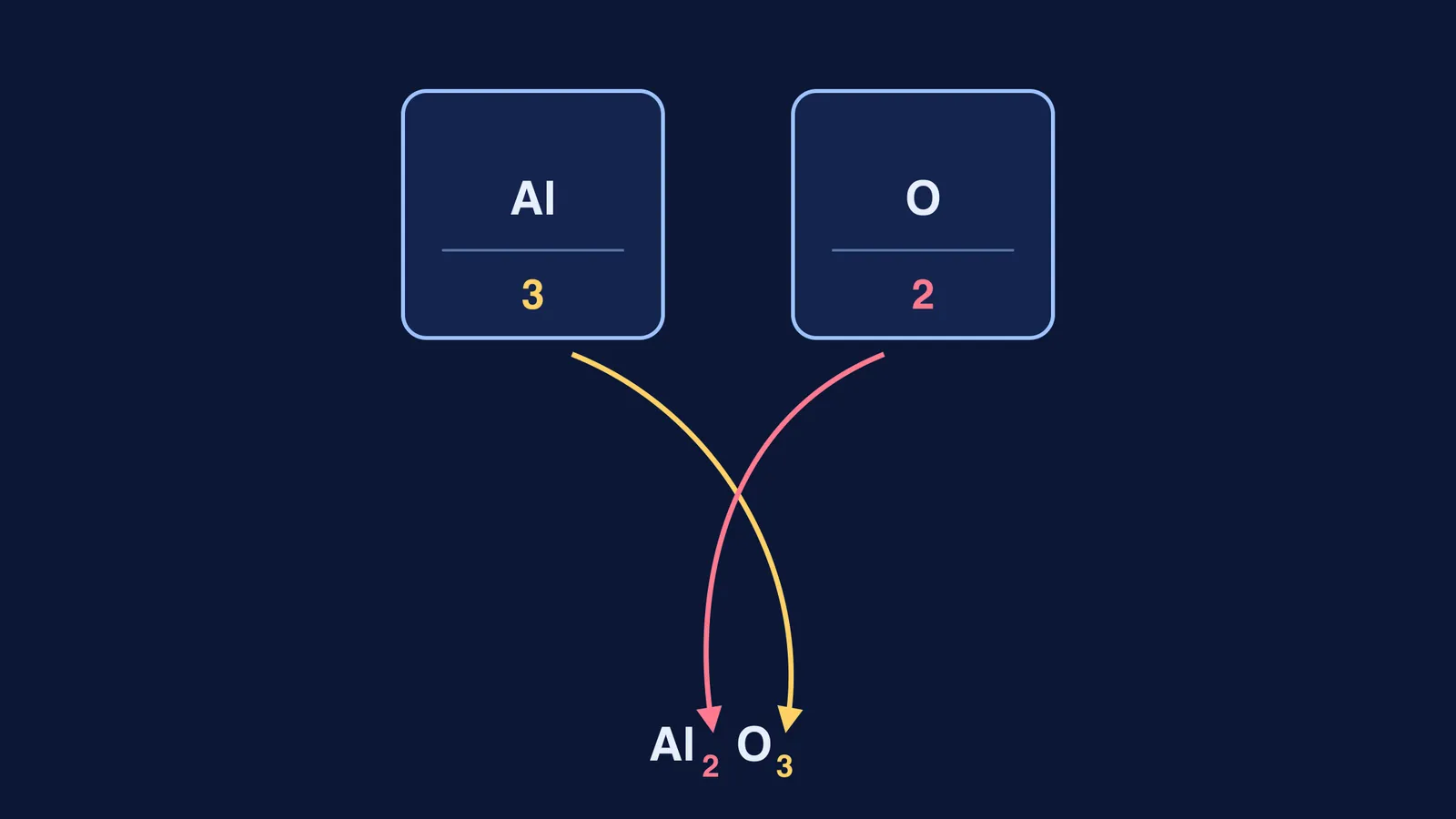
Cross them: each valency becomes the other part's subscript.
Reduce to the simplest ratio and drop any 1s.
Put brackets around a group of atoms that gets a subscript of 2 or more.
Work these three together at the table:
Aluminium oxide: Al is 3, O is 2. Cross to get Al₂O₃. It is already in its simplest ratio.
Magnesium oxide: Mg is 2, O is 2. Cross to get Mg₂O₂, then reduce to MgO.
Calcium hydroxide: Ca is 2, OH is 1. Cross to get Ca₁(OH)₂, then drop the 1: Ca(OH)₂.
For more practice sets, see our walkthrough of writing chemical formulae with valency and the criss-cross method.
How can short daily quizzes build confidence?
Recalling an answer strengthens memory more than reading it again. In a study by Henry Roediger and Jeffrey Karpicke, students who took recall tests on prose passages remembered substantially more two days and one week later than students who restudied them, even though restudying made students more confident (Psychological Science, 2006). A 2013 review by John Dunlosky and colleagues examined 10 learning techniques and rated practice testing and spreading practice over time as high utility (Psychological Science in the Public Interest). Neither study used chemical formulas; the quiz below simply applies the same idea of recalling instead of rereading.
A ten-minute daily routine:
Two minutes: run through the valency cards.
Five minutes: name three compounds and have your child write each formula with the crossing shown.
Three minutes: a five-question quiz mixing today's formulas with two from earlier in the week.
On Sunday, swap the quiz for a game; our guide to a family quiz night for learning has formats that work at home.
What you say matters too:
Instead of "Wrong again", say "Show me how you crossed it."
"Which card do you want to put back in the deck?"
When a formula is right: "You worked that out. You didn't guess it."
What if my child still gets stuck?
Ask them to talk through one formula aloud; you will usually hear exactly where it breaks. If the method keeps going wrong, the Fermi Problem Library has worked problems with a step-by-step solver that explains the reasoning rather than printing an answer. If the gap is the idea of valency itself, the Fermi Concept Library gives each chemistry concept its own lesson.
Once formulas feel steady, equations come next, and our guide on explaining chemistry equations to your teen picks up from there. Tonight, start with five cards and one formula.