

On this page
In short
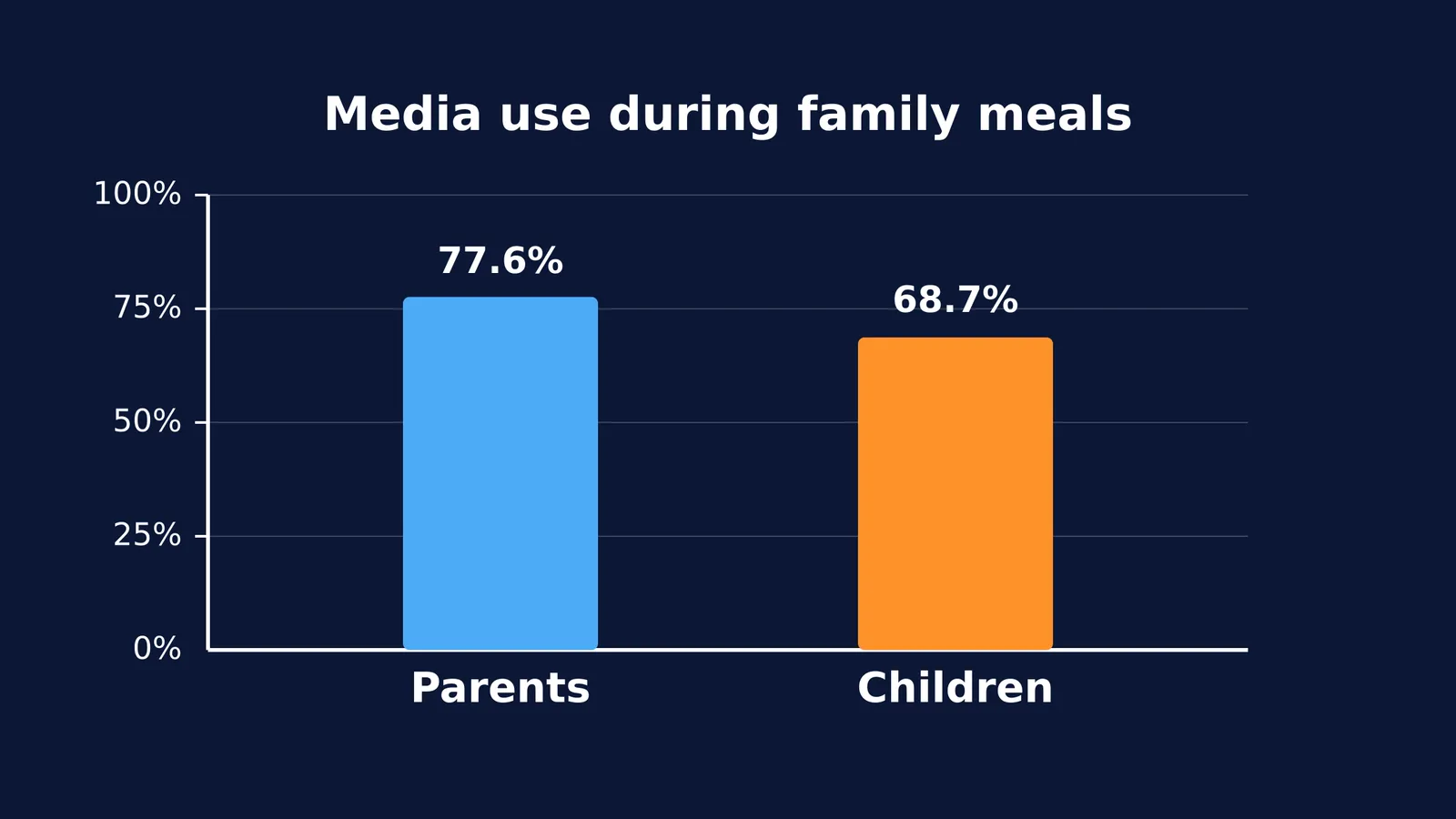
To start a phone-free dinner habit, parents need to go first. A 2026 study found that 77.6% of parents use devices at the table compared to 68.7% of children. Establishing a family-wide phone basket and replacing screen time with conversation games works better than rules aimed only at teenagers.
For many families, dinner is the only time the whole household is in the same room. But being at the same table is not the same as being present.
When a smartphone is resting next to a dinner plate, it creates a subtle barrier. The transition away from screens is a common point of friction, but building a phone-free dinner habit is possible when the whole family commits to the same rule.
Who is actually on their phone?
We often assume that teenagers are the ones bringing screens to the table, scrolling through social media or messaging friends. However, a 2026 study from the University of Arizona found the opposite: 77.6% of parents reported using media during family meals, compared to 68.7% of children.
The researchers, Jiawen Wu and Matthew Lapierre, noted that when a parent is immersed in a device, they are physically present but psychologically absent. This phenomenon, often called technoference, interrupts the communication that makes a family meal valuable. When parents frequently check their screens, it signals to children that the device is more important than the conversation happening right in front of them.
Crucially, the study found that parent and child media use are not linked. A parent putting their phone away does not automatically mean the child will follow suit. The rule has to be explicit, and it has to apply to everyone equally.
How does technoference affect the family?
The constant interruptions caused by digital devices do more than just stall dinner conversation. Research indicates that when caregivers are highly absorbed in their phones, they tend to be less responsive to their children's social cues. This lack of responsiveness can lead to missed opportunities for scaffolding, which is the support parents provide as children learn and develop new skills.
Furthermore, children often notice when they are competing with a screen for attention. In some cases, this can lead to an increase in frustration or argumentative behaviour at the table. Removing the devices removes this layer of hidden conflict, allowing the family to focus on each other and the food.
How to start a phone-free dinner rule?
The hardest part of a new routine is the first few days. Here is a framework to make the transition easier for a smart 16-year-old and the rest of the household.
1. Adults go first The rule will fail if it feels like a punishment for the children while parents still check work emails. Parents must model the behaviour. If you need to take an urgent call, step away from the table entirely rather than answering it while eating.
2. Use a phone basket Do not just put phones face down on the table. Out of sight is out of mind. Research shows that just having a phone on your desk hurts focus, even if it is turned off. Place a small basket in the hallway or on the kitchen counter where everyone drops their device before sitting down.
3. Replace the silence When you remove a distraction, you need something to fill the gap. Start a simple conversation game to get people talking. "Rose, bud, thorn" is a reliable script that gives everyone a turn to speak:
Rose: What was a highlight of your day?
Bud: What are you looking forward to tomorrow?
Thorn: What was a challenge or something that went wrong?
Transitioning to evening study
Dinner is often the bridge between the afternoon and the evening study session. A calm, connected meal makes it easier to tackle a study routine that lasts. When the dinner table is free of digital distractions, the brain gets a genuine break, which is essential for maintaining focus later in the evening.
When dinner is done and students return to their desks, the next challenge is getting stuck on difficult concepts. If your child hits a wall with their homework, the Fermi Problem Library offers worked problems with a step-by-step solver that explains the reasoning rather than printing an answer. Furthermore, Fermi's AI tutor can work out what they already know and build a plan for the session, so they sit down to a clear next step.
A family study hour immediately after dinner can also help ease the shift into academic work. If the table is cleared and everyone—parents included—spends the next block of time reading or doing focused work, it reinforces the quiet, device-free environment you started at the dinner table. Building these habits takes time, but the payoff is a calmer evening and more productive study sessions.


