On this page
Choosing a college is one of the biggest decisions a family makes, and ensuring the institution is legitimate is the critical first step. With a growing number of institutions claiming to offer degree programmes, students and parents need a reliable way to verify their authenticity. Degrees from unrecognised institutions are invalid for employment and further education, which can derail a student's career before it even begins.
The good news is that the University Grants Commission (UGC) maintains clear, publicly available records to help you make a safe choice. By knowing where to look and what warning signs to watch for, you can protect your investment in higher education and ensure your hard work leads to a recognized qualification.
How to check if a university is fake in India?
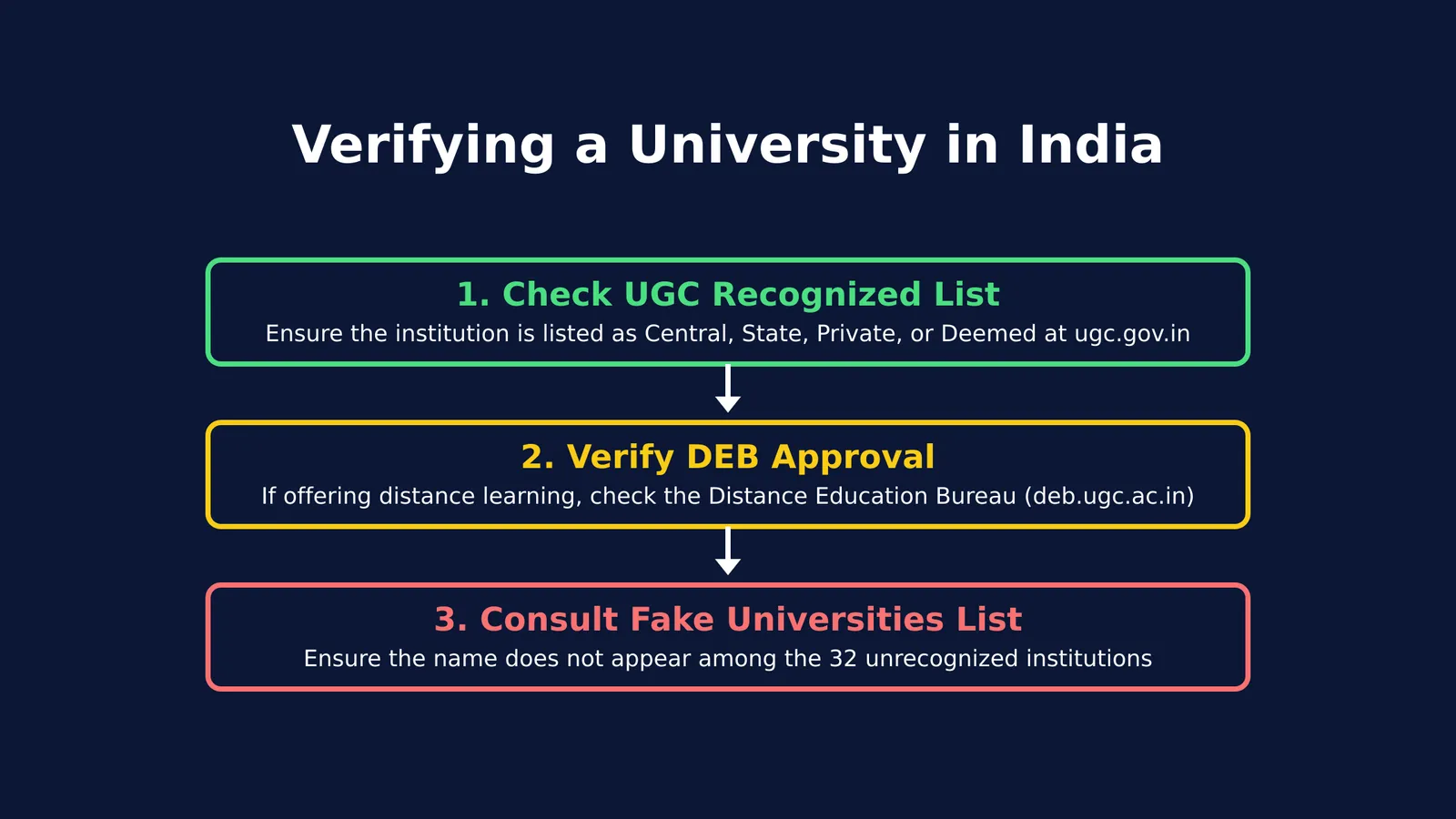
The most definitive way to verify an institution's status is through the official UGC portal. The UGC maintains separate, updated lists of all recognized Central, State, Deemed, and Private universities. Start by going to the official site at ugc.gov.in and navigating to the "Universities" section.
If an institution claims to grant degrees but does not appear on these approved lists, it is almost certainly not recognized. Under Section 22 of the UGC Act, only universities established by a Central or State Act, or those granted "Deemed-to-be" status under Section 3, have the right to confer degrees. If an institution cannot provide proof of this legal standing, it cannot legally operate as a university.
Furthermore, you can directly consult the "Fake Universities" page on the UGC portal. This specific list names institutions that are explicitly banned from calling themselves universities or awarding degrees. Checking this list first can save you time and prevent costly mistakes during your college research.
What is the latest UGC list of fake universities?
In its early 2026 updates, the UGC identified 32 fake universities operating across India. The highest concentration is in Delhi, which has 12 unrecognised institutions, followed by Uttar Pradesh with four.
Other states with fake universities include Andhra Pradesh, Karnataka, Kerala, Maharashtra, Puducherry, and West Bengal, each having two such institutions. Knowing these numbers helps families stay alert, especially when evaluating colleges in major education hubs where unrecognised institutions often try to blend in with legitimate academic environments.
The UGC periodically issues public notices in leading newspapers and on its website to warn students about specific fake institutions. It is a good habit to check for these notices during the admission season so you are working with the most current information available. Keeping track of these updates ensures you do not fall victim to newly emerged fraudulent operations.
What are the red flags of a fake university?
Beyond checking the official list, families should watch for common warning signs that suggest an institution might not be legitimate. Being able to spot these early can protect students from deceptive marketing tactics.
A major red flag is the unauthorized use of the word "University". Many fake institutions use prestigious-sounding names to appear legitimate, but the law strictly restricts the use of this term to officially recognized bodies. If an institute calls itself a university but lacks a clear founding Act or UGC recognition, it is a significant warning sign.
Another warning sign is the physical campus itself. Some fake institutions operate entirely out of small commercial shops or office buildings, yet claim to offer a wide range of comprehensive degree programs. Legitimate universities typically have adequate infrastructure, including libraries and laboratories, to support their academic claims and student body.
Finally, if the institution offers distance education or open learning programmes, its courses must also be approved by the UGC Distance Education Bureau (DEB). You can verify this independently at deb.ugc.ac.in. If a college pushes online degrees without this specific approval, its credentials may not hold up during a job background check, leaving graduates stranded despite their efforts.
Making confident choices for your education
Navigating higher education requires careful planning and reliable information. Whether you are avoiding fake institutions or deciding between legitimate options, having a clear strategy reduces stress. For families handling the complex admission process, reading about JoSAA counselling basics or how to evaluate a coaching institute can provide much-needed clarity on the steps ahead.
As you plan your study path, ensuring your daily preparation is effective is just as important as choosing the right college. If you find yourself stuck on difficult concepts or not knowing where to start, Fermi's AI tutor can work out what you already know and build a plan for the session. Instead of just giving answers, it teaches you step-by-step, helping you build genuine understanding for your exams and future career.