On this page
Weekend detox plans often fall apart early when they ban everything and offer nothing back. A screen-light weekend is easier to keep. Phones are parked, not confiscated. Everyone gets two short windows to check messages, and the hours in between are filled with things worth putting a phone down for. Below is a two-day plan, a script for the conversation, and activities that suit a 10-year-old, a 16-year-old and their parents together.
What does a screen-light weekend actually mean?
Recreational screens (scrolling, gaming, bingeing a series) shrink to agreed windows, while useful screens stay: a video call with grandparents, maps, a UPI payment, a recipe. The goal is not zero minutes. It is family time that nobody keeps interrupting.
The 2020 WHO guidelines for children and adolescents aged 5-17 recommend at least an average of 60 minutes a day of moderate- to vigorous-intensity physical activity across the week. The same guidelines say young people should limit sedentary time, particularly recreational screen time, but the evidence was not strong enough to set a precise cut-off. So your family chooses the numbers. The plan below uses two windows a day.
Getting outside matters: the WHO physical activity fact sheet reports that, worldwide, 81% of adolescents aged 11-17 were physically inactive, meaning they did not meet WHO's activity guidelines.
Why should parents go first?
Children notice where adults' attention goes. In a 2018 study in Child Development, Brandon McDaniel and Jenny Radesky analysed parent reports from 170 US families with young children. Parents' problematic technology use predicted more "technoference", technology interrupting parent-child time, and mothers' technoference was linked to more behaviour problems in children. The authors are clear this is an association, not proof of cause. The practical lesson still holds: the parent's phone goes into the basket first. We have also written about how parents' own phone use shapes children's study habits.
How do you plan a family digital detox weekend?
Hold a 15-minute family meeting on Thursday. Agree on four things and stick the list on the fridge.
The basket. One place where every phone lives from Friday 9 pm. Chargers go there too, so nobody sleeps next to a phone.
The windows. Two personal screen windows a day of about 30 minutes, plus one shared screen event such as a Saturday family film.
The exceptions. Calls from family, maps, payments, a parent on call for work. Name them now so they don't become loopholes.
The one-hour rule. At least 60 minutes outdoors or moving each day, adults included.
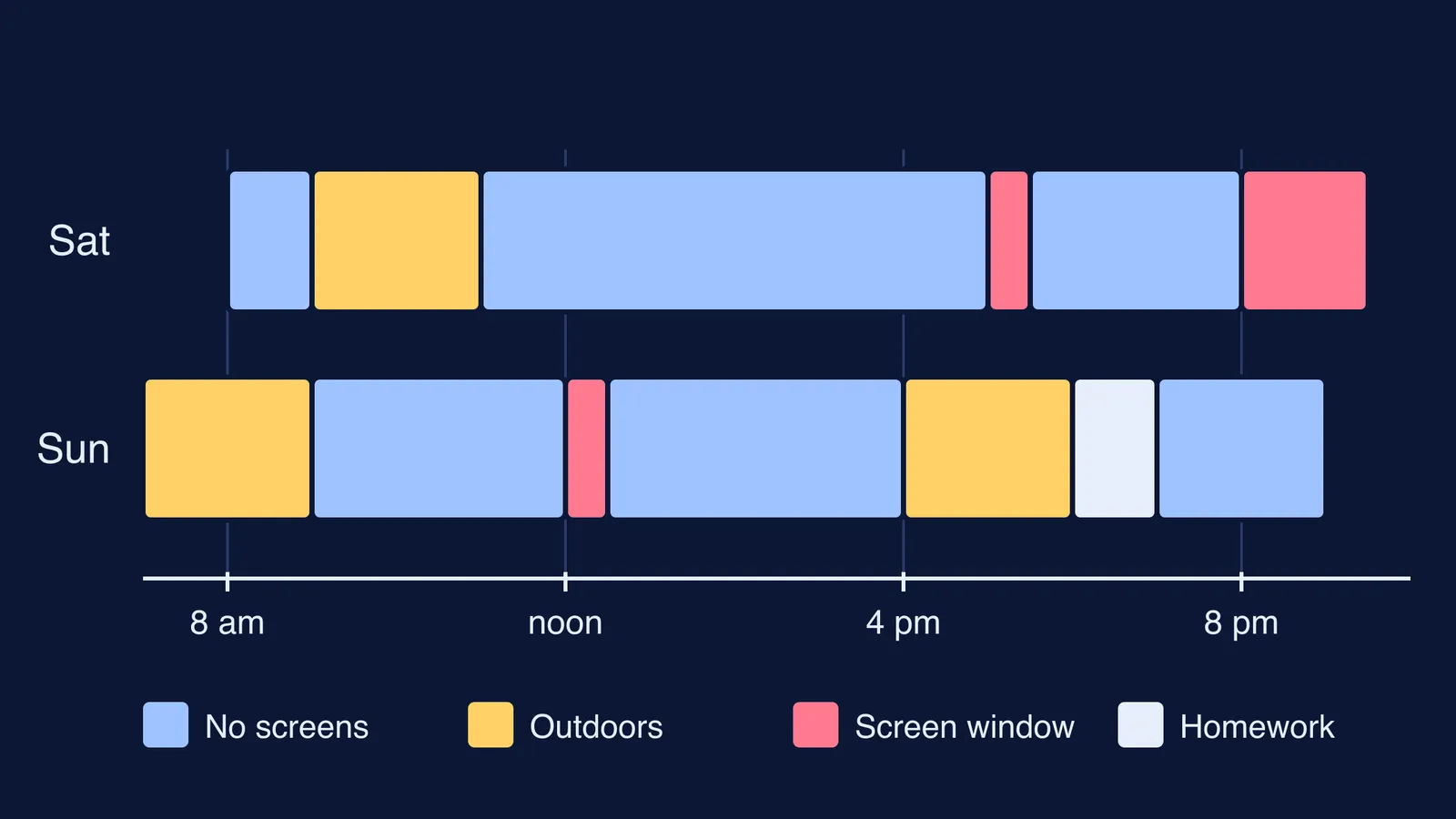
Here is a worked plan. It matches the diagram at the top of this post.
Saturday
8-9 am: breakfast, no phones at the table.
9-11 am: outdoors. Cycle, go to the park, or walk to the market for lunch ingredients.
11 am-1 pm: make something. Try a bridge, tower or egg-drop engineering challenge, or let the teen cook lunch.
1-5 pm: lunch, rest, reading, carrom or cards.
5-5:30 pm: screen window one.
5:30-8 pm: evening walk, then cook dinner together.
8-9:30 pm: family film, chosen by vote.
Sunday
7-9 am: early walk or a game in the society ground before it gets hot.
9 am-noon: breakfast, then visit grandparents, a museum or the library.
Noon-12:30 pm: screen window two.
12:30-4 pm: lunch, rest, a board game tournament.
4-6 pm: outdoors again.
6-7 pm: Monday prep. Homework that needs a laptop is allowed.
7-9 pm: dinner and a two-minute review of what worked and what to change.
What do you say to a teenager who refuses?
Don't announce the detox; ask for help with it. Here is a script to try:
"We're trying a screen-light weekend, and it includes me. You still get two windows each day, and you can pick Saturday's film and one outing. What would make it worth it for you?"
Then hand over real decisions. A teen who plans the Sunday outing has a stake in it. If the weekend goes well, a simple family phone agreement can make some of the rules permanent.
Questions like "why is the sunset orange?" make a good Monday session: the Fermi Concept Library has a lesson for every concept in physics, chemistry, biology, mathematics and computing.
What if the weekend goes badly?
Expect some friction, especially when a window ends. Keep the rules but lower the stakes: try Sunday only next time, or add a third window. If a child seems very distressed without a phone, or you are worried about their mood or sleep, talk to your doctor or a counsellor. Tele-MANAS, the Indian government's free, 24/7 tele mental health helpline, is on 14416.
Pick one weekend this month, put the basket on the shelf, and start on Friday night.