

On this page
Working parents in India face a daily puzzle: what happens between the final school bell and the end of the workday. A 2025 National Statistics Office (NSO) survey revealed that 69% of women in major Indian cities who are outside the labor force cite childcare and household responsibilities as their primary barrier to employment (NSO).
Finding the right after-school setup is crucial for both a child's development and a parent's career. When children have a secure, predictable afternoon routine, parents can focus on their jobs without the constant stress of managing afternoon logistics. Here is a look at the most common childcare options available in Indian cities today and how to weigh their pros and cons.
What are the after-school care options for working parents?
1. Grandparents and extended family
In many Indian households, grandparents are the default caregivers for school-aged children. They offer a loving, safe home environment, emotional security, and cultural grounding that is hard to replicate elsewhere. However, this arrangement relies heavily on the grandparents' health, mobility, and stamina. They may also struggle to help with modern schoolwork and complex assignments, meaning the heavy lifting of academic support remains entirely the parent's job when they return from the office.
2. Professional day care and crèches
Formal after-school programs and crèches have grown rapidly across major Indian cities. They offer a structured routine with hot meals, supervised free play, and dedicated homework hours monitored by staff. While they provide predictability, peace of mind, and physical safety, they can be expensive. Additionally, some children find the institutional setting loud and tiring after already spending a full day at school, leading to exhaustion by the time they get home.
3. Neighbours and informal care
A cost-effective and community-based approach is arranging informal care with a trusted neighbour or a parent whose child attends the same school. This provides a comfortable home environment and extremely easy logistics since the children are already in the same building or locality. The major downside is unpredictability; if the neighbour is unwell, has a family emergency, or simply gets busy, you lose your entire childcare coverage instantly and have to scramble for a backup plan.
4. Specialized activity classes
Classes for sports, coding, dance, or music build specific skills and keep children productively engaged during the long afternoon hours. However, they are not a complete childcare solution. They require managing complex pick-ups and drop-offs between different venues, and severe over-scheduling can leave children physically and mentally exhausted, cutting into their necessary downtime.
Why is homework a challenge for working parents?
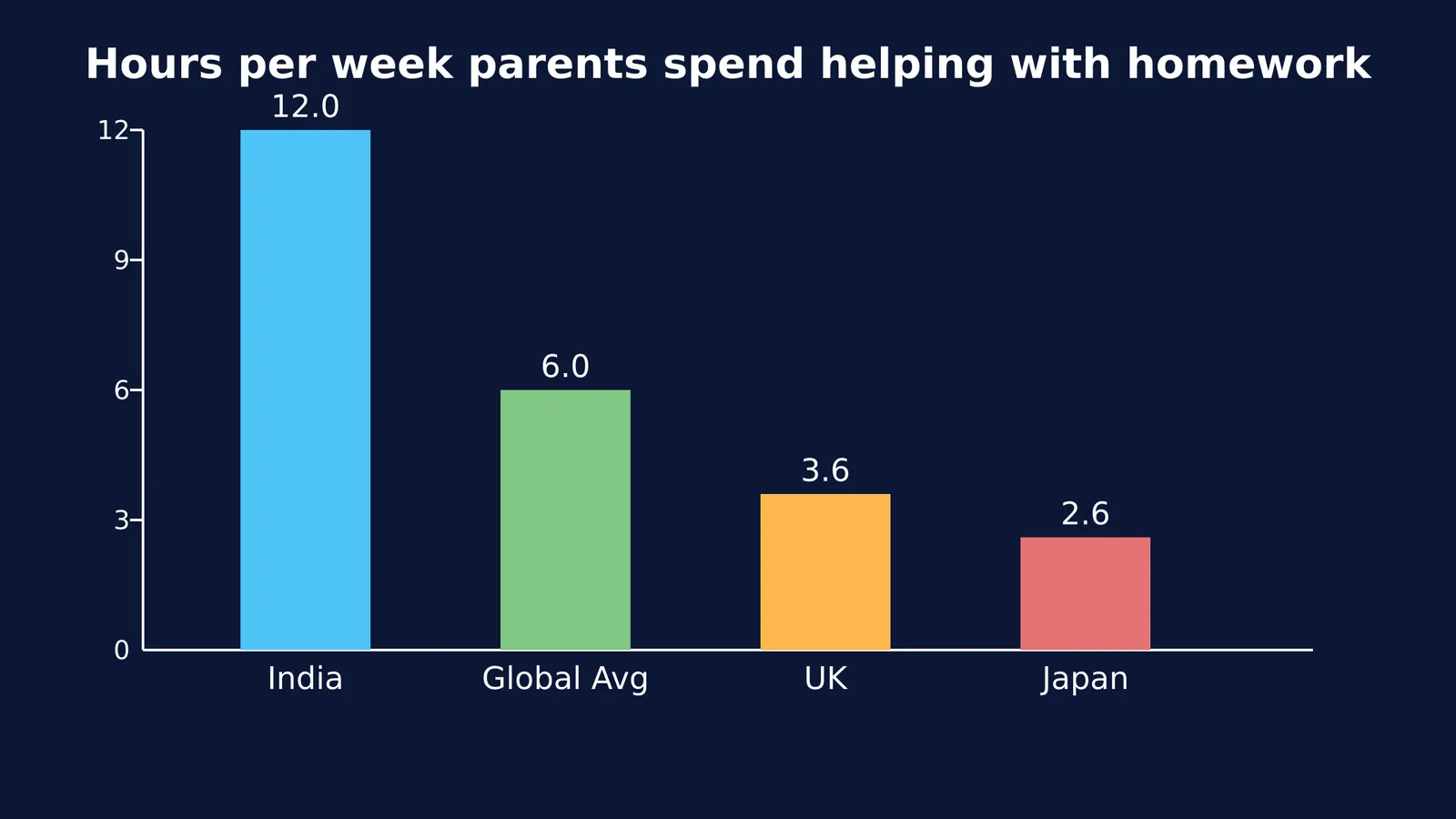
Regardless of where your child spends the afternoon, homework is usually waiting when you finish work. According to the Varkey Foundation’s 2018 Global Parents’ Survey, Indian parents spend an average of 12 hours a week helping their children with schoolwork—the highest globally (World Economic Forum).
If your child stays with a grandparent, a neighbour, or attends an activity class, this massive academic effort falls entirely on your evenings. Instead of relaxing with your family, you spend your time deciphering physics concepts or maths problems. This is where technology can step in. If your child is stuck on a difficult topic, Fermi's AI tutor works out what they already know, builds a plan for the session, and teaches through it — writing on a board and checking understanding as it goes. It shifts the burden of re-teaching from parents to a structured, interactive learning tool.
How do you build a hybrid after-school routine?
Many families find that no single option works every day of the week. A hybrid routine—such as three days with grandparents for comfort and rest, and two days at a specialized activity center for skill building—often strikes the best balance for both the child and the parent.
When building or reviewing your after-school plan, use this checklist (and see our guide to setting up a good study space at home: a parent's checklist):
Downtime: Does the daily schedule allow for at least an hour of completely unstructured rest?
Logistics: Can you easily manage the travel between the school, the care location, and your home without adding daily stress to your commute?
Academic support: Who guides the child when they struggle with tough assignments, and do they have the right tools available?
Backup plan: What happens if the primary caregiver is sick, the school bus is late, or the day care center is closed for a local holiday?
By deliberately balancing emotional care, skill-building activities, and academic support, you can create a reliable routine that works for your child and protects your own time and career. For more ideas on managing evenings peacefully once everyone is home, see how to introduce a family quiet hour: setting up shared study and reading time.
To see how you can move homework help off your evening plate, explore the Fermi Problem Library.


