On this page
With digital tools lowering the barriers to entry, many teenagers are not waiting until they grow up to start a business. A 2025 study in the International Journal for Multidisciplinary Research found that digital tools have empowered a new generation of high school students to launch and manage businesses from their homes. Whether they want to sell handmade crafts, edit videos, or offer local pet-sitting, a small business is a powerful way for them to learn about money, resilience, and responsibility.
However, parents often wonder how to support these early ambitions without taking over the project or letting it consume the time meant for studying and sleep.
My teenager wants to start a small business: where do we start?
The most important step is to let them lead. You are there as a mentor, not a manager. Help them outline a simple plan that keeps financial risk low. Service-based businesses, such as tutoring or social media management for local shops, require almost no upfront cash.
If they are making and selling physical items, they will need some initial supplies. Encourage them to use their own pocket money or offer a small, formal family "loan" that they must pay back from their sales. This makes the venture feel real and teaches them the cost of starting up.
How can a teen learn the basics of budgeting?
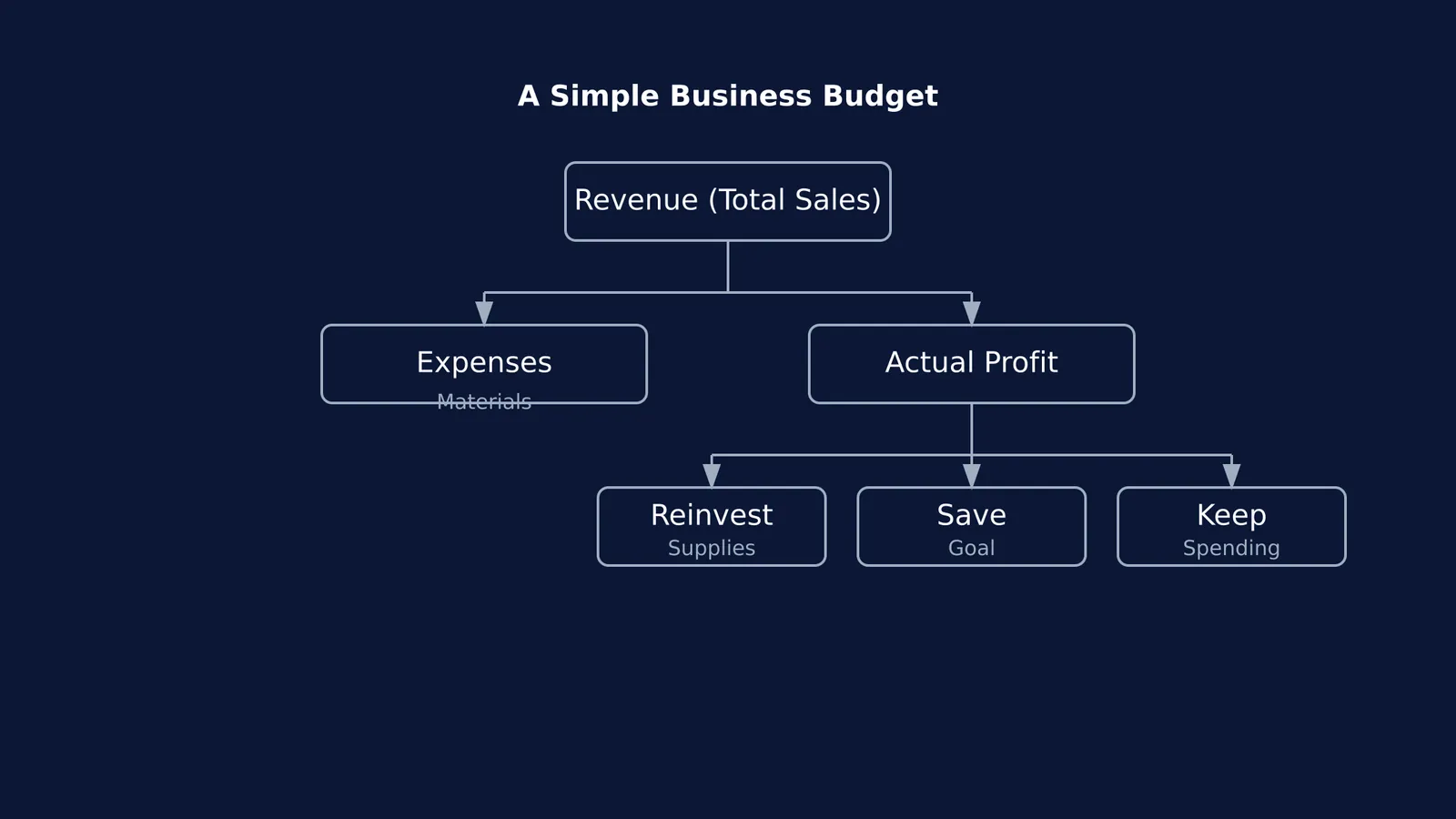
A business budget does not need to be a complex spreadsheet, but it must teach the difference between revenue and profit. Teenagers often assume that every rupee handed to them by a customer is theirs to spend.
Help them set up a system to track their money:
Record every expense: They must subtract the cost of materials, packaging, and transport from their total sales to find their actual profit.
Split the profits: Adapt a simple rule for their earnings. For example, they might put half back into buying more supplies, save some for a long-term goal, and keep the rest as spending money.
Keep money separate: If possible, help them open a dedicated teen savings or checking account. Mixing business money with personal cash makes it impossible to track whether the venture is actually making a profit.
How do we set time limits and balance schoolwork?
Running a business can easily become all-consuming. Before they launch, sit down together and agree on non-negotiable boundaries.
School, sleep, and family commitments must come first. You can treat their venture like a demanding hobby; as discussed in our review of whether sports and hobbies hurt marks, structured outside interests can actually improve focus if managed well, provided the student does not sacrifice rest.
Agree on a maximum number of hours they can work on the business each week. Ask them to log these hours. Tracking time not only prevents burnout but also helps them understand the true value of their labour. If they spend hours to make a small profit, it is a valuable lesson in pricing and efficiency. If they struggle to stick to the schedule, try teaching your child to plan their time to help them divide their week into clear blocks for school and work.
How can they keep their studies on track?
When your teenager is balancing a small business with a full school timetable, efficient study time is critical. They do not have hours to waste staring at a blank page or getting stuck on a hard assignment.
If they bring a challenging physics or maths problem set to Fermi's AI tutor, it works out what they already know and builds a plan for the session. This means they sit down to a clear next step, and the tutor teaches through a line of reasoning—writing on a board and checking understanding as it goes—rather than printing an answer. It keeps their learning active and focused, leaving them with enough time to manage their business safely.