

On this page
It is a common milestone in many families: a teenager, usually around Class 9 or 10, asks for their own room to study. In the middle of board exam or competitive exam preparation, the living room feels too noisy, and sharing a room with a sibling becomes frustrating.
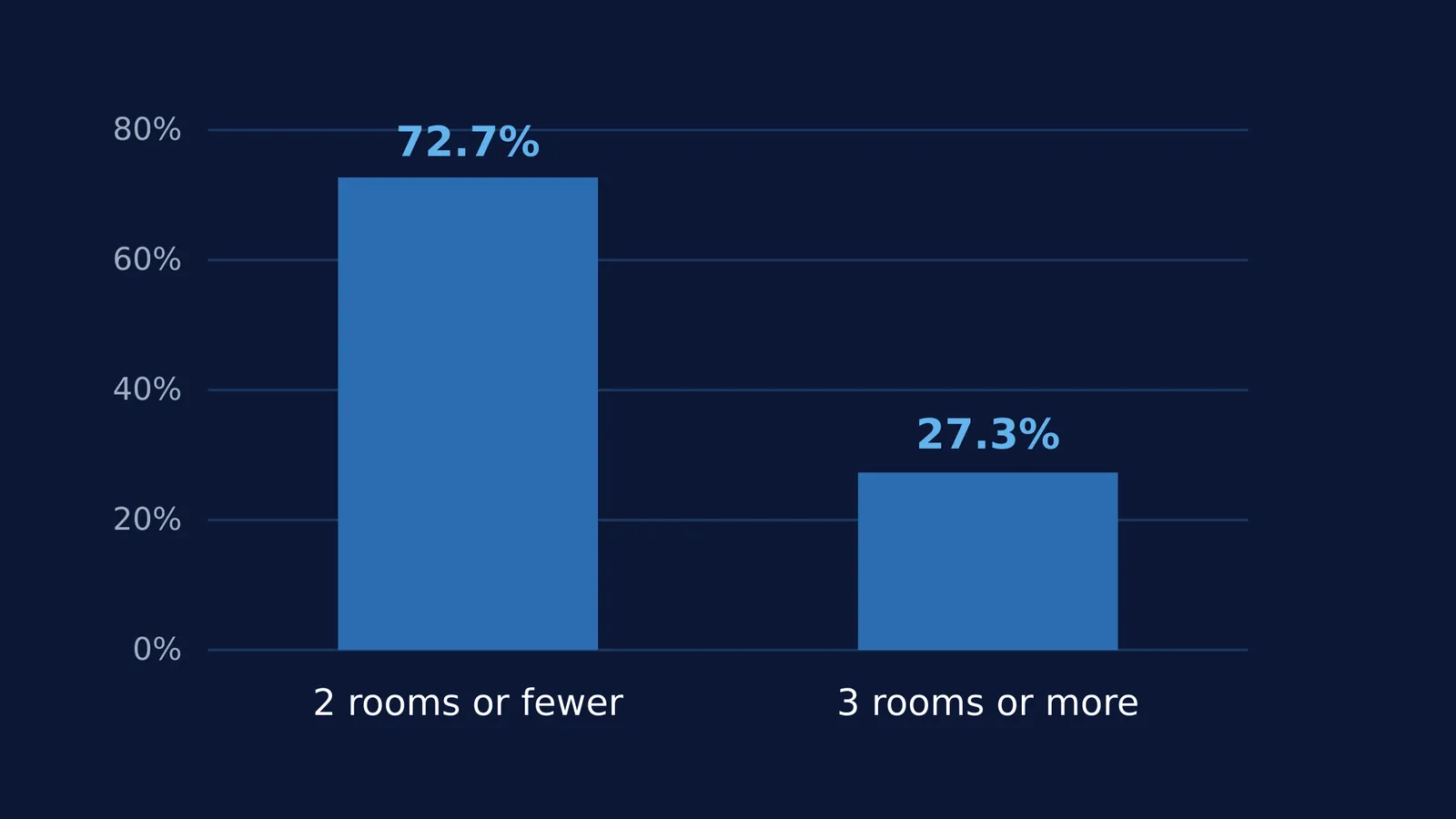
However, for most Indian families, providing a separate room is simply not an option. According to the 2011 Census of India, 72.7% of households live in houses with two rooms or fewer 1. When space is physically constrained, how do you give a teenager the privacy and focus they need to learn?
Why do teenagers ask for a study room?
Before rearranging the furniture, it helps to understand what your child is actually asking for. Often, it is a mix of developmental psychology and practical necessity.
Psychologically, adolescence is a time when the need for autonomy grows. Research in the *Journal of Adolescence* shows that parental monitoring is positively associated with feelings of privacy invasion 2. Even when a parent is just walking through the living room to check if the student needs a cup of tea, it can feel intrusive. They want to feel trusted to manage their own time and their own mistakes.
Practically, they are asking for focus. Environmental noise significantly increases cognitive load, reducing a student's learning efficiency 3. A teenager doing complex physics numericals needs to hold several variables in their head at once. A younger sibling watching television, or a conversation happening in the next room, breaks that focus instantly. They need an environment that does not force their brain to work overtime just to pay attention.
How can you create a study zone without an extra room?
If you cannot build walls, you can build boundaries. Here is a practical framework for setting up a good study space at home when sharing a busy house.
Set time boundaries instead of physical ones. When space is shared, time must be divided. Agree on a specific window, such as 7 PM to 9 PM, when the living room or shared bedroom is strictly for studying or reading. During this time, the television is turned off, and phone calls are taken outside or in another area. This approach is similar to creating a family quiet hour. It signals to the teenager that their work is respected, even if they do not have a private room.
Use sensory cues to signal focus. A study space does not have to be a whole room; it can be a specific desk, a folding table, or even one end of the dining table. The key is consistency. The human brain responds strongly to environmental cues. Using the exact same spot, the same desk lamp, or noise-cancelling headphones every time they study creates a psychological boundary. When the headphones go on or the lamp turns on, it signals to both the student's brain and the rest of the family that they are in "study mode." Over time, this makes starting a study session much easier.
Remove the need for a hovering tutor. Often, the friction in shared spaces comes from a parent constantly checking if the student is stuck, or from the stress of waiting for a private tutor in a busy house. The teenager feels watched, and the parent feels anxious about their progress. This is where technology can step in to provide academic privacy. Fermi's AI tutor can work out what they already know and build a plan for the session, so they sit down to a clear next step. Because the tutor teaches, draws the figure, and explains the reasoning rather than just printing an answer, parents do not need to oversee the homework process. The student gets the independence they crave, which is a key part of how to help children learn without pressure.
What should you say to your teenager?
If your child asks for a room you cannot provide, avoid dismissing the request or feeling guilty. Acknowledge the real need behind the ask.
By treating the request as a shared problem to solve, you give your teenager the autonomy they need, while maintaining a healthy atmosphere for the whole family.


