On this page
There is no set age when a child suddenly becomes ready to stay home alone. The decision depends less on their birthday and more on their maturity, their ability to follow rules, and how safe they feel.
While Indian law does not specify an age, international guidelines offer a benchmark. The UK's National Society for the Prevention of Cruelty to Children (NSPCC) generally advises that children under 12 are rarely mature enough to be left alone for long periods.
Before you hand over the house keys, you need to know if they have the skills to handle the unexpected.
Is my child ready to stay home alone after school?
A child might be academically brilliant but still panic if the power goes out. Readiness is about practical judgment and emotional maturity.
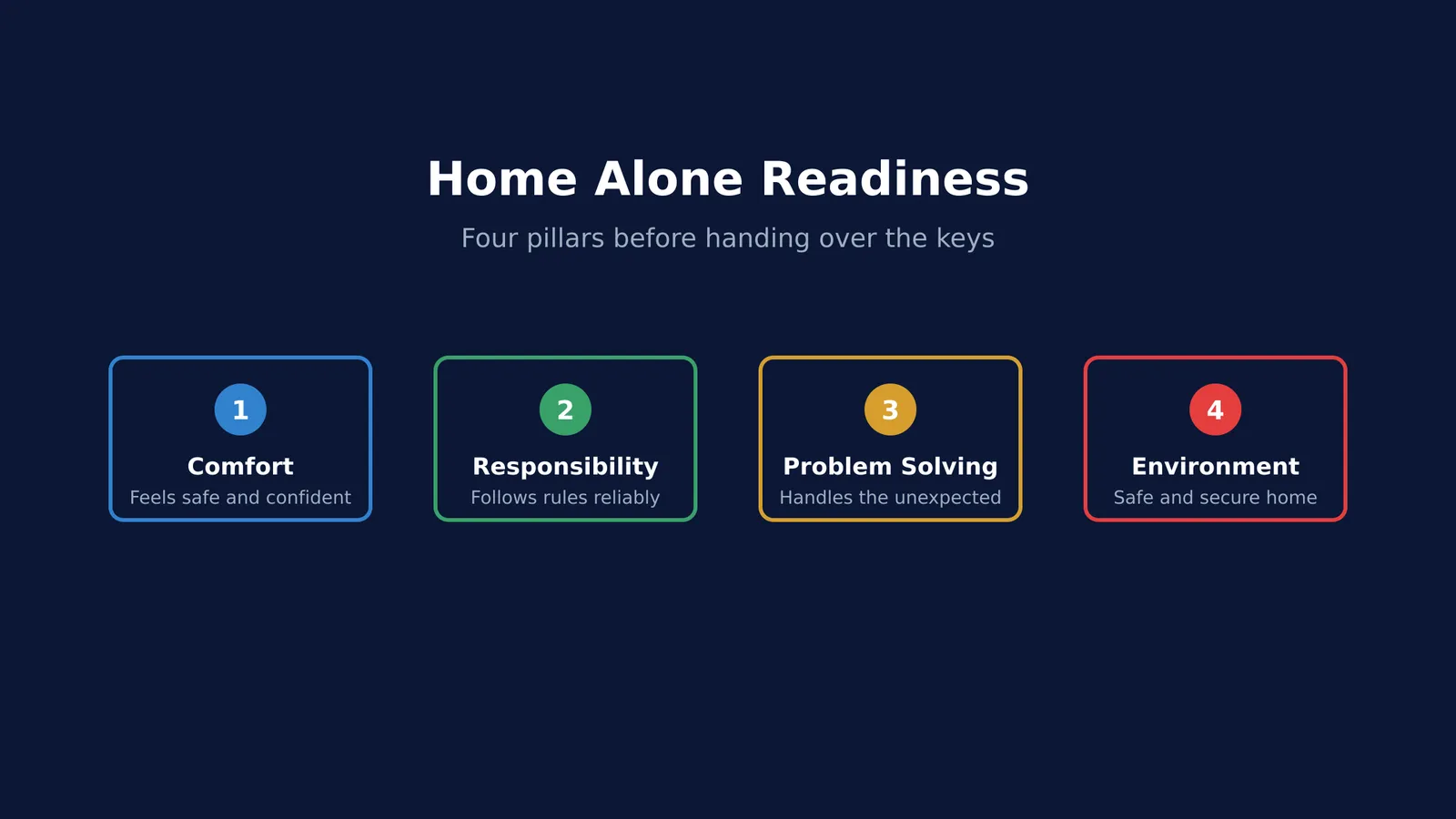
Consider these factors before deciding:
Comfort level: Do they want to stay home alone? If they are frightened, anxious, or hesitant about the idea, they are not ready.
Problem-solving: Do they know what to do if they lose their key, if the smoke alarm sounds, or if a stranger knocks?
Responsibility: Do they reliably follow instructions, such as coming straight home from school, doing their chores, and calling you when they arrive?
Sibling dynamics: If they are staying home with a younger brother or sister, consider whether they get along. The NSPCC notes that while there is no legal age to babysit, parents remain responsible if the older sibling is under 16.
If your child's after-school routine involves independent study, they might get stuck on a difficult maths or physics problem. When they do not know how to move forward without you there, Fermi's AI tutor can step in. It holds a line of reasoning across a session, notices where a student is stuck, and teaches rather than simply printing an answer. This keeps their study session productive while you are away.
What are the rules for staying home alone?
Clear boundaries prevent small mistakes from becoming emergencies. Establish "non-negotiable" rules and write them down so there is no confusion.
The check-in rule: They must call or text a parent the moment they walk through the door.
The door rule: They should not open the door to anyone, even if it is a delivery person or a neighbour, unless previously agreed upon.
The kitchen rule: Decide what they are allowed to cook. Often, the stove and sharp knives are off-limits, with snacks restricted to fruit, sandwiches, or microwave items.
The digital rule: Set boundaries for internet use and remind them never to post on social media or tell online friends that they are home alone.
The visitor rule: Be explicit about whether friends are allowed over. At first, it is usually safest to ban guests entirely.
How can we make the home safer?
Before leaving your child alone, take time to secure the house. Ensure that all smoke alarms are working correctly and that your child knows what they sound like. Lock away any potential hazards, such as medications, cleaning supplies, and sharp tools, especially if younger siblings might be present. Check that all doors and windows have secure locks that your child can easily operate from the inside. Creating a safe physical environment reduces the chances of an accident and gives both you and your child peace of mind.
How should we practice staying home alone?
Do not make their first time alone a three-hour stretch. Build their confidence with a graduated trial period, following advice from the NSPCC.
Step 1: The 20-minute test. Start by leaving them alone for just 20 minutes while you run a quick errand nearby. This is a low-stakes way to see how they feel in an empty house.
Step 2: The "what if" game. When you return, discuss hypothetical scenarios. Ask, "What would you do if the doorbell rang?" or "What if you smelled something burning?" This tests their judgment without real danger.
Step 3: Extending the time. If the short trial goes well, increase the time to an hour. Ensure they know how to reach you and that you remain available by phone the entire time.
Once they handle these shorter periods responsibly and use their home study space effectively, you can gradually transition to the full after-school block. Setting up a predictable study routine that lasts will keep them occupied and focused until you return. If you want to make their after-school time even more structured, consider implementing a family study hour later in the evening so they know when they will have your full attention for schoolwork.