On this page
It is increasingly difficult to shield children from violent or scary content online. A 2024 report by the Youth Endowment Fund found that 70% of teenagers (ages 13–17) had seen real-life violent content online in the past year. This includes footage of physical fights, weapons, and sexually violent content.
Many parents assume their children are actively seeking out this material, but the data shows otherwise. In the same study, 25% of teens who saw violent content reported that it was pushed to them by platform algorithms on their newsfeeds or "For You" pages, while only 6% actively searched for it.
There is also a significant awareness gap between what children experience and what parents know. According to a 2024 survey by Internet Matters, 21% of children report seeing violent content online, but only 14% of their parents are aware of it.
If your child stumbles across a disturbing video, how you react in the first few minutes matters.
What to say after a child sees a disturbing video?
When a child tells you they saw something scary or violent, your first instinct might be to panic, confiscate the device, or get angry at the platform. However, experts from the American Academy of Pediatrics (AAP) recommend a calm, supportive approach.
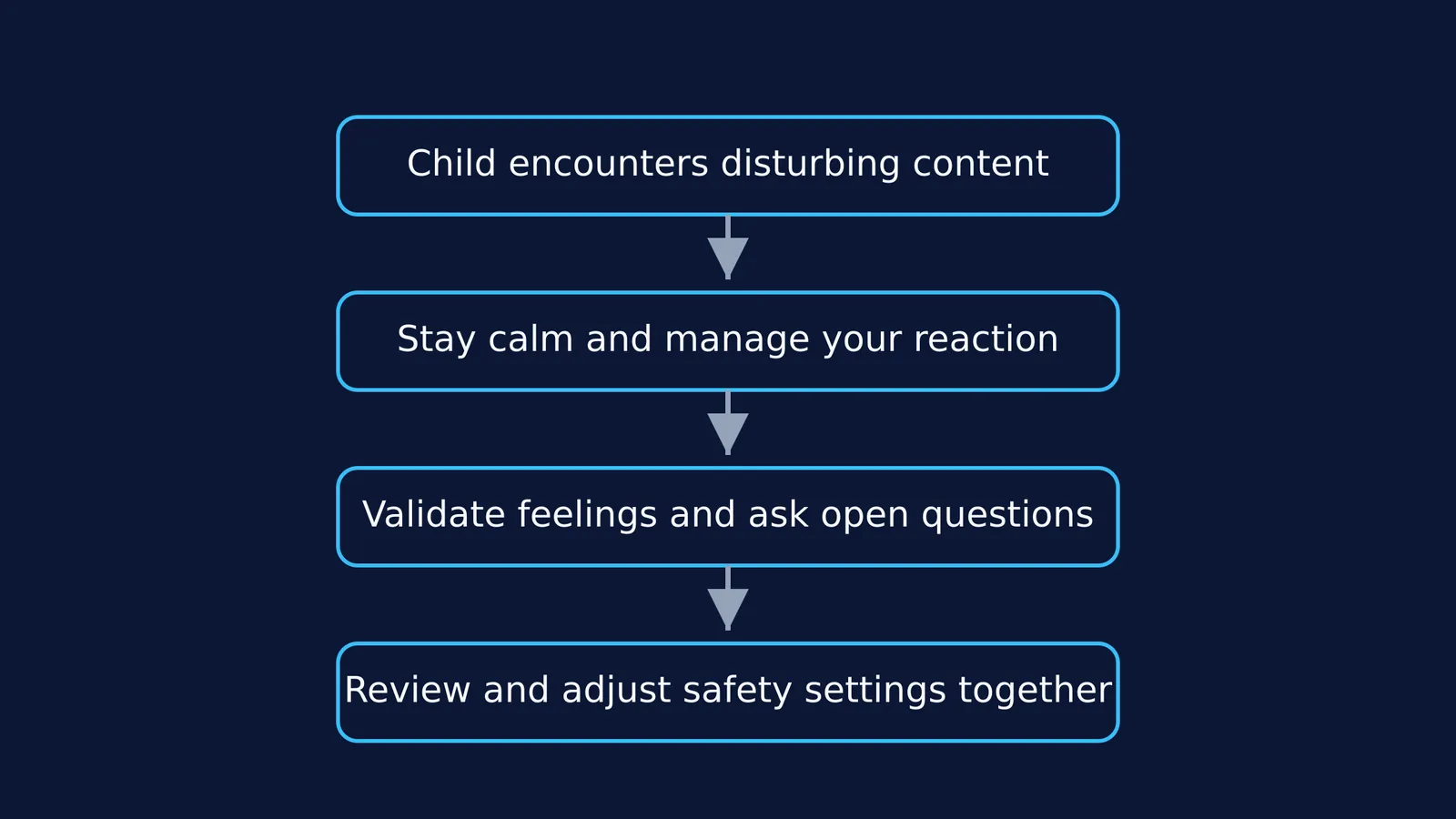
Manage your own reaction: If you react with extreme distress or anger, your child may feel ashamed and avoid coming to you next time. Take a deep breath before you respond, and remember that they came to you for comfort, not punishment.
Validate their feelings: Acknowledge that it is normal to feel scared, confused or physically sick after seeing upsetting content. Reassure them by saying, "I'm glad you told me," and "It's not your fault that you saw this."
Ask open-ended questions: Instead of lecturing or asking accusatory questions like "Why were you looking at that?", simply listen. Ask, "How did that video make you feel?" or "What did you think about what you saw?"
Provide age-appropriate context: For younger children, explain that people sometimes post things that are not true or are meant to scare people. If the video contained fake news or a scary myth, gently explain the reality. For older teenagers, you can discuss how algorithms often promote extreme content just to keep people engaged.
Do not reshare: Explain to teenagers why they should not share the video in their group chats. While they might want to share it out of shock or to warn friends, doing so only spreads the panic and harm further.
How can you adjust settings to reduce the risk?
You cannot make the internet perfectly safe, but you can drastically reduce accidental exposure by adjusting platform settings. Take practical action together with your child, which helps them feel more in control.
Report and block: Show your child how to report the specific video to the platform and how to block the account that posted it.
Turn on safety modes: Enable Restricted Mode on YouTube and SafeSearch on Google. On social media, use features like TikTok's Family Pairing or the Family Center on Instagram and Snapchat to limit sensitive content.
Focus on safe platforms for learning: When children use the internet for schoolwork, guided environments reduce the chance of them falling down an algorithmic rabbit hole. For instance, Fermi's AI tutor holds a line of reasoning across a whole session, notices where a student is stuck, and decides whether to explain, ask, or show, keeping them focused on their work rather than searching the open web.
If you are setting up a new device for school, you might also want to review privacy in learning apps: what parents should check in India, and establish clear family rules for phones and homework.
When should you seek professional help?
Keep an eye on your child's behaviour over the next few days. Some children process upsetting events slowly and may come back with new questions a week later.
Look out for signs of distress that linger. If your child experiences persistent nightmares, intense anxiety, sudden clinginess, or a change in appetite and behaviour that lasts more than a few weeks, the AAP suggests consulting a paediatrician or a mental health professional. In India, you can call the national Tele MANAS helpline on 14416 for free, confidential mental health support. Knowing when to get outside support is a key part of managing exam stress in teenagers and everyday anxiety.