On this page
Your child saw flood footage on a phone or caught war coverage over dinner. Now they are asking whether it could happen to them. Children cope better when an adult they trust explains things calmly, cuts down the replays, and shows them who is helping.
Why does bad news scare children so much?
How much coverage a child sees matters. A 2012 study in Psychological Science followed 141 schoolchildren in grades 4 to 8 who had lived through Hurricanes Katrina and Gustav, checking on them before and after Gustav. The more TV coverage of the disaster they watched, the more stress symptoms they had afterwards, even after accounting for their symptoms before the storm. The link was strongest in children who already had more stress symptoms beforehand.
Adults are affected too. In a survey of 4,675 US adults after the Boston Marathon bombings, repeated media exposure was linked to higher acute stress than being at or near the bombings.
What should I say to my child about a flood, accident or war?
Start by finding out what they already know. UNICEF's advice on talking about conflict suggests choosing a natural moment, such as a family meal rather than just before bedtime, asking what they know and how they feel, and accepting that it's OK not to have every answer. Then match the detail to their age. The American Academy of Pediatrics says even the youngest child needs accurate information, not something vague. For school-age children and teens, it suggests saying what happened, where, and that the authorities are working to stop it happening again.
Here is how that can sound:
Under 6: "There was a big flood in another state, far from here. Heavy rain filled the rivers, water came into houses and people had to move somewhere dry. Lots of grown-ups are helping them. You are safe here with me."
6 to 11: "A bus crashed on a highway and some people were hurt. Ambulances came quickly. The police will check what went wrong so it doesn't happen again. Is anything you heard still worrying you?"
12 and up: "There's a war between two countries. Many families have had to leave home, and aid groups are getting them food and shelter. What have you seen online about it? Let's check where it came from."
How much news should my child see?
The AAP's guidance is to keep young children away from repetitive graphic images and sounds on TV, radio and social media, and to preview coverage before watching it with older children, pausing to talk. UNICEF calls this limiting "the flood of news" and suggests switching off the news around younger children.
A simple plan for a week when a big story is breaking:
Turn off TV news while young children are in the room.
For older children, choose one short, trusted update a day and watch it together instead of letting clips autoplay.
Agree that phones go away before bed, so the last thing they see isn't a disaster video. Our post on setting screen-time rules at home shows how to agree on limits.
Keep ordinary routines going: school, play, meals together.
How do I help them focus on helpers and safety?
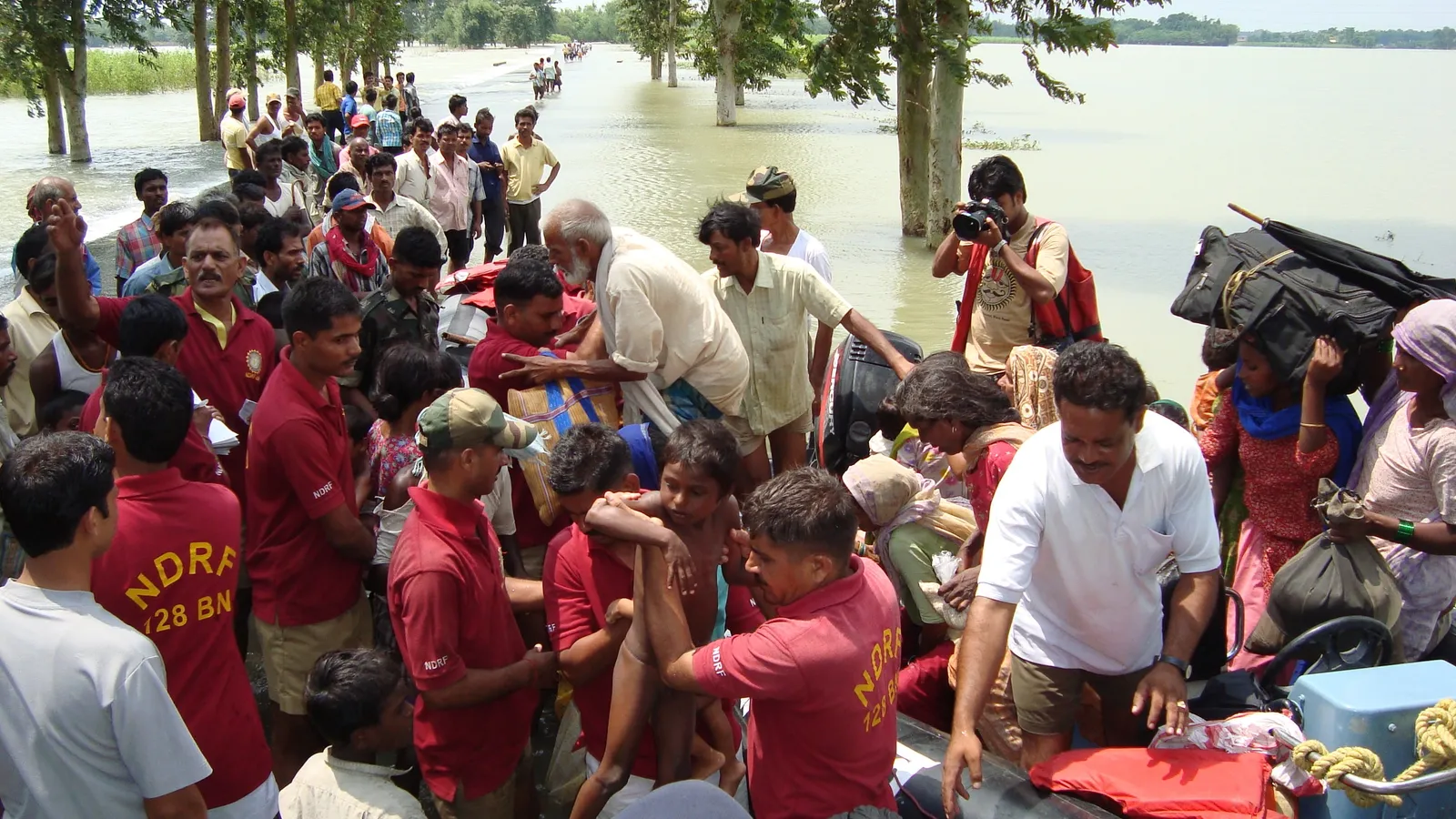
Fred Rogers, the American children's TV presenter, recalled that when he saw scary things in the news as a boy, his mother would tell him: "Look for the helpers. You will always find people who are helping." The quote appears on PBS's page on helping children with scary news. In an Indian flood, the helpers might be rescue teams in boats, doctors, or neighbours cooking for relief camps.
UNICEF notes that "the sense of doing something, no matter how small, can often bring great comfort." Your child could draw a card or pack a box of supplies. Then make safety concrete: show them where the emergency numbers are kept.
Some older children want to understand how a disaster happens. If your teenager asks why rivers overflow, treat it as a real question. Our post on encouraging a child's curiosity has ideas, and the Fermi Concept Library has a lesson for every concept in physics, chemistry, biology, mathematics and computing if they want to go further.
When should I get help for a scared child?
The AAP lists signs that a child is not coping well: sleep problems, physical complaints, changes in behaviour, and emotional problems such as sadness, anxiety or fears. If you are concerned, it suggests talking to your child's paediatrician, teacher, or a mental health professional. Children often hide distress, so keep the conversation going.
In India, IIT Kanpur's counselling page describes Tele MANAS, a free national helpline from the Ministry of Health and Family Welfare offering counselling, emotional support and referrals.
For more on spotting when worry needs a professional, see when to get help for exam stress.
Tonight, ask one open question, such as "What have you heard about the floods?", and listen before you answer.