

On this page
When a school switches a student from a morning shift to an afternoon shift, the change can feel disruptive. Parents often worry about when their child will find time for homework, self-study, and play if they are at school from midday until evening. However, with a thoughtful reset, an afternoon shift can actually be a healthy schedule for a teenager.
Does an afternoon school shift affect academic performance?
The biggest fear parents have is that starting school at 12:30 PM or 1:00 PM will harm their child's grades. The evidence suggests otherwise.
A 2017 study of 400 secondary school students in a double-shift system found no difference in academic performance or intelligence between morning and afternoon shifts.
In fact, the afternoon shift offered a distinct biological advantage. The teenagers in the afternoon shift slept longer, reported a smaller sleep deficit, and experienced less social jet lag (the mismatch between their body clock and their weekday alarm clock). Because adolescent bodies naturally want to stay up later and wake up later, the afternoon shift aligns better with their natural chronotype. If you are curious about how timing affects focus, you can read more in our guide to morning or night study.
How to structure a daily routine for an afternoon shift?
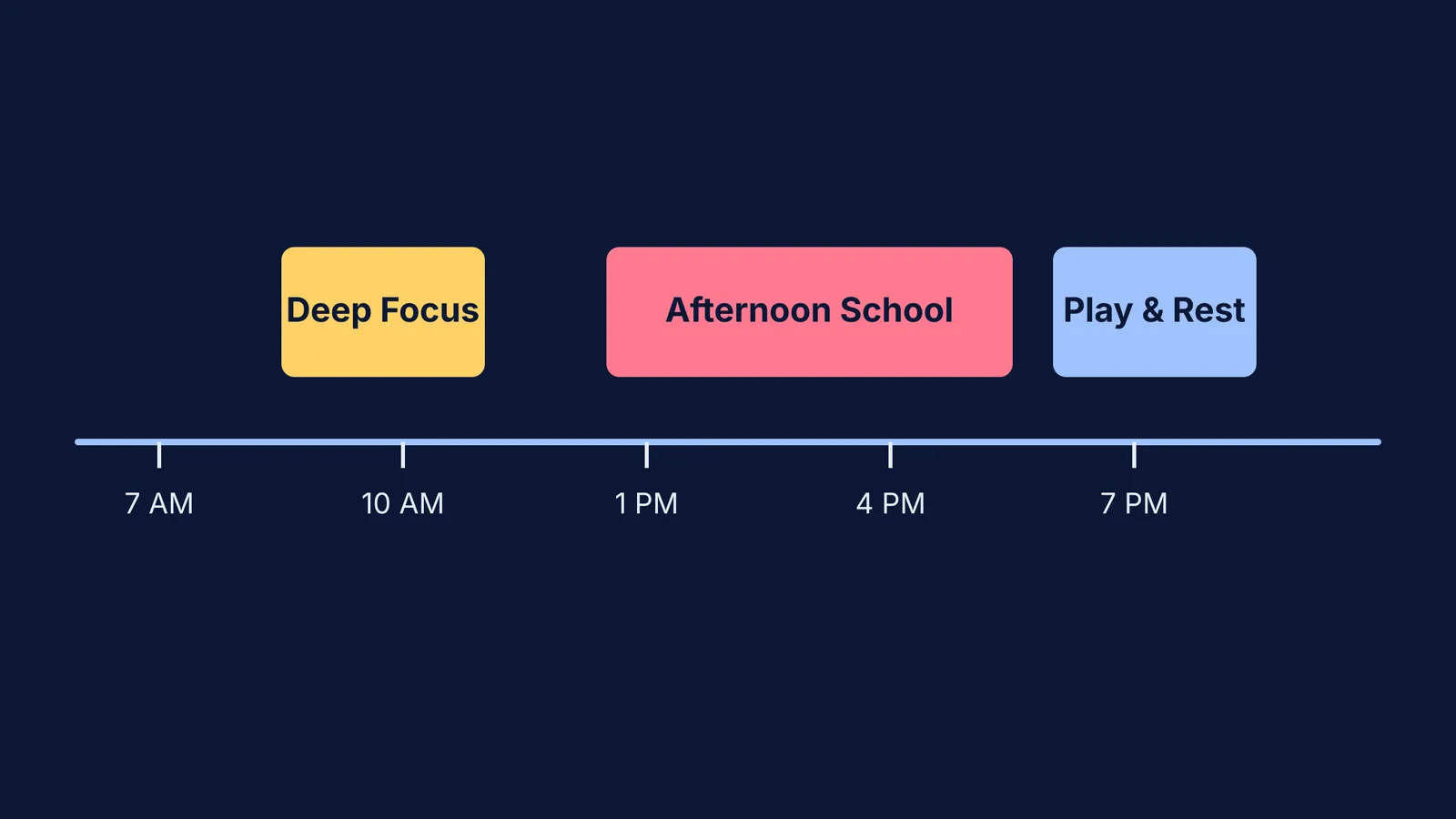
The trap of an afternoon shift is the "slow morning". If a child wakes up late and lounges around until it is time to leave for school, the day slips away. The key is to treat the morning exactly as you would an evening in a regular school schedule: this is the protected time for deep work.
Here is a practical framework for the day:
7:30 AM – Wake up and breakfast: Avoid the rush. There is plenty of time for a proper breakfast and getting ready.
8:30 AM to 11:00 AM – Deep focus and homework: This is the most crucial block of the day. Since the child is fresh, this time should be used for solving tough numericals, writing assignments, or preparing for exams.
11:30 AM – Early lunch: A nutritious meal before heading to school.
12:30 PM to 5:30 PM – School: The core academic day.
6:00 PM – Active play and unwind: After school, children need physical activity. This is the time for sports, cycling, or just relaxing.
7:30 PM – Light review or family time: Keep the evening light. This could be a time for reading or a shared family study hour.
Making the morning study session work
To make the morning block successful, the child needs a dedicated home study space free from the distractions of the house waking up.
Because they are tackling homework before they see their teachers, they might get stuck on new concepts. This is where having the right tools makes a difference. If they are working through physics or chemistry numericals and hit a wall, they can use the Fermi Problem Library. Instead of just printing an answer key, it provides a step-by-step solver that explains the reasoning, acting as a guide when the teacher is not available.
If they are struggling to start a broad revision session, Fermi's AI tutor can work out what they already know and build a plan for the morning, so they sit down to a clear next step.
Protecting the evening wind-down
When a child returns from an afternoon shift at 5:30 PM or 6:00 PM, they are often mentally exhausted. In a traditional morning shift, this would be the time they sit down to do homework. In an afternoon shift routine, this habit must be broken.
Trying to force deep concentration after a full afternoon of classes leads to frustration and tears. Instead, the evening should be protected for decompression. Encourage active outdoor play, which helps clear the mind and provides a necessary break from screens and books.
Dinner becomes a natural anchor for family time. Because the child has already completed their heavy academic lifting in the morning, the evening can be genuinely restful. If there is any schoolwork left to do, keep it strictly to light tasks: organizing the school bag for the next day, reading a novel for pleasure, or casually reviewing notes. By shifting the heavy cognitive work to the morning, the child goes to school already feeling accomplished and ends the day in a healthy, relaxed state.


