

On this page
When a child takes an interest in chess, parents often hope it is a shortcut to better grades, particularly in mathematics. The image of a child quietly calculating three moves ahead seems like the perfect training for school exams. But does pushing pawns actually translate to higher marks?
The research gives a nuanced answer. While chess is not a magic wand for mathematics, it teaches children how to sit still, think ahead, and tackle difficult problems without giving up. Understanding what the game can and cannot do will help you support your child's learning effectively.
Does teaching children how to play chess improve maths test performance?
In 2016, the UK's Education Endowment Foundation (EEF) published a major study to answer exactly this question. The trial involved 4,009 Year 5 pupils across 100 schools, where students received 30 hours of chess lessons over a year, delivered by experienced tutors, according to the Education Endowment Foundation.
The results were clear: there was no evidence that the chess intervention had a positive impact on mathematics attainment. The difference in test scores between pupils who received chess lessons and those who did not was essentially zero. The study also found no positive impact on reading or science scores.
Crucially, the EEF trial measured the impact one year after the intervention ended, aiming to see if chess produced a lasting rise in national test performance. The researchers concluded that while children enjoyed the game, schools should not expect chess lessons to raise pupil attainment in the medium or long term.
Does chess help children in studies?
While the UK trial showed no direct boost to maths scores, other research highlights broader benefits. A 2016 study of 100 sixth-grade students in rural India found that one year of chess training led to significant improvements in English, social studies, and science compared to a control group, as published in the Open Journal of Social Sciences. In fact, the experimental group outperformed the control group in all subjects except Tamil.
This suggests that chess may not teach mathematics itself, but it can help bridge cognitive gaps. The true value of the game lies in the study habits it builds. When a child learns to analyze a chessboard, they are practicing how to break a large, complex situation into smaller, manageable steps. They learn to evaluate options, anticipate consequences, and make decisions under pressure.
How does chess improve focus and concentration?
Even though the EEF trial did not see higher maths scores, headteachers and class teachers were positive about the program. They reported visible improvements in pupils' concentration, confidence, and behavior.
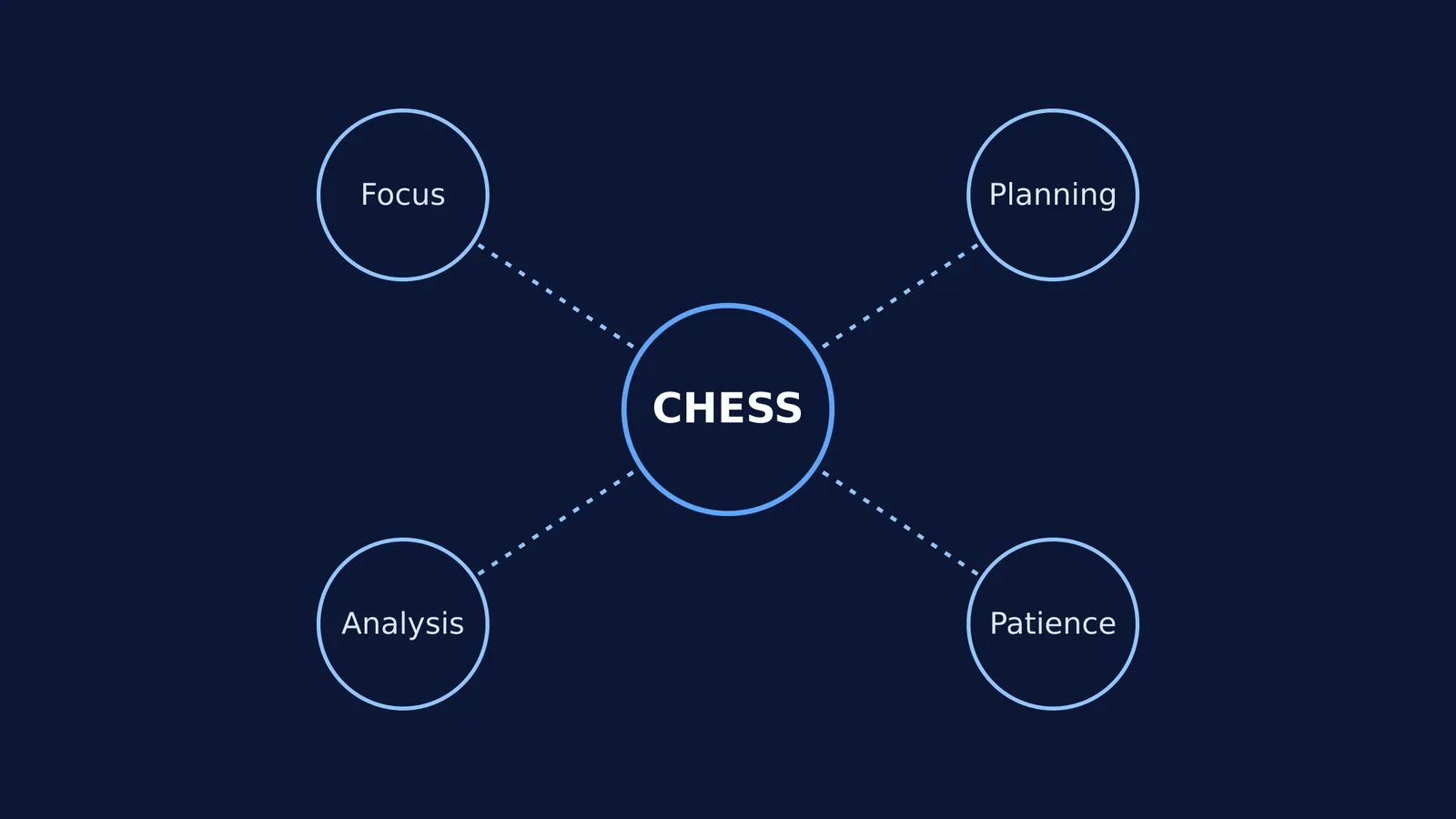
Chess forces a child to slow down. If they act impulsively, they lose their queen. This builds a tolerance for frustration and a habit of sustained attention—skills that are absolutely essential when revising for demanding subjects like physics or chemistry. A student who can sit at a chessboard for an hour without losing focus is building the stamina needed for long exams.
If your child struggles to apply that same focus to their schoolwork, they might need a different kind of engagement. When a student is stuck on a difficult concept, Fermi's AI tutor works out what they already know and builds a plan for the session. By holding a line of reasoning and asking questions rather than just printing the answer, it keeps them actively engaged, much like a good opponent over the board.
Should I replace study time with chess?
If your child is eager to play, you can use the game to build better study habits without letting it take over their timetable. Chess is a demanding mental activity, and treating it as a replacement for actual studying is a common mistake. Instead, use it as a tool to reinforce good habits.
Here is a practical plan for balancing chess and schoolwork:
Keep it recreational: Treat chess as a rewarding break rather than another academic task. Let them play for fun, without the pressure of having to extract a mathematical benefit from every game.
Draw parallels to school: When they rush a homework question, remind them to "look at the whole board" and take their time, just as they would before a major chess move.
Limit tournament stress: Competitive chess can be as demanding as exam prep. Ensure their weekend tournaments do not replace the rest they need to perform well in school on Monday.
Use chess to build stamina: If they can concentrate on a game for forty minutes, point that out to them. Show them that they already possess the ability to focus, and encourage them to apply that same endurance to their next study session.
Chess is a demanding game that builds character and patience. While it may not automatically raise their next maths grade, the focus they learn at the board will serve them well in every subject they tackle.
Read more about building focus and study habits:


