On this page
Many parents are thrilled to hear their child is breezing through school assignments, but that initial pride often turns to concern when the child starts complaining that class is "boring." When a bright child consistently finds schoolwork too easy, they are at risk of developing poor study habits because they never learn how to exert effort or push through frustration.
Is being bored in class normal for high-achieving students?
If your child frequently says they are bored, they are not alone. A study by the Thomas B. Fordham Institute found that 73% of teachers agreed that "too often, the brightest students are bored and under-challenged in school."
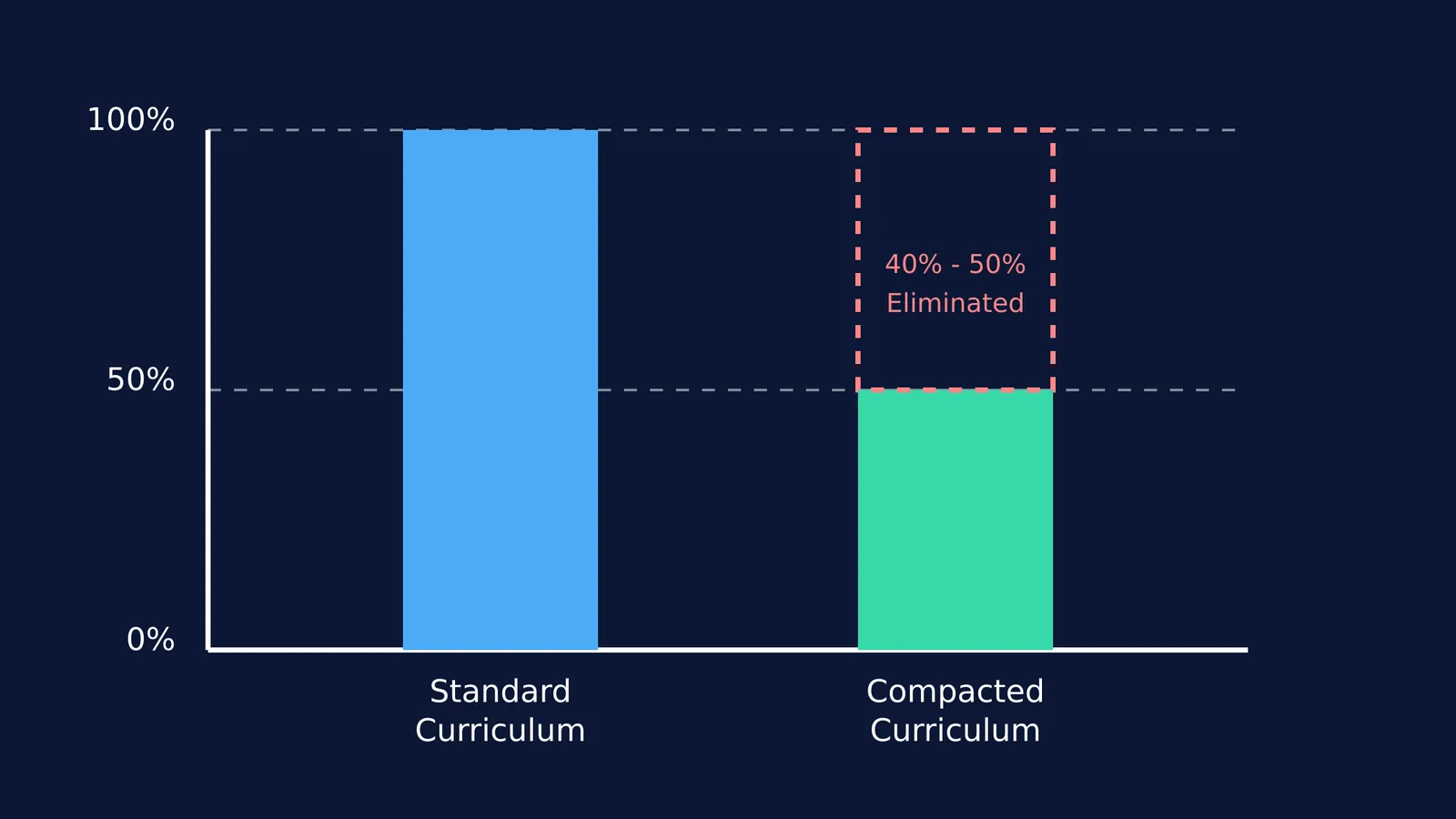
The core of the problem is that standard classroom pacing is designed for the average student. Prominent research on curriculum compacting from the University of Connecticut's Neag Center for Gifted Education and Talent Development found that approximately 40% to 50% of traditional classroom material is redundant for gifted students because they have already mastered it. Crucially, the researchers noted that eliminating this redundant curriculum resulted in no decline in standardized achievement test scores.
When a child spends years without being academically challenged, they miss the opportunity to develop resilience. Later, when they encounter genuinely difficult material in high school or university, they often lack the study routines needed to succeed.
What should I tell the teacher if the work is too easy?
The first step is to partner with your child's teacher. Instead of simply stating that your child is bored—which can sound like a criticism of their teaching—focus on the fact that your child is finishing early and needs a greater challenge.
Avoid asking for "more work." Giving a child twenty easy math problems instead of ten does not challenge them; it just feels like a punishment for finishing quickly. Instead, ask for "different work."
Teachers are often stretched thin, so offering to help facilitate these changes can be very effective. You might also want to read our guide on helping children learn without pressure to ensure you are setting a supportive tone. For older students making long-term decisions, our article on coaching, online classes or self-study for JEE explores how to match the learning environment to the student's pace.
How can I challenge my bright child at home?
If the school curriculum is moving too slowly, you can introduce stretch activities at home. The goal is not to force them to skip ahead to the next grade's curriculum, but to go deeper into the subjects they already enjoy.
If your child is interested in science and mathematics, they need tools that allow them to explore at their own pace. This is where you can introduce them to university-level concepts, provided the teaching adapts to their current level. For example, if they don't know where to start with an advanced physics topic, Fermi's AI tutor can work out what they already know and build a plan for the session, holding a line of reasoning to teach them rather than just giving away the answers.
Additionally, you can let them explore the Fermi Concept Library to see how the basic ideas they learn in school connect to much harder, real-world scientific problems.
Finally, remember that unstructured time is also a challenge. Allowing them to pursue their own hobbies—whether that is building complex models, writing stories, or learning to code—can provide exactly the kind of deep, self-directed learning they are craving.