On this page
It usually comes out late in the evening, over a page of factorisation: "Why do I even need to learn this?" It is a fair question. Psychologists call the sense that a subject is useful to you its utility value, and it can raise interest, especially when the link feels real to the student.
Does it help to tell my child why maths is useful?
Yes, with a catch. In a field experiment published in Psychological Science, Judith Harackiewicz and colleagues mailed parents of US high school students two brochures and gave them a website about why maths and science courses matter. Students whose parents got these materials took, on average, nearly one semester more of maths and science in their last two years of high school than the control group.
A follow-up of the same families in PNAS found the intervention raised students' maths and science ACT scores by 12 percentile points. Better high-school preparation was linked with more pursuit of STEM careers five years later.
The catch comes from lab studies. In Canning and Harackiewicz (2015), students learning a mental-maths technique were either told why it was useful or wrote about its usefulness themselves. Being told undermined interest and performance for students who lacked confidence; writing their own reasons helped. Those students also benefited more from everyday examples than from career and school ones.
A classroom study in Science points the same way: when high school students wrote about how science lessons connected to their lives, those who expected to do poorly benefited most.
These were US studies, so treat them as a guide, not a rule.
What are honest answers about algebra, geometry and science?
Honest answers come in three kinds. Pick the one that is true for the topic.
"You will use this." Some topics have everyday uses that are not a stretch.
"This is a tool for later." Some topics exist mainly because the next topic needs them.
"This trains a way of thinking." Some topics are practice in reasoning step by step, the way a batter's net practice builds skills a match only tests indirectly.
Real links that need no forcing:
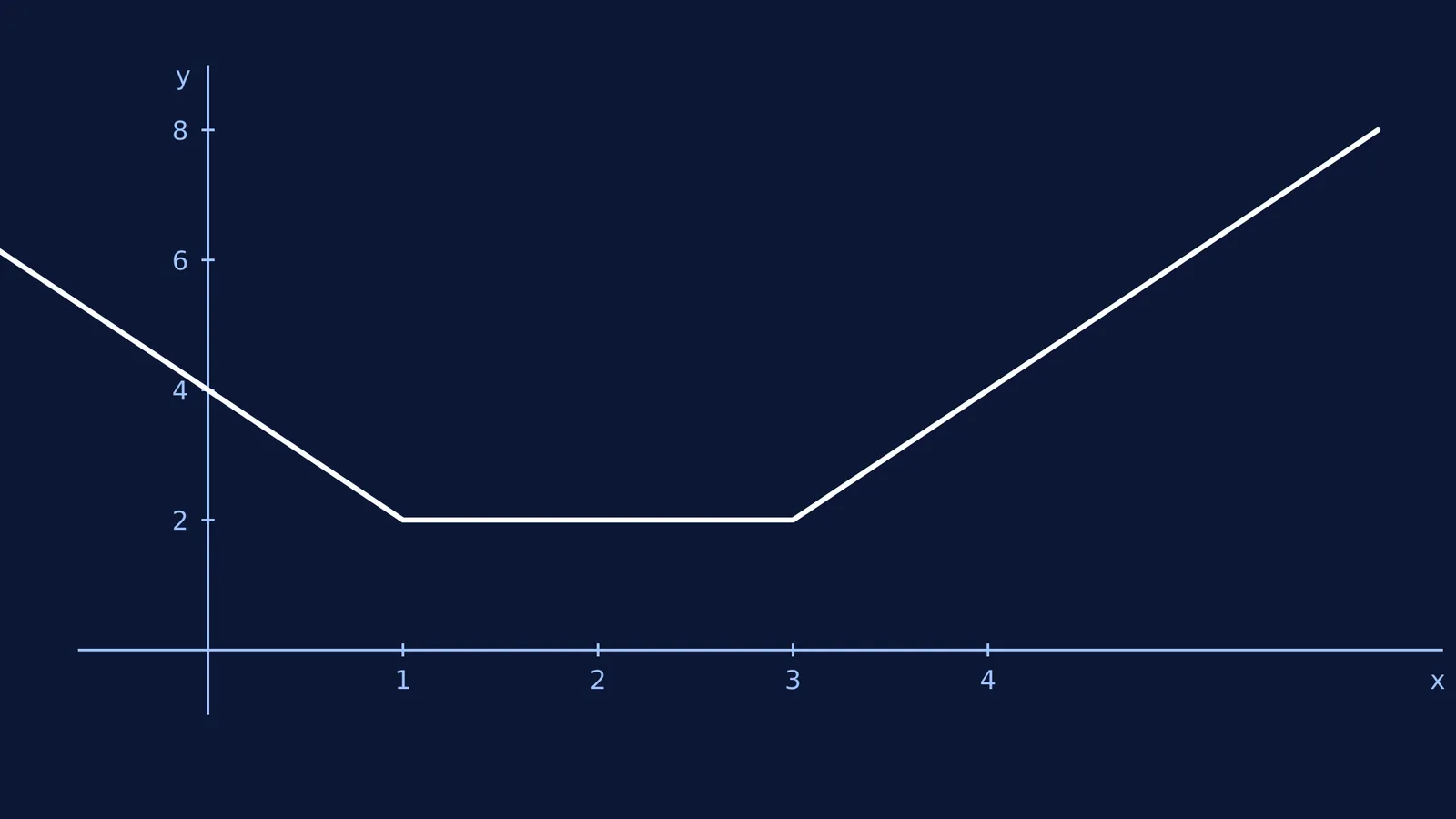
Algebra: a cab fare is often a fixed charge plus a rate per kilometre, which is a linear equation. If one ride costs Rs 30 plus Rs 15 per km and another Rs 50 plus Rs 12 per km (made-up numbers), solving 30 + 15x = 50 + 12x gives about 6.7 km. Go farther and the second is cheaper.
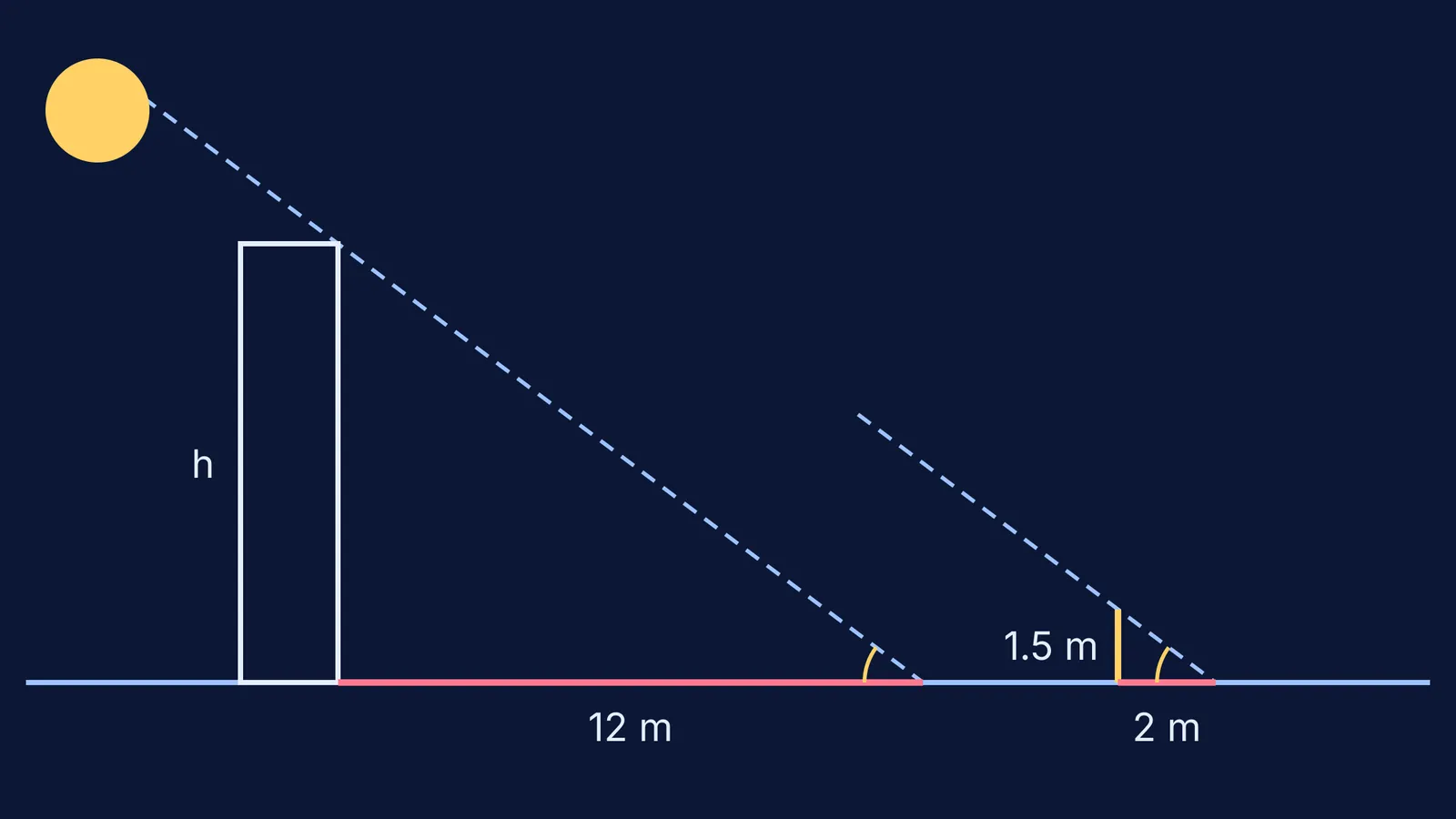
Geometry: similar triangles let you measure things you cannot reach, as in the example below.
Science: a pressure cooker cooks dal faster because higher pressure raises the boiling point of water, so the water gets hotter than in an open pot.
A worked example: how tall is that building?
Let your child do the measuring. On a sunny afternoon, stand a 1.5 m stick upright and measure its shadow: say 2 m. At the same time, measure a nearby building's shadow: say 12 m.
The sun's rays arrive parallel, so the stick and its shadow make a triangle the same shape as the building and its shadow. So height divided by 12 equals 1.5 divided by 2, which gives 9 m. Your child has measured something they could not reach, with school geometry.
When is it fine to say "this is for later"?
Often. Factorising quadratics and trigonometric identities rarely show up at the vegetable market. They come back in physics, where the distance an object falling from rest covers depends on the square of time, and forces are split into components using sine and cosine. Saying "this is a tool for the next thing" is honest. Inventing a shopping example is not, and children notice.
You can also point to the bigger picture. India's National Education Policy 2020 states in paragraph 4.25 that "mathematics and mathematical thinking will be very important for India's future", including in fields such as artificial intelligence, machine learning and data science.
If your child wants to see where a topic leads, the Fermi Concept Library gives every concept in physics, chemistry, biology, mathematics and computing its own lesson and its place in the map, so the "later" becomes something they can look at.
What can I say tonight?
A script to adapt:
Ask first: "Good question. Where do you think someone might use this?" Then wait.
If they find a link, build on it. If they cannot, offer one everyday example, not a career speech.
If there is no honest example, say: "This one is mostly a tool for what comes next. Let's get it solid so the next chapter is easier."
If you do not know, say so, and look it up together.
Notice whether the question really means "I'm stuck" or "I'm tired". Then the fix is help or a break.
If the question comes every night, read our guide on what to try when your child loses interest in studies, see how choice and autonomy build real motivation, or try talking about STEM careers beyond engineering and medicine.