On this page
Grandparents hold a unique place in a child's life, and their death is often the first major loss a child experiences. Explaining this loss is daunting for parents, especially when they are grieving themselves. However, the words you choose shape how your child processes their grief and eventually returns to their daily routine.
Why should you use the word "died"?
It is natural to want to soften the blow. Phrases like "passed away," "went to sleep," or "we lost him" feel gentler to adults. However, pediatric experts from the American Academy of Pediatrics warn against these euphemisms.
Young children are literal thinkers. If a grandparent "went to sleep," a preschooler might become terrified of bedtime. If they were "lost," the child might expect them to be found.
Instead, experts advise using the direct words "dead" and "died," followed by a simple, biological explanation. You might say, "Grandpa died. That means his heart was very old, it stopped working, and his body couldn't be fixed."
What to say at different ages?
A child's developmental stage determines how they perceive death. Adjust your explanation to match their understanding, as outlined by pediatric development guidelines.
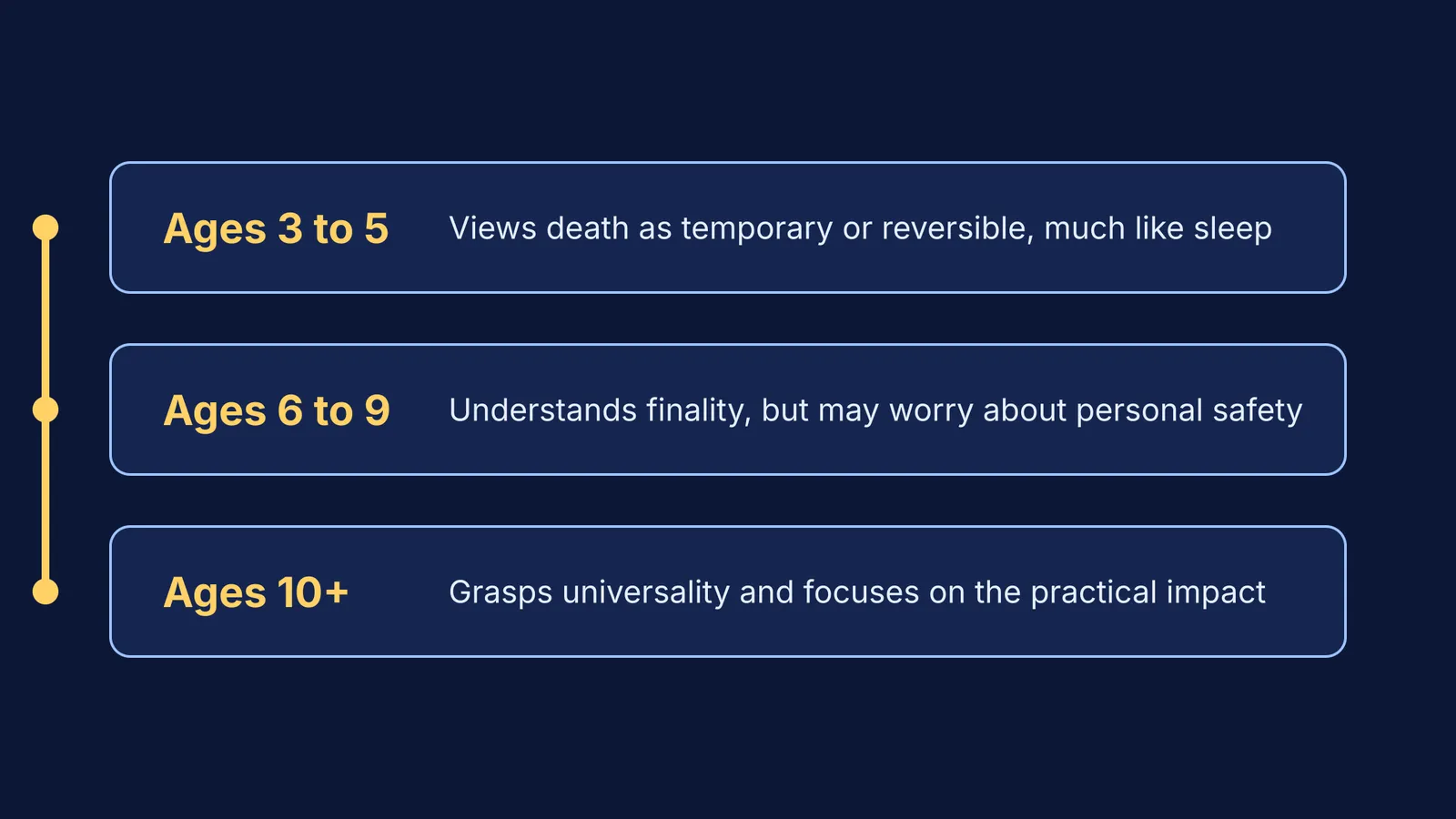
Under 5 years: They often see death as temporary or reversible. They may ask repeatedly when the grandparent is coming back. Be patient and gently repeat the simple truth.
6 to 9 years: Children begin to understand that death is permanent. They might worry about their own safety or yours. Reassure them that most people live a long time and that you are healthy.
10 to 12 years: Pre-adolescents grasp the finality of death but might focus on the practical impact: "Who will take me to football practice?" Answer these practical questions clearly to provide security.
Teenagers: Adolescents understand death like adults but may struggle to express their feelings, leading to internalized grief.
How does a grandparent's death affect teenagers?
The impact of this loss can be profound and long-lasting, particularly for older children who have formed deep bonds. A 2022 study published in *SSM - Mental Health* tracked thousands of families and found a stark generational consequence. The death of a grandmother led to a 50% increase in depressive symptoms for adolescent boys, an effect that persisted for up to seven years.
Researchers suggest that boys may be particularly vulnerable because they often feel social pressure to hide their sadness. Parents should watch for changes in behaviour, withdrawal from friends, or a sudden drop in school performance, rather than expecting teenagers to vocalise their grief clearly. If you notice signs of severe distress, consider reading our advice on everyday support for exam stress in teenagers, and when to get help or contacting a professional helpline like Tele MANAS (14416).
How to help a grieving child return to school?
After a loss, returning to school and homework can feel overwhelming, yet the structure of a normal routine is one of the best ways to provide security.
Inform the school: Tell their class teacher what has happened so they can offer leeway if the child is distracted or upset during the day.
Keep the routine, lower the pressure: Expect their concentration to dip. Maintain regular study hours, but accept that they might accomplish less in that time.
Provide patient tools for catching up: If grief causes a student to fall behind, catching up alone can be frustrating. Fermi's AI tutor can work out what you already know and build a plan for the session, so you sit down to a clear next step. If they missed core lessons, the Concept Library lets them re-learn the foundations at their own pace, without the pressure of a classroom environment.
Talk about the struggle: If they resist returning to their books, you might find our guide on what to try first when your child loses interest in studies helpful for opening a supportive conversation.
Grief does not follow a strict timetable. By speaking honestly and maintaining a gentle routine, you give your child the tools they need to remember their grandparent and eventually move forward.