On this page
Education fairs and college expos are overwhelming. Walk into any major hall, and you will find dozens of universities handing out glossy brochures, promising world-class facilities and guaranteed career success. For parents, it is easy to either step back completely and let the student wander, or to take over the conversation entirely.
Are education fairs useful for parents?
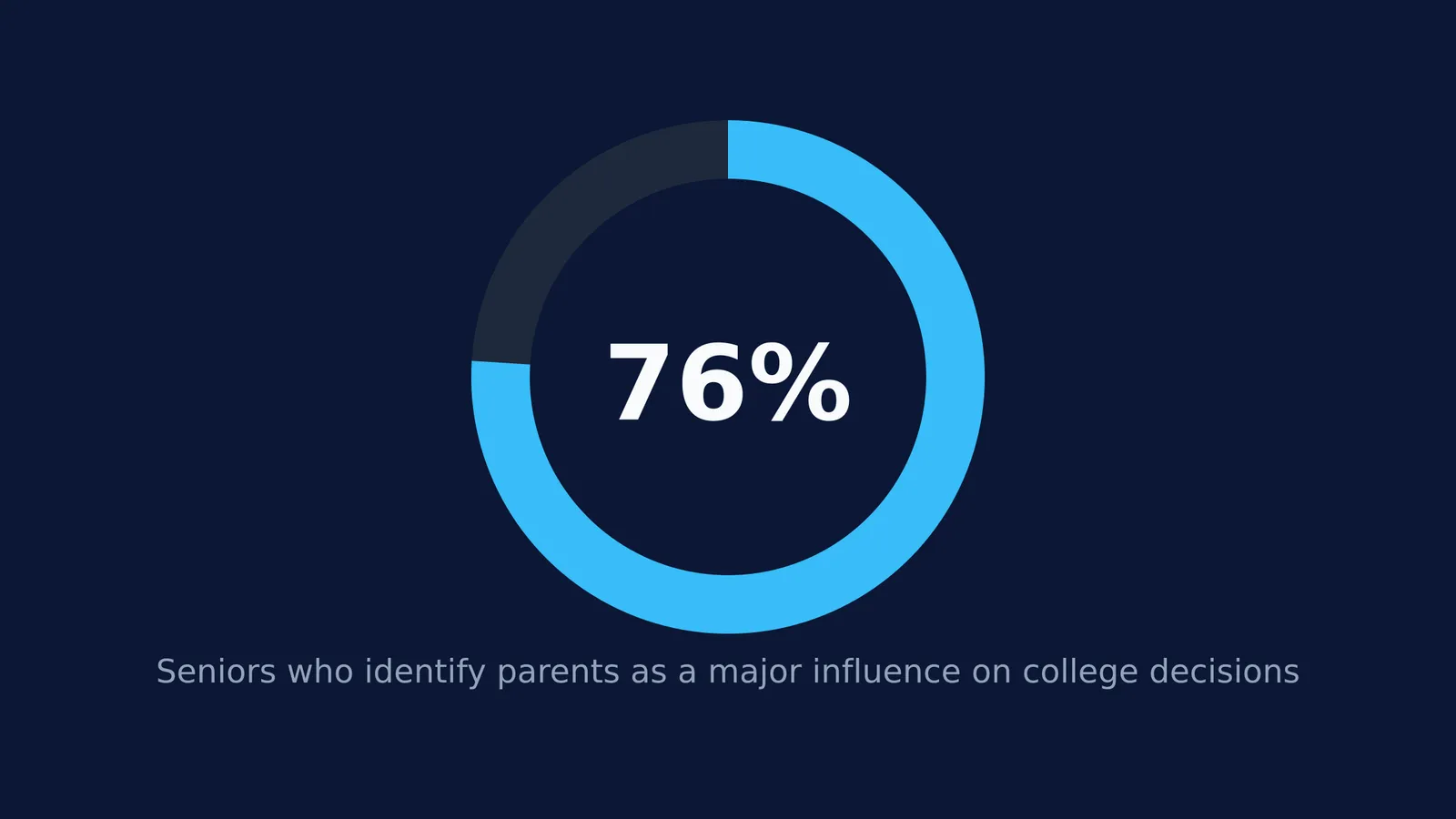
Yes, they are highly useful, provided parents take a supportive role rather than a leading one. A 2024 study by Niche found that 76% of high school seniors identified their parents as a major influence on their college decision (Niche, 2024). While students should lead the conversations about academics and campus life, parents act as the financial planners and safety net. You can use these events to gather the vital details that are rarely published in university marketing materials or online portals.
What should parents expect at education expos?
Expect a busy, crowded environment where admissions representatives are eager to speak directly to prospective students. The most effective approach for parents is to be the guide, not the driver.
Let your child approach the table first and ask the initial questions about their intended major or student clubs. While they chat with the representative, you can step back and act as the secretary. Take notes on key application dates, the names of the people you meet, and any specific programmes or scholarships mentioned. Before you arrive, sit down together and agree on a short list of five to ten priority institutions to visit, so you do not waste energy wandering aimlessly.
If a university requires strong scores in competitive entrance exams, Fermi's AI tutor works out what a student already knows and builds a plan for the session, keeping them on track for their goals. (Read our guide on trying an AI tutor with your child: a 20-minute parent's guide to see how this works at home.)
What questions should parents ask at college fairs?
Cost is the largest concern for most families. The 2024 "How America Pays for College" report by Sallie Mae found that families covered 48% of college expenses using family income and savings (Sallie Mae, 2024). The same report noted that 78% of families eliminated at least one college from consideration based on cost alone. Education expos are the perfect place to ask about the financial reality behind the glossy brochure.
What are the hidden costs? Ask about laboratory fees, mandatory health insurance, freshman orientation fees, and typical textbook expenses.
Does tuition increase every year? Some institutions lock in the first-year tuition rate for all four years, while others raise it annually, which can drastically alter your long-term budget.
Are merit scholarships renewable? Ask what grade point average (GPA) your child must maintain to keep their financial aid in the second and third years.
While your child might ask about sports teams and societies, you can ensure the campus environment will support them when things get difficult.
How accessible are mental health services? Ask if there is a limit on the number of free counselling sessions a student can have, and how long the average wait time is for an appointment.
What academic support is available? Find out if tutoring is free, and whether it is run by peers or trained professionals. If you are currently comparing coaching, online classes or self-study for JEE, ask how the university supports students transitioning from heavily structured coaching to independent learning.
Is housing guaranteed? Ask if students are guaranteed on-campus accommodation for all four years, or if they have to find private, off-campus housing after their first year.
The ultimate goal of a degree is what comes next. You want to know if the university actively helps its students launch their careers.
Where do graduates go? Ask for recent examples of companies that recruit directly from the campus, or which postgraduate schools students typically attend.
What career services are available to first-year students? The best career offices do not wait until the final year; they help first-year students find early internships and build their resumes. For more on discussing different professional paths, read our guide on talking about STEM careers beyond engineering and medicine.
By asking these specific questions, you can gather the logistical facts that matter, leaving your teenager free to focus on whether they can truly see themselves living and learning there for the next four years.