

On this page
A board game can be maths practice that nobody calls maths practice. The catch is that not every game does the job, and the right game changes as your child grows. Here is what the research supports, a plan by age, and what to say at the table.
Do board games really improve maths skills?
The strongest evidence is for young children and simple race games on a straight, numbered track. In a study in Child Development, Geetha Ramani and Robert Siegler had preschoolers from low-income families (mean age 5.4 years) play such a game for roughly one hour in total. They improved on four tasks: comparing numbers, placing numbers on a number line, counting, and naming numerals. The gains were still there nine weeks later. Classmates who played the identical game with coloured squares instead of numbered ones did not improve on any measure.
A second study, in Developmental Science, found that four 15-minute sessions of a numbered board game removed the gap in numerical estimation between preschoolers from low-income families and better-off peers. Games with colours instead of numbers did not. A follow-up in the Journal of Educational Psychology is named for its result: linear number board games improved preschoolers' numerical understanding, and circular ones did not.
The wider picture is more modest. A 2025 meta-analysis in Review of Educational Research pooled 18 studies of linear number board games, from preschool to Class 2, and found a small, statistically significant effect on maths outcomes (g = 0.21). Small is still worth having for something that costs a strip of paper and 15 minutes.
Does chess make children better at maths?
Less clearly than many parents hope. A 2016 meta-analysis by Giovanni Sala and Fernand Gobet covered 24 studies of chess instruction and found a moderate overall effect (g = 0.338), a little larger for maths (g = 0.382). In a 2017 review, the same researchers reported that chess effects get smaller as study designs get stricter, for example when the comparison group does another activity instead of nothing, and concluded that far transfer of learning rarely occurs.
So play chess because your child enjoys planning ahead and learning to lose well, not as a shortcut to marks. We go through the evidence in does chess help with studies.
Which board games build number sense at each age?
Ages 3 to 6: straight number tracks
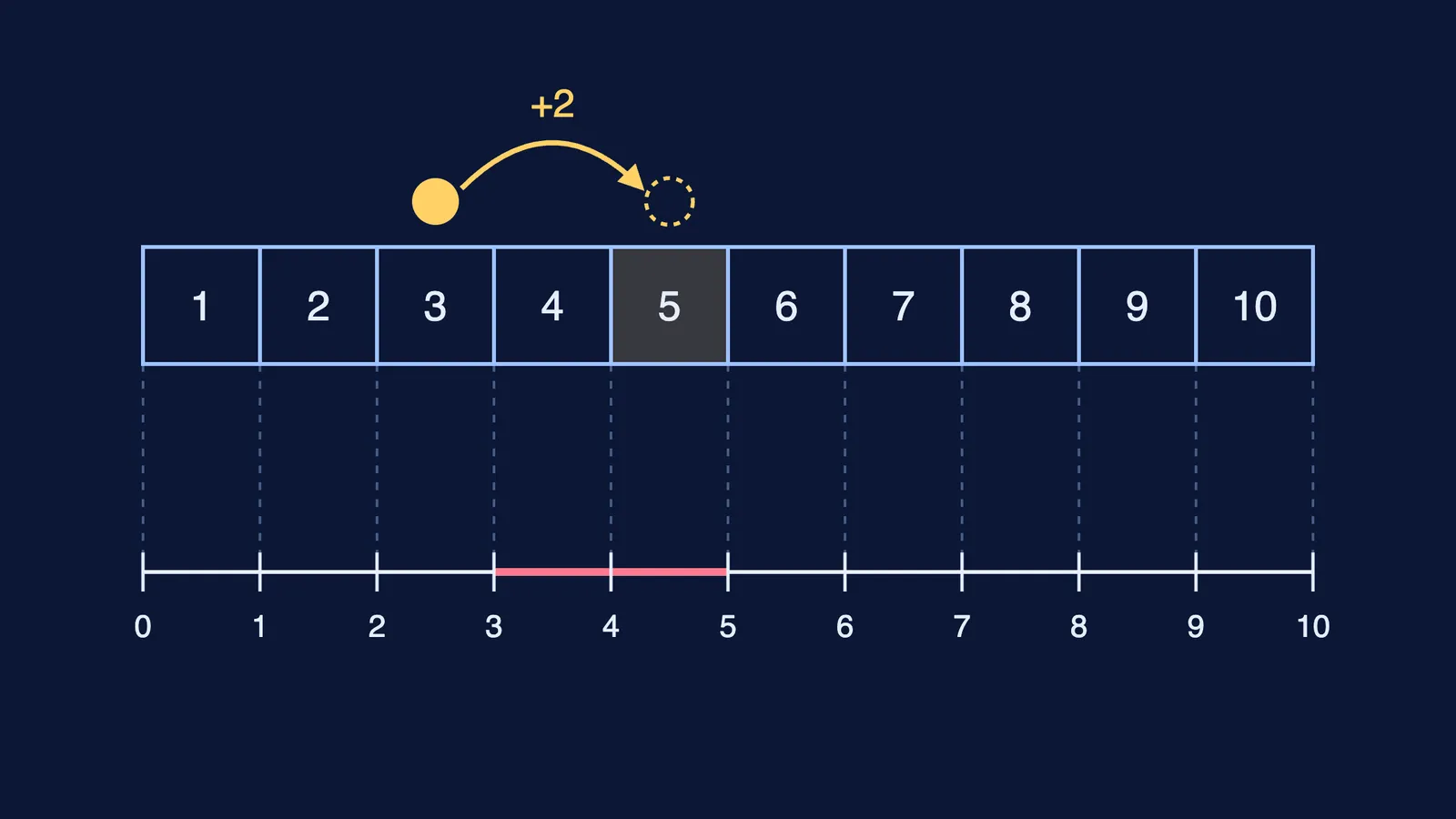
Make a board: a strip of paper with 10 squares in a row, numbered 1 to 10 from left to right.
Use a spinner or a die you mark with only 1s and 2s, so moves stay small and countable.
Say the square numbers as you move: “I'm on 4. Five, six.” Not “one, two”.
Move to snakes and ladders once 1 to 10 is easy, since every square is numbered, though its rows zigzag instead of running in one straight line. Ludo is fun, but its squares carry no numbers and its track goes round, so it gives different practice.
Ages 6 to 9: dice and cards
Roll two dice and add before moving; play “make 10” with playing cards; compare two cards to see who has more.
Ask distance questions on a snakes and ladders board: “How many more to reach 50?”
Six games with full rules are in card and dice games for number sense.
Ages 9 to 12: planning games
Chess, draughts and noughts and crosses train one habit: “If I do this, what will you do?”
Any game with play money: make your child the banker, so they make change and keep totals.
Ages 13 to 16: probability games
Turn any dice game into a question: is it fair? Count the outcomes and work out what each player should win on average. Our worked example shows how: check if a dice game is fair using expected value.
When a question from the table turns into a real probability problem, the Fermi Problem Library has worked problems with a step-by-step solver that explains the reasoning rather than printing an answer.
What should parents say while playing?
The aim is to make the maths visible without turning the game into a test. A script you can use:
Before the move: “You got a 3. Where will you land?” Let them predict, then check by moving.
After the move: “You went from 4 to 7. How many jumps was that?”
When they get it wrong: “Let's count it together.” No correcting voice.
Swap roles: “Now you check my move.”
Stop while it is still fun, even mid-game.
Pick one game for your child's age tonight, keep it short, and let them win sometimes.


