On this page
Most of your students already use AI chatbots for homework. Few have been shown, in class, how one gets things wrong and how to catch it. This plan fills one 40-minute period. It needs a projector, one device with a chatbot, printouts, and the NCERT textbook for the subject you teach.
What should an AI literacy lesson for high school cover?
Two international frameworks give you a map. UNESCO's AI competency framework for students (2024) sets out 12 competencies across four dimensions: a human-centred mindset, ethics of AI, AI techniques and applications, and AI system design.
The AI Literacy Framework from the European Commission and the OECD describes its aim this way: AI literacy empowers students and teachers to "understand how AI systems work, critically evaluate their opportunities and risks, and use them responsibly." The framework also contributes to the PISA 2029 assessment.
One period cannot cover all of that. This lesson aims at one habit: check an AI answer before you trust it, and be honest about how you used it.
How do you show students that AI makes mistakes?
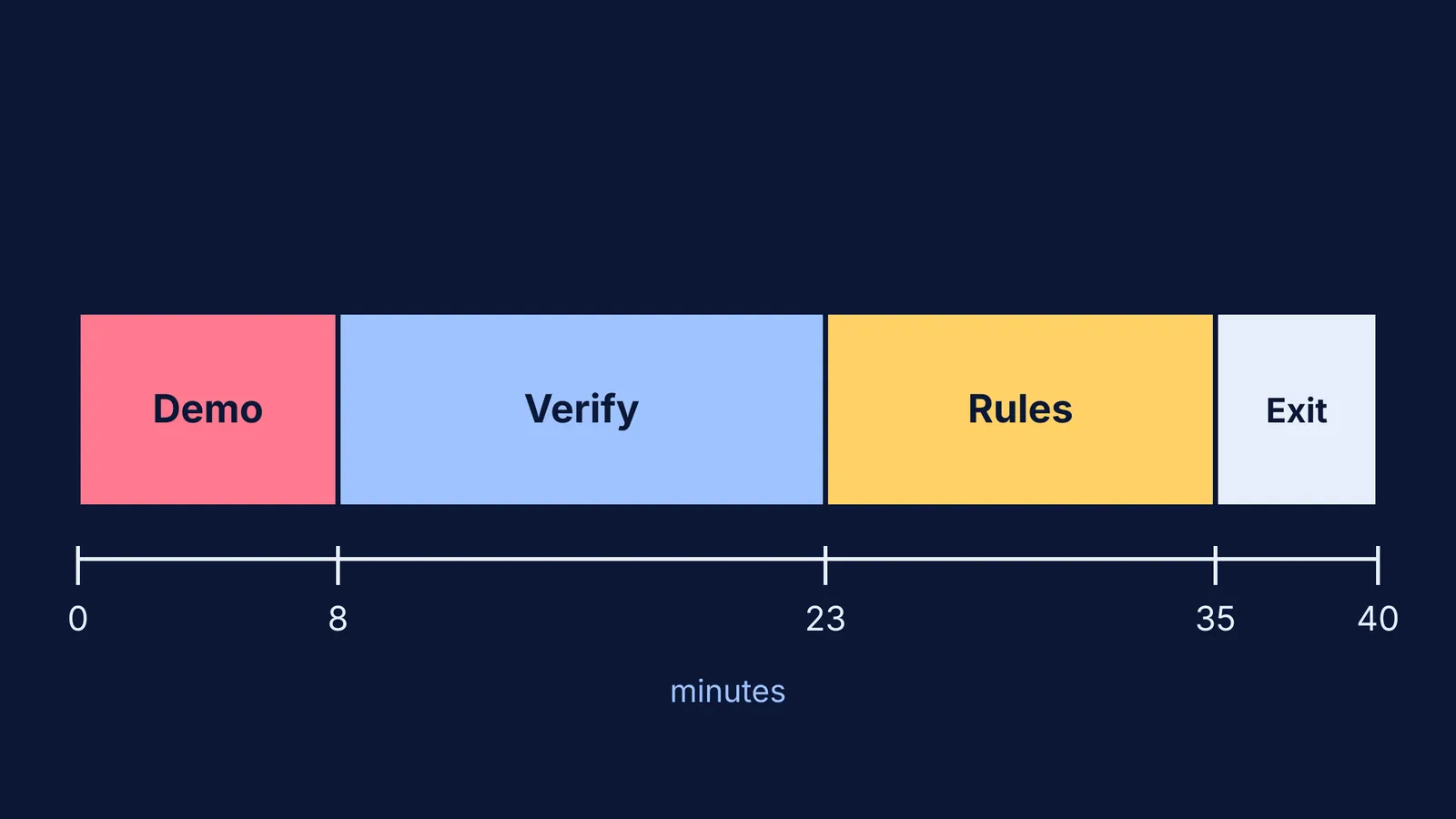
Minutes 0-8: the demo. Ask a chatbot, on the projector: "Give me three research papers, with authors, journal and DOI, on how phone use at night affects the sleep of Indian teenagers." Then search for each paper live in Google Scholar.
This demo has a track record. Walters and Wilder asked ChatGPT for short literature reviews on 42 topics and checked the 636 citations they contained; 55% of the GPT-3.5 citations and 18% of the GPT-4 citations were fabricated, and many of the real ones had errors.
Run the prompt once before class. Newer tools may get it right. If yours does, that is a lesson too: ask students how they would know it was right without checking.
What to say: "The answer looked confident. It had names and numbers. None of that told us whether it was true. Only checking did." Our post on why AI sounds confident when it is wrong explains the reason in plain words, if students ask.
How do students verify an AI answer in groups?
Minutes 8-23: the verification task. Before class, ask a chatbot to explain a topic from the current chapter, for example "Explain why the sky is blue, with one example and a page reference to NCERT." Print the answer and number five claims in it. Make sure at least one is wrong or unverifiable; made-up page numbers are common, as our post on AI inventing NCERT page numbers shows.
Groups of four take one role each:
Reader: reads each claim aloud.
Checker: finds it in the NCERT textbook.
Cross-checker: looks for a second source, such as the teacher's notes or another textbook.
Recorder: marks each claim Verified, Wrong, or Can't check, with the page number.
Give 10 minutes to check and 5 for two groups to report. Ask the class: "Which claim was hardest to check, and why?"
What rules should students follow when using AI for schoolwork?
Minutes 23-35: the discussion. Do not hand out rules. Build them with the class, using three colours, and write the result on the board.
Green, fine to do: ask AI to explain a concept another way, quiz you, or point out a mistake in your working.
Amber, do it and say so: ask for feedback on a draft or help planning a project, then tell the teacher what you asked.
Red, not allowed: submit AI-written work as your own, or type in personal details such as your phone number or address.
UNESCO's guidance on generative AI in education calls for a human-centred approach and proposes setting an age limit for independent conversations with these tools. Check your school's own policy before class and say where it applies.
For the amber zone, our post on telling your teacher how you used AI has sample wording students can copy.
Some AI tools are built to teach, not just answer. Fermi's AI tutor holds a line of reasoning across a session, decides whether to explain, ask or show, and checks understanding as it goes. Used to explain a concept, it sits in the green zone, and the same checking habit still applies.
What goes on the exit ticket?
Minutes 35-40. Students answer three questions on a slip of paper, without devices:
Name one way the AI answer in today's demo or task went wrong.
Write the two steps you would take to check an AI answer for homework.
Write one green, one amber and one red use of AI, in your own words.
Sort the slips into three piles: got it, partly, not yet. Start the next lesson with the most common "not yet" answer.
For that follow-up, the Fermi Problem Library has worked problems with a step-by-step solver that explains the reasoning, so students can compare each step with their own and decide which is right.