On this page
AI can write a fresh unseen passage in seconds. The weak point is the answer key: a question can look fine and still have an answer the passage never states. Here is a prompt that copies the board pattern, and four tests that catch a bad key.
What does a board-style unseen passage look like?
CBSE's Class 10 English Language and Literature syllabus for 2026-27 gives the reading section 20 marks, split between a discursive passage of 400-450 words and a case-based factual passage of 200-250 words with a chart or statistics. The same document says the questions are multiple choice or objective type, plus short answers of 30-40 words, testing comprehension, interpretation, analysis, inference, evaluation and vocabulary.
The 2026-27 sample question paper shows the actual mix: true or false, an analogy, fact or opinion, assertion and reason, an "all EXCEPT" item, and 1-mark and 2-mark short answers. Name that mix in your prompt, or you will mostly get plain recall questions.
What prompt makes AI write unseen passage practice questions?
Copy this and fill in the topic. Word counts follow the CBSE syllabus:
You are setting a CBSE Class 10 English reading section. Write one original discursive passage of 400-450 words on [topic], in six numbered paragraphs.
Write one case-based factual passage of 200-250 words built around a small table of survey figures. State clearly that the figures are invented for practice.
For each passage, write nine questions: three MCQs (options A to D), one true or false, one assertion and reason, one fact-or-opinion item, one vocabulary item, and two short answers of 30-40 words.
Every question must need the passage. Ask nothing a reader could answer from general knowledge.
Put the answer key at the end. For each answer, give the paragraph number and quote the exact words that prove it. For short answers, list the two or three points a marker would look for.
Line 2 matters because AI-written passages can contain made-up statistics. The label stops you remembering a fake fact as a real one.
How do you check the answer key is supported by the passage?
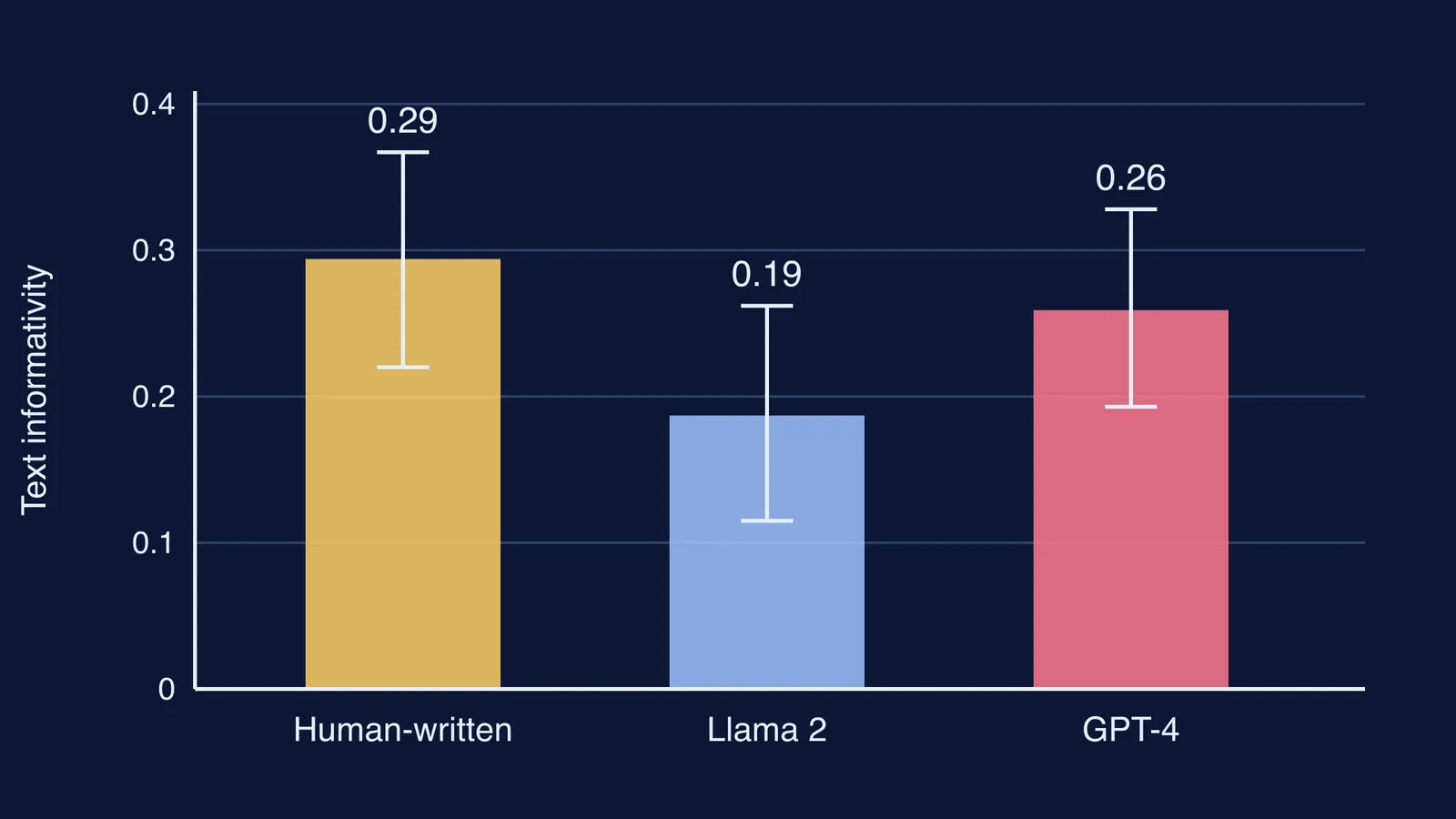
In a 2024 study, Andreas Säuberli and Simon Clematide of the University of Zurich had six readers answer German multiple-choice reading questions, written by people, Llama 2 and GPT-4, twice: once without the text, once with it. The gap between the two scores, which they call text informativity, shows how much a question really depends on the passage. GPT-4's questions got the most "perfect" ratings (84 of 180), yet they were also easy to guess without reading. Across the questions the authors examined, the most common reasons a question could not be answered properly were a wrong answer label, options open to more than one reading, and a text without enough evidence.
Four tests catch these problems:
Cover test. Try the MCQs before reading the passage. Any you get right with it covered test general knowledge; ask the AI to replace them.
Quote test. Search the passage for each quote in the key (Ctrl+F works). If the exact words are not there, the answer is not supported.
One-answer test. For every wrong option, find the line that rules it out. If you cannot, two options may be defensible.
Word-limit test. Try writing each short answer's marking points in 30-40 words. If you can't, the question is too broad for its marks.
How does the sample paper's assertion-reason question trap a careless key?
The official sample paper has a good trap. The assertion says the most popular time to listen to audiobooks is while travelling. The reason says listeners struggle with short attention spans while travelling. Paragraph 2 says the commute was the most popular choice, so the assertion holds. Paragraph 4 mentions attention span difficulties, but only as a reason audiobooks help some readers, never in connection with travel. So the reason is false, and the official marking scheme gives C. A careless key might pick A because both ideas appear in the passage. The quote test catches it: no line joins attention span to travel.
For more checks, see how to check the answer keys of AI-generated MCQs and how to check if an AI practice question is solvable.
How should you use AI passages in your weekly practice?
One passage with a checked key is worth more than several unchecked ones. Time yourself, mark against the corrected key, and note which question type you missed: inference, vocabulary or fact-or-opinion. Next week, ask the AI for more of that type only. If speed is the problem, see how to solve an unseen English passage quickly.
The case-based passage comes with numbers, which are easy to misread. If charts and percentages trip you up and you are not sure where to begin, Fermi's AI tutor can work out what you already know and build a plan for the session, so you start with a clear next step.
Tonight, run the prompt once and do the four tests on the key before you trust it.