

On this page
If you paste a passage into an AI chat and type "make notes", it does the one thing the question is testing. Use it as a checker instead. Here is a sample passage, flawed sample notes and the exact prompt.
Is note making in the Class 12 English paper?
In the CBSE English Core curriculum for 2026-27, note making and summarisation sit in Section A of the Class 11 paper, based on a passage of approximately 200-250 words. The same document's Class 12 reading section has two unseen passages worth 22 marks, and no separate note-making question.
The skill still matters. The curriculum's reading objectives include "making notes based on a text", and you will make notes for every chapter you revise. For long explanations, our guide to making Cornell notes from an AI explanation shows a different layout. If your school test includes note making, practise to the Class 11 scheme below.
What does a full-marks note-making answer need?
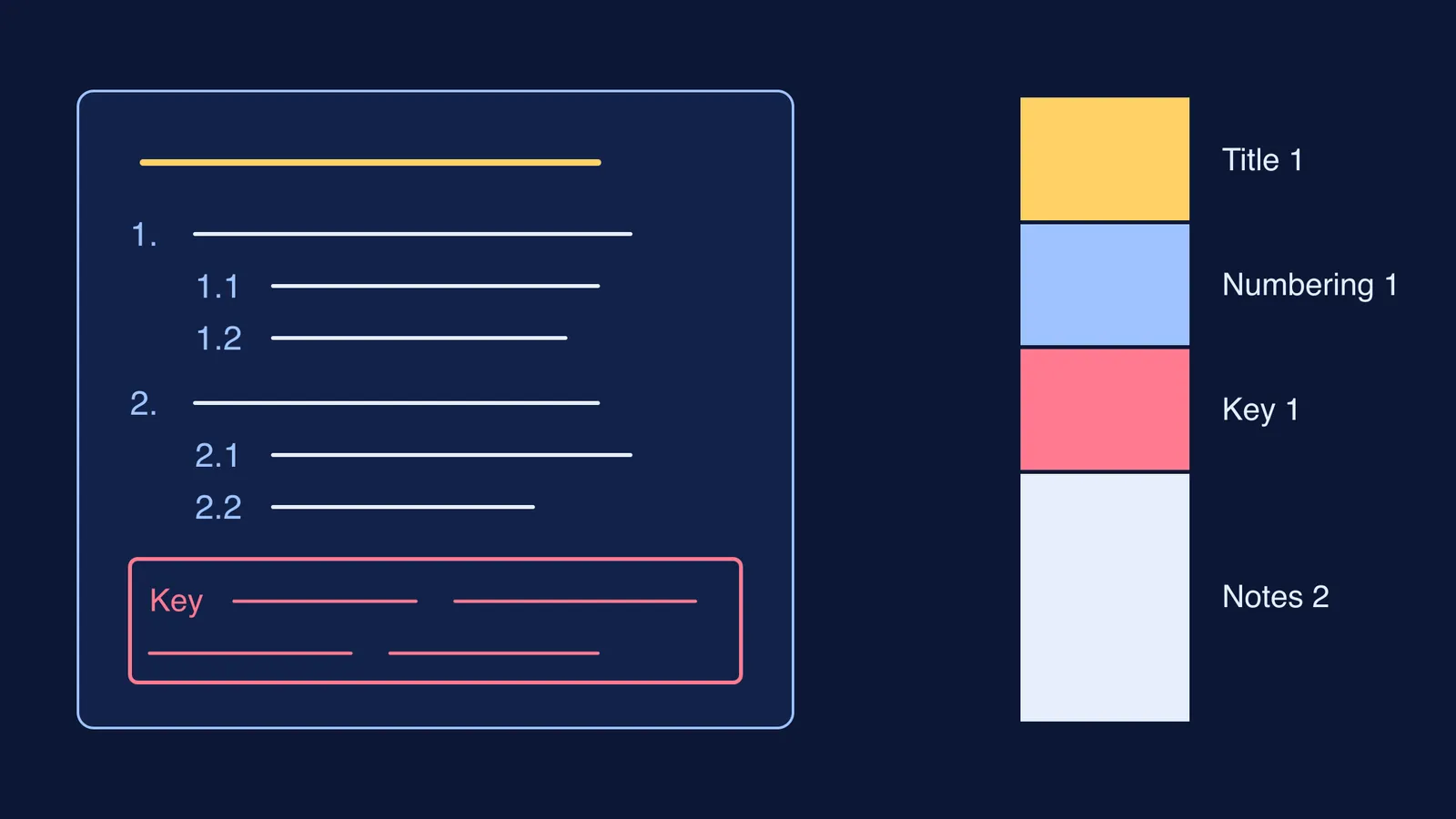
CBSE's 2026-27 curriculum splits the 5 note-making marks into title 1, numbering and indenting 1, key/glossary 1, and notes 2 (CBSE English Core curriculum). The summary, up to 50 words, is a separate 3 marks.
Three of the five marks are for format:
Title: a short heading that names the passage's topic.
Numbering and indenting: main points 1, 2, 3; sub-points 1.1, 1.2, set in from the margin; one system used all the way through.
Key: every abbreviation and symbol you used, with its full form.
Notes: the main ideas as short phrases, not copied sentences.
Format is mechanical, so an AI can check it. Choosing the main ideas is the reading skill, so you judge that. To see how examiners apply marks like these, read how to use the CBSE marking scheme.
How do you ask AI to check notes without rewriting them?
Doing the work yourself is the point. A 2007 meta-analysis of 86 studies found that people remember information they generate (for example, by producing synonyms) better than material they only read, with an average effect of 0.40, almost half a standard deviation (Bertsch and colleagues, Memory & Cognition). Those were memory experiments, not note-making tests.
Make your own notes on this passage first.
Sample passage. Many Indian cities flood in the monsoon and run short of water in summer. Part of the reason is that roofs, roads and paved courtyards stop rain from soaking into the ground. The water rushes into drains, overflows them and is lost. Rainwater harvesting tries to catch it. The simplest method collects rain from rooftops and pipes it into storage tanks for later use. Another sends it into recharge pits or old wells, where it seeps down and refills groundwater. Both need little more than pipes, filters and regular cleaning. When many buildings in a neighbourhood do this, streets flood less, and borewells are less likely to run dry in the hot months.
A student's notes, with two format mistakes planted in them. On paper, put each sub-point on its own indented line.
Heading: Rainwater Harvesting in Cities
1 Problems: 1.1 roofs, rds, paved areas stop rain soaking in; 1.2 drains overflow → floods; 1.3 water lost
2 Methods: 2.1 rooftop coll. → storage tanks; (b) recharge pits/old wells refill gw
3 Needs and benefits: 3.1 pipes, filters, reg. cleaning; 3.2 less street flooding; 3.3 borewells less likely to dry in hot mths
Key: coll. = collection; gw = groundwater; reg. = regular; mths = months; → = leads to
Now paste the passage and your notes into any AI chat with this prompt:
"Do not rewrite my notes or give me a model answer. Check only these four things, and quote my line for each problem."
"Is there a heading that names the topic?"
"Do the main points and sub-points use one numbering system, with sub-points indented?"
"Is every abbreviation and symbol in my notes listed in the key, and is every key entry used?"
"Is any line a full sentence copied from the passage? If a check passes, just say OK."
On the sample, a careful check should flag two lines: "rds" is not in the key, and "(b)" breaks the 2.1, 2.2 pattern. If yours misses either, remember it is a helper, not an examiner.
What should you fix yourself after the AI replies?
Correct the format by hand: add "rds = roads" to the key and change "(b)" to 2.2.
Judge the content yourself. In the sample, point 3 mixes what harvesting needs with what it gives. Splitting it into 3 Requirements and 4 Benefits is a reading decision, not a format fix.
Write the summary from your notes, not the passage, to test whether they carry the meaning.
Our post on getting AI feedback on an assembly speech in your own voice uses the same draft-first rule. Fermi's AI tutor takes a similar approach in STEM subjects: it teaches rather than just answering, deciding whether to explain, ask or show and checking understanding as it goes.
Pick one passage this week, make notes in ten minutes, and run the four checks.


