

On this page
Your NCERT chapter on inheritance says, in two lines, that Walter Sutton and Theodor Boveri "noted that the behaviour of chromosomes was parallel to the behaviour of genes". Behind those lines are a grasshopper, thousands of sea urchin eggs and a table of numbers that still works as an exam problem. This post tells their story and shows how to do the calculation Sutton did in 1903.
Who was Walter Sutton?
According to the Embryo Project Encyclopedia, Sutton was born on 5 April 1877 in Utica, New York. He first enrolled in engineering at the University of Kansas, then switched to pre-medical studies and took a bachelor's degree in 1900 and a master's in 1901 under the cell biologist Clarence McClung. In 1901 he moved to Columbia University to work with Edmund B. Wilson.
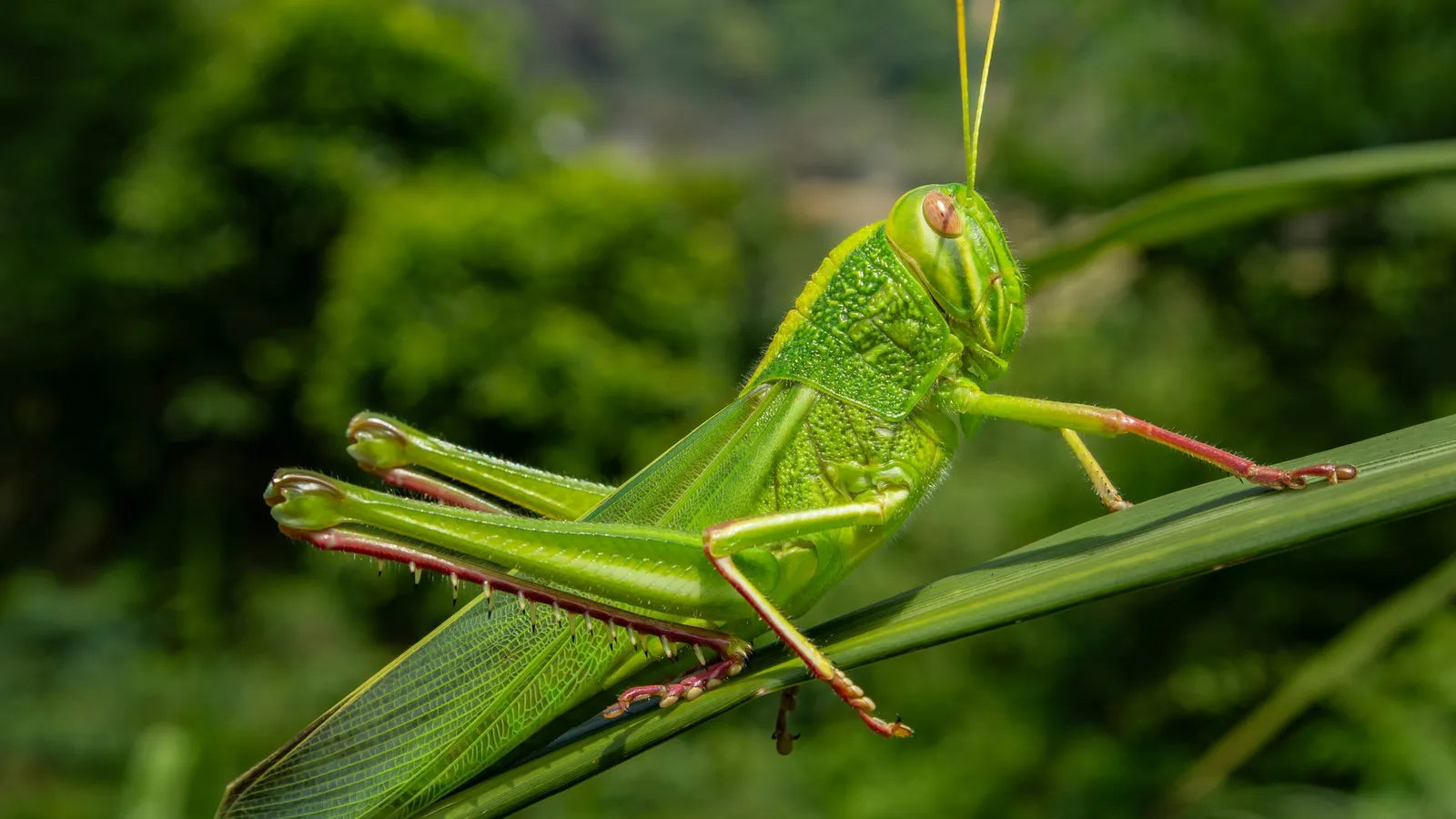
His research animal was the lubber grasshopper *Brachystola magna*. Its large testes made it possible to follow the chromosomes through the divisions that produce sperm. Sutton later went back to medicine, took his MD in 1907 and worked as a surgeon in Kansas. He died in November 1916, aged 39, after his appendix ruptured.
What did Sutton see in grasshopper cells?
His first paper, On the morphology of the chromosome group in Brachystola magna, appeared in the Biological Bulletin in December 1902. The longer argument came in The chromosomes in heredity (1903). In it he listed what his cells had shown:
The chromosome set is made of two equivalent series, one most likely from the father and one from the mother.
In synapsis, chromosomes of the same size from the two series pair up.
In the reducing division, the members of each pair separate and go to different cells.
Each chromosome keeps its individuality through cell division.
Sutton first thought all paternal chromosomes might go to one pole and all maternal ones to the other. He rejected that idea because it clashed with breeding results: it would mean a grandchild could never inherit from both grandparents on the same side. Instead he found that the way each pair lines up "is purely a matter of chance", independent of the other pairs. He also wrote that his ideas were "evolved purely from cytological data, before the author had knowledge of the Mendelian principles".
What did Boveri's sea urchin experiments add?
Sutton's argument needed one more fact: that different chromosomes carry different hereditary qualities. In the same 1903 paper he cites Boveri's study of larvae "actually lacking in certain chromosomes", which, he wrote, left no alternative to the conclusion that the chromosomes "differ qualitatively".
A history of Boveri's work by Laubichler and Davidson (2008) describes those polyspermy experiments. Theodor Boveri (1862 to 1915), working at the Zoological Institute in Würzburg, let two or three sperm enter a single sea urchin egg. The first division then pulled chromosomes toward more than two poles, so the first cells received different, usually incomplete, sets of chromosomes. Only the small fraction of embryos in which every cell had a complete set developed normally. The conclusion was that a complete set of chromosomes is needed in every cell.
Worked example: how many kinds of gametes?
Sutton put numbers on independent assortment. If each pair lines up by chance, a cell with n pairs can make 2^n kinds of gametes, a formula he gives in a footnote. Two parents then give 2^n x 2^n kinds of zygote.
Four pairs (eight chromosomes). 2^4 = 16 kinds of gametes and 16 x 16 = 256 zygote combinations. This is the example Sutton writes out, listing all 16 sets from ABCD to abcd.
Brachystola, 11 pairs. Sutton counted eleven chromosomes in the reduced set, setting aside the unpaired accessory chromosome. That gives 2^11 = 2,048 kinds of gametes and 2,048 x 2,048 = 4,194,304 combinations in the offspring of one pair.
Humans, 23 pairs. 2^23 = 8,388,608 kinds of gametes from one person. Sutton used an estimate of 16 human chromosomes, the lowest then published, because the correct count was not yet known.
Common mistakes:
Using the diploid number. n is the number of pairs, not the total. For 46 chromosomes, n = 23.
Mixing gametes and zygotes. Gamete kinds are 2^n. Zygote combinations from two parents are (2^n)^2 = 4^n.
Forgetting what the count ignores. This counts whole chromosomes only. Crossing over, which Sutton did not include, makes the real number of combinations larger.
How was the theory tested?
The NCERT Class 12 chapter on inheritance says Sutton "united the knowledge of chromosomal segregation with Mendelian principles and called it the chromosomal theory of inheritance", and that experimental verification came from Thomas Hunt Morgan and his colleagues working with fruit flies. Our profile of Thomas Hunt Morgan and his fruit flies picks up the story, and Mendel's pea experiments covers the ratios Sutton was trying to explain.
What can a student take from their way of working?
Look closely at one good system. Sutton chose a grasshopper whose chromosomes differed in size, so he could tell pairs apart.
Test your first idea against known facts. He dropped his own "all paternal to one pole" idea once he saw it contradicted breeding data.
Turn a qualitative idea into numbers. His table of 2^n made independent assortment concrete.
Combine evidence from different methods. Observation from Sutton and experiment from Boveri together made the case.
Seeing meiosis move
Independent assortment is easier to understand when you watch pairs line up and separate than when you read about it. The Fermi Simulation Lab has interactive simulations for ideas that are easier to see than to read, and the Fermi Concept Library gives each biology concept its own lesson if a step in the chapter is unclear.
Try it now: draw a cell with three chromosome pairs, label them Aa, Bb and Cc, and list all eight possible gametes.


