

On this page
Every time you sweat on a hot afternoon or feel thirsty after a match, your body is pulling a number back to where it should be. The word for that is homeostasis, and it is only about a hundred years old.
Who coined the word homeostasis, and when?
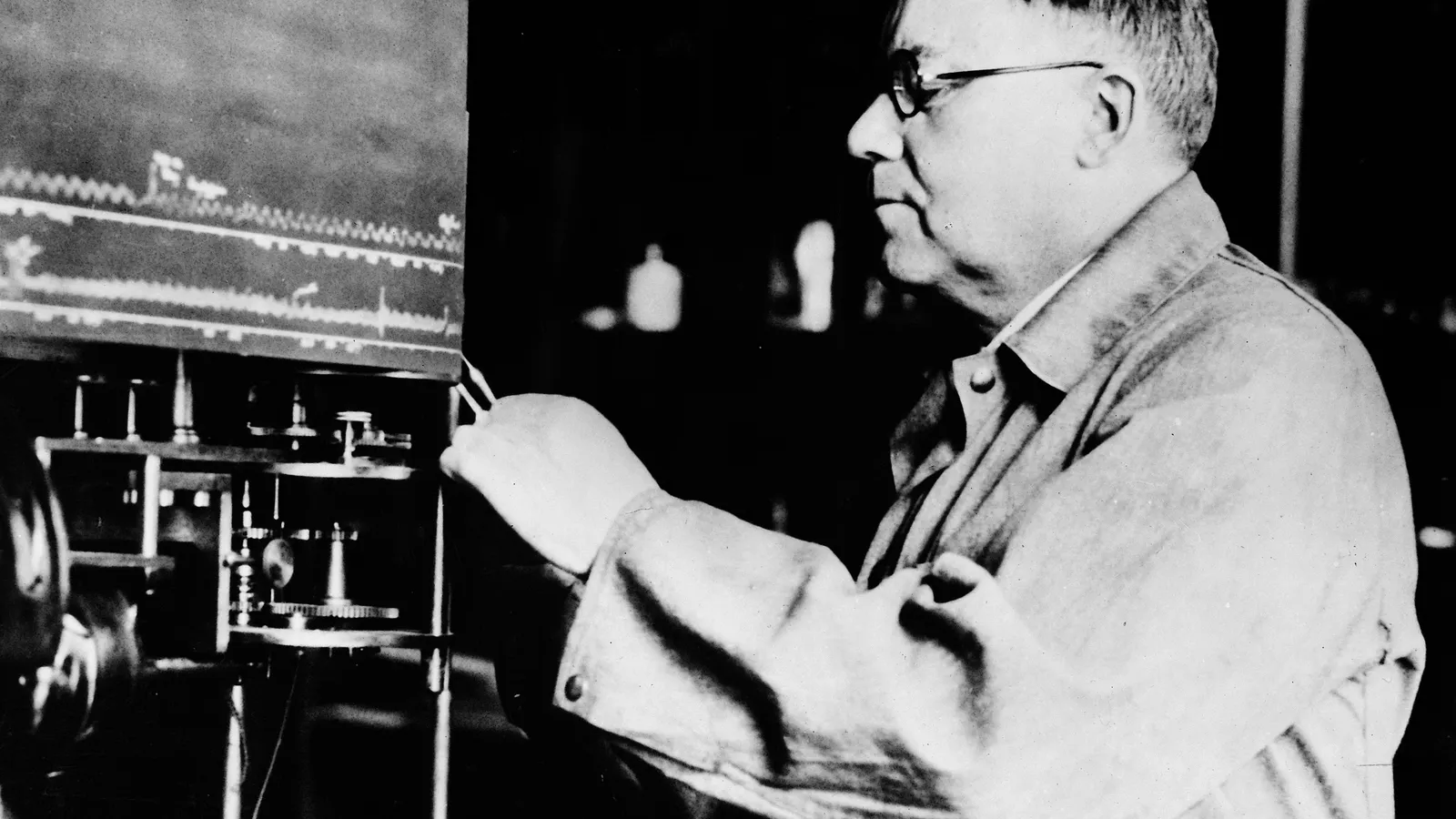
The word homeostasis was coined by the Harvard physiologist Walter Bradford Cannon in 1926, to describe and extend Claude Bernard's idea of the milieu intérieur, the body's internal environment (Davies, Molecular Aspects of Medicine, 2016).
Cannon first used it in an essay titled "Physiological regulation of normal states: some tentative postulates concerning biological homeostatics", written for a volume honouring the French physiologist Charles Richet and published in Paris (reference list, Homeostasis article). He set the idea out at length in his paper "Organization for physiological homeostasis" in Physiological Reviews in 1929, and then for general readers in his 1932 book The Wisdom of the Body.
Eleven years earlier, in 1915, Cannon had introduced the phrase "fight or flight" (Walter Bradford Cannon), a story we tell in Walter Cannon and the fight-or-flight response.
His starting point was Bernard, who developed the idea of the milieu intérieur in 1865 (Davies, 2016) and concluded that "the fixity of the internal environment is the condition for the free, independent life" (as translated by Billman, Frontiers in Physiology, 2020). Read about Bernard's own experiments in how Claude Bernard discovered liver glycogen.
What does homeostasis actually mean?
Homeostasis comes from the Greek hómoios, "similar", and stásis, "standing still" (Billman, 2020). Billman notes that Cannon chose "similar" rather than "same" on purpose, because the body's internal conditions can vary within a range.
Cannon said so himself in The Wisdom of the Body: "The word does not imply something set and immobile, a stagnation. It means a condition - a condition which may vary, but which is relatively constant" (excerpt from the 1932 book).
How does the body keep temperature, sugar and water steady?
The Wisdom of the Body reviews research on thirst and hunger, the water and salt in the blood, blood sugar, oxygen supply and body temperature (review of the book). Here is how a modern textbook describes three.
For body temperature, the set point in humans is approximately 37°C (OpenStax Anatomy and Physiology 2e, section 1.5). When you overheat, blood flow to the skin rises to shed heat and sweat glands increase their output. When you get cold, the brain reduces blood flow to the skin, and if heat loss is severe it signals skeletal muscles to contract: shivering.
Cannon wrote that, for a short time, people may be exposed to dry heat of 115 to 128°C without their body temperature rising above normal (1932 excerpt).
For blood sugar, glucose concentration is tightly maintained between 70 mg/dL and 100 mg/dL (OpenStax, section 17.9). After a meal, rising glucose makes the pancreas release insulin, which helps cells take up glucose and leads the liver to store it as glycogen. When glucose falls, the pancreas releases glucagon, which raises it again.
For water, an average adult takes in about 2500 mL of fluids a day and loses about the same amount (OpenStax, section 26.2). Osmoreceptors in the hypothalamus detect how concentrated the blood is. If it becomes too concentrated, you feel thirsty, and the hypothalamus releases antidiuretic hormone (ADH) through the posterior pituitary, which signals the kidneys to recover water from urine.
These are textbook descriptions, not health advice; take any worrying test result to a doctor.
How do you write a homeostasis answer in an exam?
Most homeostasis questions test one loop. OpenStax names its parts: a sensor monitors a value, a control centre compares it with the normal range, and an effector causes a change that reverses the situation (OpenStax, section 1.5). Use these five steps for any variable:
Variable: what is held steady.
Change: what pushed it away.
Sensor: what detects it.
Control centre and effector: what decides, what acts.
Response: how the change is reversed.
Worked example: you have played cricket for two hours in May and sweated a lot.
Variable: the concentration (osmolality) of your blood.
Change: water lost in sweat, so the blood becomes more concentrated.
Sensor: osmoreceptors in the hypothalamus.
Control centre and effector: the hypothalamus triggers thirst and ADH release; the kidneys respond.
Response: you drink, the kidneys recover water from urine, the blood is diluted, and the signal fades.
In step 5, say what switches the response off. That is negative feedback, the same idea engineers use, as in Harold Black's negative feedback amplifier.
If a loop is hard to hold in your head, the Fermi Simulation Lab has interactive simulations for ideas that are easier to see than to read. For gaps in the basics, such as hormones or the hypothalamus, each idea has its own lesson in the Fermi Concept Library.
Next time you reach for a glass of water, try naming the five steps before you finish it.


