

On this page
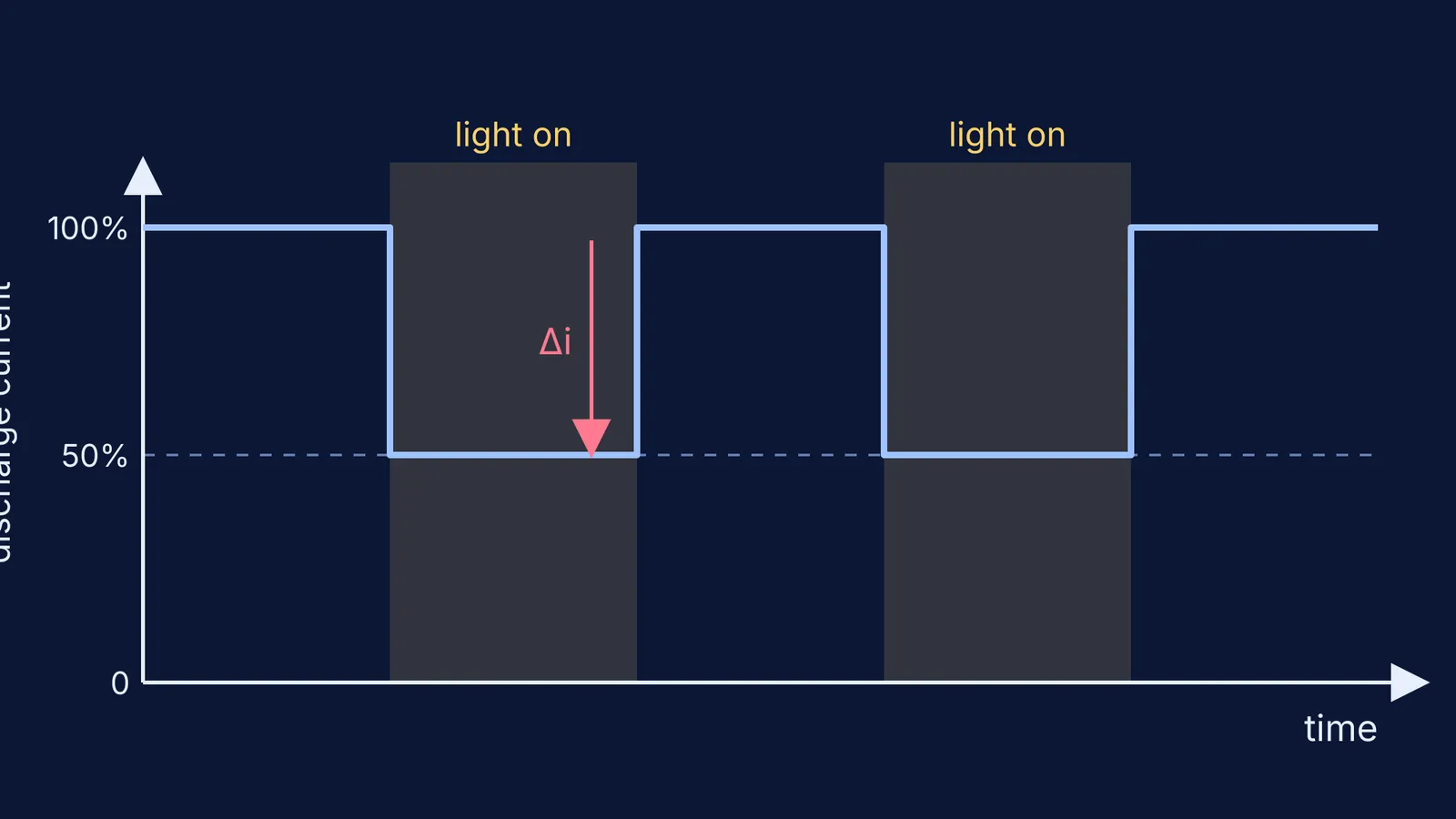
In 1939 Shridhar Sarvottam Joshi, a chemist at Banaras Hindu University, reported something that seemed backwards. When light fell on a gas carrying an electrical discharge, the current did not rise. It fell, and when the light went off, it came straight back. That is the Joshi effect.
What is the Joshi effect?
The Joshi effect is an instantaneous and reversible decrease in the current through a gas under a silent electric discharge when light falls on it (G. S. Deshmukh, Journal of the Indian Chemical Society, 1947). A later paper described it as a reversible change in discharge current caused by light, usually a reduction (Mohanty and Kamath, 1948).
The discharge was produced in an ozoniser, a glass vessel run on alternating voltages of a few kilovolts. Three features define the effect:
Direction: light usually lowers the current, although a positive effect was also found under some conditions, for example in benzene vapour under X-rays (Asolkar, 1953).
Speed: the change starts the moment light arrives and reverses when it stops.
Dependence on light and gas: the effect grew with the intensity and frequency of the light, and was largest in bromine, then oxygen, air, nitrogen and hydrogen (Deshmukh, 1947).
When did S. S. Joshi report the Joshi effect?
Joshi's own 1945 paper in the Proceedings of the Indian Academy of Sciences cites a short note of his in Current Science, 1939, volume 8, page 548 (Joshi, 1945). His affiliation on that paper was the Chemistry Department, Banaras Hindu University (OpenAlex record).
In 1941 Joshi and his BHU colleague G. S. Deshmukh published "An Effect of Light in Gases under Electrical Discharge" (Nature, 1941). With P. G. Deo he reported how the effect in chlorine depended on the light's intensity and frequency (Nature, 1943) and on gas pressure (Nature, 1944).
Under visible light, current fell by up to 50% in hydrogen (Visvanathan, 1949) and in oxygen (Mohanty and Kamath, 1948). Sulphur dioxide showed a negative effect as large as 83% (Deshmukh and Dhar, 1949).
Why was a drop in current surprising?
You learn that light frees electrons from a metal, so light should add charge carriers and raise the current. That is the photoelectric effect seen in Heinrich Hertz's spark-gap experiments and studied by Philipp Lenard, who showed brighter light doesn't make faster electrons. Joshi's gases did the opposite.
In oxygen, Mohanty and Kamath found that over moderate intensities the change in current followed Δi = aI^b, where I is the light intensity, levelling off at high intensity. They noted that this non-linear dependence set it apart from the classical metal-in-vacuum photoelectric effect (Mohanty and Kamath, 1948).
How did Joshi explain the Joshi effect?
Joshi's theory placed the origin of the effect at the surface, in an excited boundary layer formed during discharge, and his colleagues read their results as support for it (Deshmukh and Dhar, 1949). Working with chlorine, Ramanamurti proposed that chemisorption involving electron transfer forms this layer (Ramanamurti, 1948). In iodine vapour, Deshmukh described an adsorption-like boundary layer where the excited vapour meets the glass walls (Deshmukh, 1949).
Deshmukh noticed that the order of gases roughly matched their electron affinity, which tells you how readily each gas captures an electron (Deshmukh, 1947). In 1963 R. J. Galagali reported a thermionic analogue: the Joshi effect appeared in an electrodeless discharge in air when a central wire emitted electrons, in place of light (British Journal of Applied Physics, 1963).
Others proposed their own explanations, such as R. Parshad's "Explanation of the Joshi Effect" (Nature, 1945), and a 1997 Los Alamos study of ultraviolet light on dielectric barrier discharges still carried "The Joshi effect" in its title (Falkenstein, 1997).
Worked example: how big is a Joshi effect?
Papers give the size of the effect as a percentage, % Δi (Visvanathan, 1949). Here we take it as the drop in current divided by the current in the dark. The readings below are made up for practice.
Write down the dark current: i(dark) = 40 microamperes.
Write down the current with the light on: i(light) = 20 microamperes.
Find the change: Δi = 40 − 20 = 20 microamperes.
Divide by the dark current and multiply by 100: 20 ÷ 40 × 100 = 50%.
Now reverse it. For the 83% effect reported in sulphur dioxide (Deshmukh and Dhar, 1949), a dark current of 60 microamperes would fall to 60 × 0.17 = 10.2 microamperes under light.
Before calling a result a Joshi effect, check three things:
Does the current fall, not rise, when light arrives?
Does the change appear at once and vanish when the light is removed?
Is the gas under a discharge?
If ideas like this still feel abstract, the Fermi Simulation Lab has interactive simulations for ideas that are easier to see than to read. The Fermi Concept Library gives each concept in physics and chemistry its own lesson, so you can revisit electron affinity.


