On this page
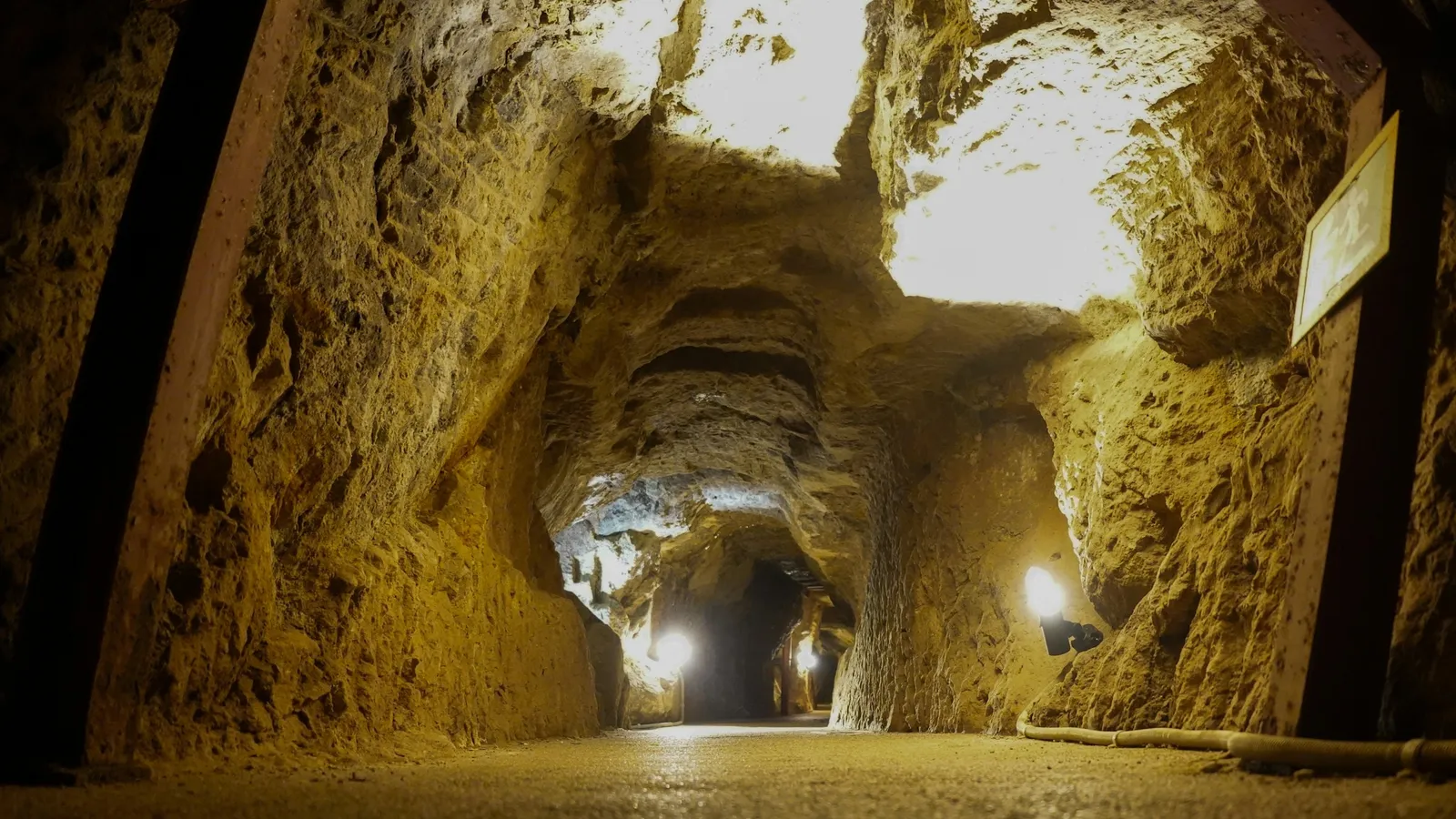
Neutrinos pass through almost everything, which makes them very hard to catch. In 1965 an international team caught some by going 7600 feet down a gold mine in Karnataka, where the rock blocked almost everything else. Leading the effort was M. G. K. Menon, a particle physicist who had already helped untangle the puzzle of the kaon. This post covers his physics, works through two calculations from it, and ends with what students can learn from how he worked.
Who was M. G. K. Menon?
The Royal Society biographical memoir of M. G. K. Menon by Ramanath Cowsik gives his dates as 28 August 1928 to 22 November 2016 and notes that colleagues called him Goku. It describes him as an outstanding particle physicist and an extraordinary statesman of science.
He did his early research at the H. H. Wills Physical Laboratory of the University of Bristol, studying cosmic-ray particles recorded in photographic emulsions. A 1954 paper there, Observations on the decay of heavy mesons in photographic emulsions in the Proceedings of the Royal Society, lists his affiliation as Bristol.
What did he find out about kaons?
Photographic emulsions record the track of every charged particle that passes through them. In the 1954 paper's abstract, two events seen in 1951 appeared to be the decay at rest of heavy charged mesons, with a mass of about 1200 electron masses. They were called K-mesons, now kaons. The Bristol group then found eighteen more examples, labelled K3 to K20, and the paper gives a detailed account of the measurements.
The Royal Society memoir says he will be remembered for his studies of the two-body and three-body decay modes of the charged kaon, which gave rise to the tau–theta puzzle signalling that parity is not conserved. It also credits him with coining the phrase "associated production" for the way kaons and hyperons are created together. Our profile of Chien-Shiung Wu and the parity experiment tells how parity violation was confirmed.
Worked example: how heavy is a kaon?
Particle masses are often given as energies, using E = mc². The CODATA value of the electron's rest energy is 0.511 MeV.
The early estimate of about 1200 electron masses means a rest energy of 1200 × 0.511 = 613 MeV.
The Particle Data Group's listing for the charged kaon gives 493.677 MeV.
In electron masses, that is 493.677 / 0.511 = 966.
The early estimate was (1200 − 966)/966 = 0.24, about 24% too high.
This is normal in physics: first measurements from a handful of tracks are rough, and many later experiments refine them. Common mistake. Mixing MeV with MeV/c². A mass of 493.7 MeV/c² has a rest energy of 493.7 MeV; dropping the c² is shorthand, not a change of quantity.
How did his team catch cosmic-ray neutrinos?
Cosmic rays hitting the atmosphere produce muons, which rain down everywhere and would swamp any neutrino signal. The answer was to go deep. A 1968 paper in the Canadian Journal of Physics, The Kolar Gold Fields neutrino project, describes an underground laboratory at a depth of 7600 feet in the Kolar Gold Mines in South India.
At that depth, the 1968 abstract explains, most tracks within 40 degrees of vertical were atmospheric muons that had made it through the rock. Tracks at a projected zenith angle larger than 50 degrees were interpreted as muons made by neutrinos interacting in the surrounding rock, since only neutrinos can cross that much Earth. The team's first report, Detection of muons produced by cosmic ray neutrinos deep underground, appeared in Physics Letters in 1965, with Menon among its authors. The memoir describes it as the detection of an event in which a cosmic-ray neutrino interacted with rock to produce an energetic muon.
Quick conversion. 7600 feet × 0.3048 m per foot = 2316 m, or about 2.3 km of rock overhead.
In the 1980s, the memoir adds, Menon used a large underground detector to set a lower bound on the lifetime of the proton; papers such as one in Physics Letters B in 1982 describe the Kolar Gold Fields proton decay detector.
What did he do beyond the laboratory?
The memoir describes him as a great builder of institutions. He served as secretary to the Government of India and later as minister of state for science and technology. As president of the International Council of Scientific Unions he led its work with the United Nations. He was at various times president of India's three leading science academies, and a founding member and vice-president of the World Academy of Sciences. Our profile of Homi Bhabha covers the generation that brought him into Indian physics.
What can a student take from how he worked?
Read the tracks carefully. Emulsion work meant careful measurement of individual particle tracks. Careful observation beats guessing in your own lab readings too.
Remove the background. Going underground was a way to strip out unwanted signal. In problem solving, ignoring what does not matter is half the work.
Collaborate across borders. The 1965 Kolar paper had eleven authors from several countries.
Give back to the system. He spent decades building institutions so that others could do research.
If particle decays and conservation laws feel abstract, Fermi's AI tutor can work out what you already know and build a plan for the session.
Your next step: convert the masses of the pion and the proton from MeV into electron masses, using the same steps as the kaon example.