On this page
Walter Reed's team showed in 1900 that mosquitoes carry yellow fever, and mosquito control cleared it from cities. But yellow fever also lives in forest monkeys, out of reach of any clean-up campaign. A vaccine was the only answer. Max Theiler, a South African doctor working in the United States, made one. This post uses his Nobel Lecture to explain how he weakened a deadly virus, and the honest test that overturned his own explanation. For the mosquito experiments, see our post on Walter Reed.
Who was Max Theiler?
The Nobel Prize facts page records that he was born on 30 January 1899 in Pretoria, South Africa, and died on 11 August 1972 in New Haven, USA. He won the 1951 Nobel Prize in Physiology or Medicine "for his discoveries concerning yellow fever and how to combat it".
His Nobel biography says he studied at Rhodes University College and the University of Cape Town, then in London at St Thomas' Hospital and the London School of Tropical Medicine, qualifying in 1922. He joined Harvard's Department of Tropical Medicine that year and moved to the Rockefeller Foundation's International Health Division in 1930.
Why did mice matter?
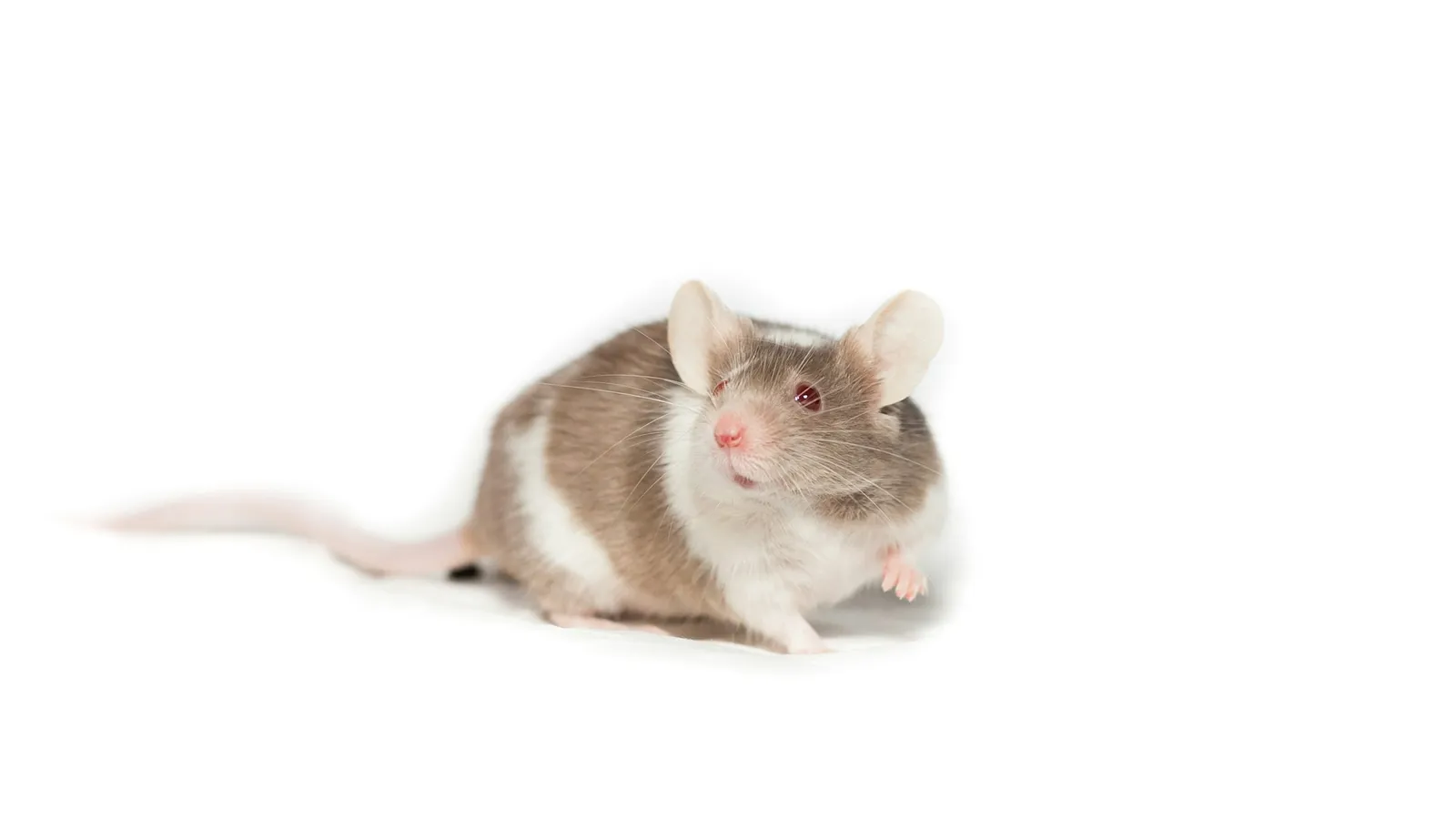
In 1928 researchers found that rhesus monkeys could catch yellow fever, which made lab study possible but costly. Theiler looked for a cheaper animal and, as he describes in his Nobel Lecture, found that ordinary white mice could be infected if the virus was injected into the brain.
The 1951 presentation speech explains why this was so useful. Mice were cheap and available by the thousand. In 1931 Theiler showed that serum from people or monkeys who had had yellow fever protected mice against the virus. That gave a test to map who had been infected, which revealed how widespread jungle yellow fever was.
How do you weaken a virus?
When the virus was passed from mouse brain to mouse brain, two things changed. The time from injection to illness got shorter and then fixed. And the virus lost much of its power to harm monkeys when injected into their bodies. That loss of virulence first suggested a live, weakened virus could protect people.
But mouse-brain virus had a danger: it attacked the nervous system more. The presentation speech says the mouse vaccine "was thought to involve certain risks", though the French used it on a very large scale in their African colonies. Theiler wanted something safer.
How did 17D appear?
Theiler and his colleagues turned to tissue culture, growing the virus in minced embryo tissue in flasks instead of in animals. His idea was that if brain tissue made the virus attack nerves, growing it without nerve tissue might reverse that. So he ran three parallel series of the highly virulent Asibi strain in chick embryo tissue:
whole chick embryo
chick embryo brain only
chick embryo with the brain and spinal cord cut away
In the third series a sharp change appeared. The Nobel facts page dates this weaker variant to 1937. The virus, now called 17D, had lost most of its ability to harm monkeys' organs and much of its ability to cause brain disease. Vaccinated monkeys made antibodies and were immune to the virulent strain. After trials in people, including large studies in Brazil, 17D was used "in many millions of individuals".
Was his theory right? The crossed experiment
To test the nervous-tissue idea, Theiler swapped the conditions:
Virus from the two series that had not weakened was moved into medium with almost no nerve tissue.
17D was moved into medium of chick embryo brain only.
After more than 200 further subcultures, nothing changed. 17D stayed weak in brain tissue, and the other strains stayed dangerous without it. His conclusion was plain: the amount of nervous tissue "had not produced any demonstrable change". The change in 17D had happened between the 89th and 114th subcultures, and its cause "was and still is completely unknown". Only one of six chick embryo series had changed in this way. Once it had appeared, the weakened form was stable.
Reading the logic. If cause A really produces effect B, then removing A should prevent B and adding A should bring it back. Theiler's swap did both and saw no effect, so A was not the cause. A common mistake in exam answers about experiments is to treat one series that worked as proof of the reason it worked. Without the crossed test, his first story would have been accepted.
What does the vaccine do today?
The WHO yellow fever fact sheet says a single dose provides lifelong immunity and no booster is needed. Immunity develops in 80 to 100% of people within 10 days and in over 99% within 30 days. WHO lists 27 African and 13 Latin American countries as high-risk for outbreaks. The vaccine is not recommended for some groups, such as infants under 9 months, so anyone travelling should follow a doctor's advice.
For a sample group of 1,000 vaccinated travellers, "over 99% within 30 days" means more than 990 protected by day 30. "80 to 100% within 10 days" means somewhere between 800 and all 1,000 by day 10, which is why travellers are advised to be vaccinated well before they go.
What can a student take from Theiler's way of working?
Find a cheaper experiment. Switching from monkeys to mice made thousands of tests possible.
Run parallel series. Three conditions at once let him see which one changed.
Try to break your own explanation. The crossed test is the most honest part of his lecture.
Report what you do not know. "Completely unknown" is a scientific result too.
If attenuated vaccines, antibodies and immunity still feel abstract, the Fermi Concept Library covers every concept in physics, chemistry, biology, mathematics and computing, so you can review each idea on its own. Our post on human health and immunity links them to your syllabus.
Next step: write out Theiler's three tissue-culture series and his crossed test as a table in your notebook, with the result of each.