On this page
Most students know the Raman Effect. Far fewer know where it was found, or who built that place half a century earlier. This post tells the story of Mahendralal Sircar, the Calcutta doctor who founded the Indian Association for the Cultivation of Science (IACS), what he set out to do, and what a student today can take from the way he worked.
Who was Mahendralal Sircar?
According to Banglapedia, the national encyclopedia published by the Asiatic Society of Bangladesh, Sircar was born in Howrah district in 1833 and died in 1904. He studied at Hare School and Hindu College, but the science taught at Hindu College was elementary, so he moved to Calcutta Medical College. He became the second person to earn an MD from Calcutta University, after Chandra Kumar De.
He then made a choice that cost him dearly. Banglapedia records that after reading William Morgan's *Philosophy of Homeopathy* and attending the clinic of a Calcutta homoeopath, he declared at a British Medical Association meeting that homoeopathy was superior, was ostracised by British doctors in Calcutta, and lost his practice for a while. A historian's study in the Journal of Medical Biography (Singh, 2021) describes him as one of the first well-known converts to homoeopathy, who defended his choice through the *Calcutta Journal of Medicine*, a journal he founded. The same study argues that the opposition he faced pushed him towards a larger goal: spreading the spirit of science in society.
This post is about that second goal, his work for Indian science, not a judgement on his medical views.
Why did he want an Indian science association?
Banglapedia says his campaign for a national science association began in 1867. He wanted an autonomous body that Indians would control, fund and manage themselves, with laboratories for research, so that India could build its own pool of scientists. In 1869 he set out the case in an article titled "On the Desirability of Cultivation of the Sciences by the Natives of India", in volume 2 of his *Calcutta Journal of Medicine*; the piece has since been reprinted by Routledge in a collection on Victorian science.
It was not easy. Banglapedia notes that the British government was indifferent and that some of his own countrymen opposed the idea, while wealthy and educated Indians supported it.
How was IACS founded?
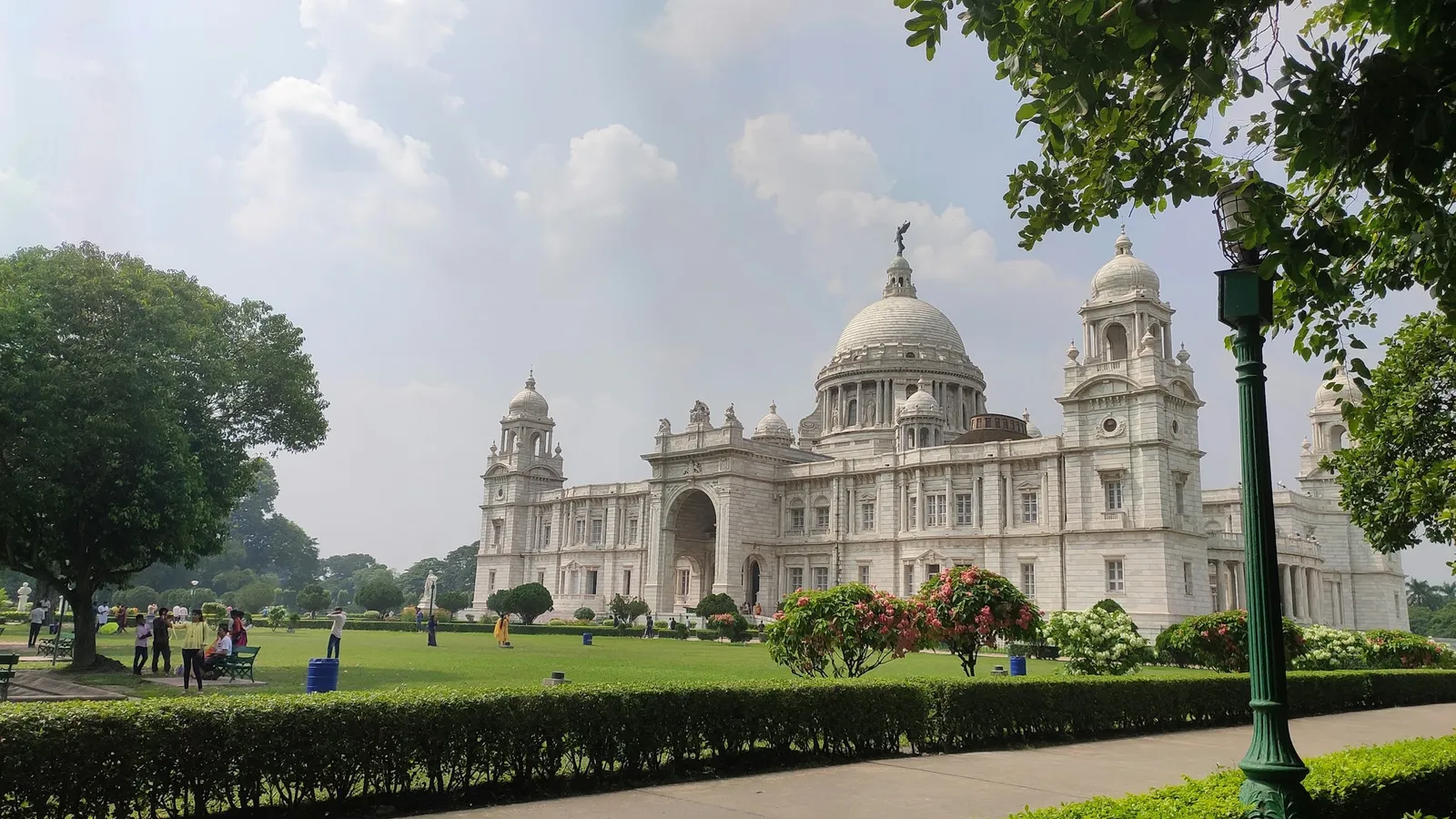
The official IACS history page gives the date: IACS was founded on 29 July 1876 by Dr Mahendra Lal Sircar. Its early work at 210 Bowbazar Street, Calcutta, was supported by public contributions, and its founder wanted it to be "solely native and purely national". Its stated aim was "to cultivate science in all its departments with a view to its advancement by original research and its varied applications to the arts and comforts of life".
The same page lists the early lecturers: Father Lafont, Jagadish Chandra Bose, Asutosh Mukherjee, Chunilal Bose and Pramathanath Bose. Iswar Chandra Vidyasagar was on the first Trustee Board, and Sircar himself was the first Honorary Secretary. Banglapedia adds that Sircar lectured there on electricity, magnetism, optics and physiology. You can read more about one of those early lecturers in our profile of Jagadish Chandra Bose.
Did Sircar think he had succeeded?
Not fully. Banglapedia records that towards the end of his life he regretted that IACS had not grown into a research institution on the scale he hoped, for want of support. His son, Amrita Lal Sircar, later served as secretary, and that is where the story turns.
How did C V Raman end up at IACS?
The Nobel Prize biography of C V Raman says he joined the Indian Finance Department in 1907 and, though his job took most of his time, found chances to do experiments in the IACS laboratory in Calcutta. He became its Honorary Secretary in 1919. The IACS history page says Raman started serious research there as a part-time worker, under the encouragement of Amrita Lal Sircar.
In 1928 Raman and K S Krishnan published A New Type of Secondary Radiation in *Nature*, and IACS records that the effect was discovered in its laboratory that year. In 1930 Raman received the Nobel Prize in Physics "for his work on the scattering of light and for the discovery of the effect named after him". The physics of that discovery is explained in our post on C V Raman and light scattering.
IACS lists other scientists who worked there, including K S Krishnan, S Bhagavantam and M N Saha, and says that for the early decades of the twentieth century it was the only place in India where higher research in the physical sciences could be done.
What can a student take from Sircar's way of working?
Build for people you will never meet. Sircar argued for years for a laboratory whose greatest result came 24 years after his death. Much of what you study now pays off later too, in a second year of college or a first job.
Make room for part-timers. Raman was a government accountant doing physics in his spare hours. A school lab, a science club or a library that is open to anyone who turns up can matter more than it looks.
Teach in public. Sircar lectured on electricity, magnetism and optics himself. Explaining a topic aloud to others is one of the quickest ways to find out what you do not yet understand.
Keep going when people disagree. He faced opposition from both British officials and some Indians, and kept making the case in writing.
If reading about the Raman Effect sends you back to topics like scattering, spectra or energy levels, the Fermi Concept Library covers every concept in physics, chemistry, biology, mathematics and computing, so you can look up the idea behind the history.
Next step: read the IACS history page, then explain to a friend in five sentences why a self-funded lab mattered in 1876.