On this page
Polio sounds like history to most students today, but many Indian families still remember the "polio drops" campaigns. Two scientists, Jonas Salk and Albert Sabin, gave the world two very different ways to stop the same virus. This post explains what each of them built, how the vaccines were tested, and what a biology student can take from the way they worked.
What made polio so hard to stop?
Polio is caused by a virus that spreads mainly through the faecal-oral route and multiplies in the intestine. The WHO polio fact sheet says it mainly affects children under 5, and that about one in 200 infections leads to irreversible paralysis, usually of the legs. There is no cure; it can only be prevented.
There is also not one poliovirus but three. The CDC's Pink Book chapter on polio notes that immunity to one serotype does not give significant immunity to the others. A vaccine has to train the body against all three types.
Before anyone could make a vaccine, someone had to grow the virus in quantity. John Enders, Thomas Weller and Frederick Robbins shared the 1954 Nobel Prize in Physiology or Medicine "for their discovery of the ability of poliomyelitis viruses to grow in cultures of various types of tissue". That made vaccine production possible.
How did Salk's vaccine work?
Salk chose to kill the virus rather than weaken it. A review of polio vaccine history in the World Journal of Virology describes how his inactivated polio vaccine (IPV) used virus grown on monkey kidney cells and inactivated with formalin. The virus could no longer cause infection, but its proteins could still train the immune system to make antibodies. Salk and colleagues reported early results in JAMA in 1953, in a paper titled "Studies in human subjects on active immunization against poliomyelitis".
The big test came in 1954. The same review describes a placebo-controlled trial that enrolled 1.6 million children in Canada, Finland and the United States. Some children received the vaccine, some received a dummy injection, and doctors compared the paralysis rates. The CDC's Pink Book records that IPV was licensed in 1955.
How was Sabin's vaccine different?
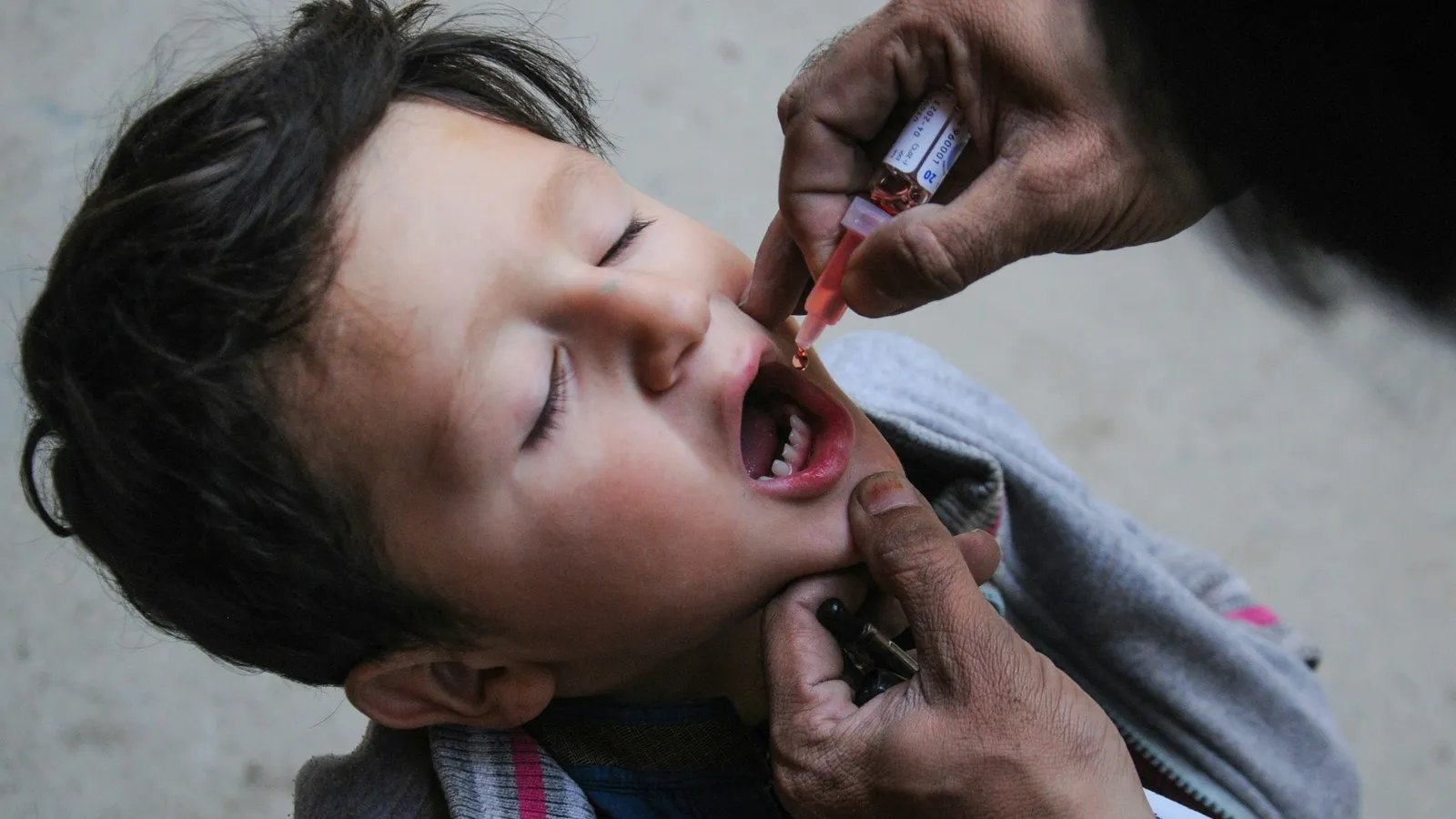
Sabin took the other route: a live but weakened (attenuated) virus, swallowed rather than injected. The World Journal of Virology review explains that his strains were chosen because they gave good antibody levels and were less neurotropic in monkeys. In 1956 Sabin shared his strains with the Soviet virologist Mikhail Chumakov, and a few million children in Estonia and Lithuania had received the vaccine by 1959. The Pink Book lists the US licensing dates: types 1 and 2 of the oral vaccine in 1961, type 3 in 1962 and the trivalent form in 1963.
Oral drops suited mass campaigns: no needles, and, as the same review notes, OPV induces both a systemic and a mucosal immune response, so it builds immunity in the gut where the virus multiplies. The trade-off is that a live vaccine can, very rarely, cause paralysis. The WHO fact sheet describes both vaccines as effective and safe and says countries use them in different combinations depending on local conditions.
What happened in India?
India is one of the great polio stories. The WHO South-East Asia Regional Office records that the region's last wild poliovirus case was an 18-month-old girl paralysed in Howrah, West Bengal, on 13 January 2011. The region was certified polio-free on 27 March 2014, after at least three years of zero confirmed indigenous cases and strong laboratory surveillance. At that point WHO noted countries were preparing to add IPV to routine immunisation as part of phasing out oral vaccines.
Globally, the Global Polio Eradication Initiative reports that wild poliovirus type 2 was certified eradicated in 2015 and type 3 in 2019. Wild type 1 still circulates in parts of Afghanistan and Pakistan, so the work is not finished.
What can a student take from Salk and Sabin?
Two good answers can exist. Salk and Sabin took opposite routes, yet both vaccines saved children, and modern programmes use both. In exams and in research, ask what each method is good at instead of which one "wins".
Test against a fair comparison. The 1954 trial is a model of how to show cause and effect: same season, a control group, careful follow-up.
Know the mechanism behind the label. "Inactivated" and "live attenuated" are not just words to memorise for NEET. They predict how a vaccine is given, what kind of immunity it builds and what its risks are.
If active and passive immunity, or live versus killed vaccines, still feel like a list of definitions, see how the pieces fit together in our guide to human health and immunity, and read about the first vaccine in our post on Edward Jenner and smallpox. For a concept that won't click, the Fermi Concept Library has every concept in biology with its own lesson and its place in the map.
Tonight, write one line each on how IPV and OPV are given, what they contain and one advantage of each, then check your answers against this post.