

On this page
Before the 18th century, farmers planted crops by "broadcasting"—scattering seeds by hand across a ploughed field. This method was imprecise, leaving some areas bare and others overcrowded, while leaving many seeds exposed on the surface for birds to eat.
Jethro Tull, born in Berkshire in 1674, trained as a lawyer before turning to agriculture. When he began operating his father's farm in Oxfordshire, he noticed the massive waste of seed caused by hand-sowing. He sought a more systematic way to plant crops that would make better use of the land and the seed.
In 1701, Tull perfected the horse-drawn seed drill, an invention that introduced mechanical precision to agriculture (Source). His idea was so fundamental that the shift from manual broadcasting to precise drilling remains a key topic in the NCERT Class 8 science syllabus today.
What was Jethro Tull's seed drill invention?
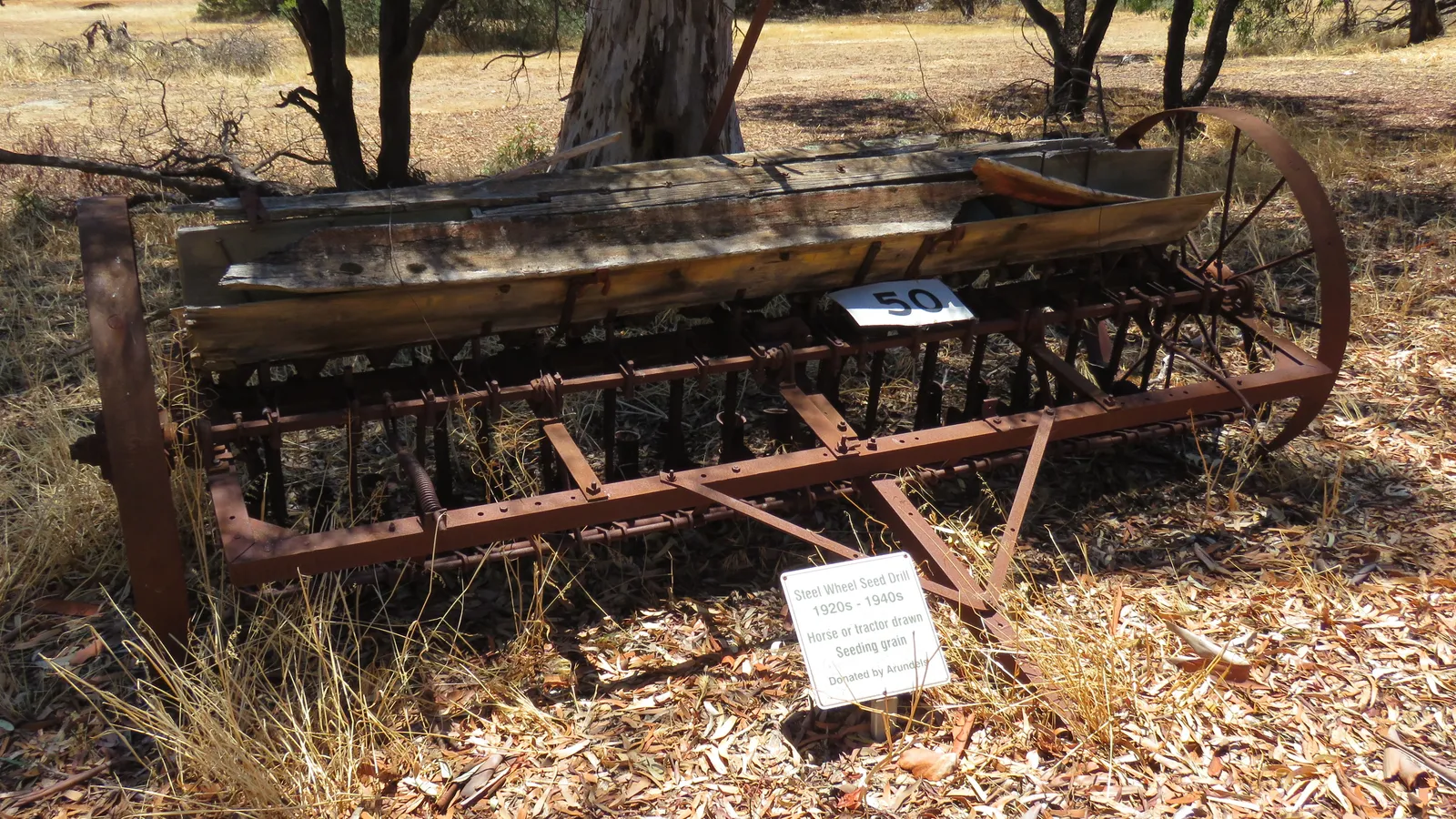
In 1731, Tull published his methods in *The New Horse-Hoeing Husbandry*, outlining his principles of tillage and vegetation. To execute these ideas, he had designed a horse-drawn machine that metered out seeds and planted them at a specific depth in neat, even rows.
By placing the seeds in rows rather than scattering them randomly, farmers could use a horse-drawn hoe to cultivate the soil between the growing plants. Tull developed this system after observing vineyards in France and Italy, where the earth between rows was regularly pulverised. He mistakenly believed that plants "swallowed" the fine earth as their food, but his practical method of aerating the soil and removing weeds was highly effective (Source).
This mechanical approach to sowing and cultivation laid the groundwork for modern agriculture and significantly increased crop yields. The study of crop growth and resources continues to be a rich field of biology; for example, understanding how limiting resources affect yield is explored in Justus von Liebig and the law of the minimum for crops.
Why is the seed drill important in Class 8 science?
In the Class 8 NCERT chapter "Crop Production and Management", the seed drill is introduced as the modern alternative to the traditional funnel-shaped sowing tool (Source). The traditional funnel required farmers to drop seeds down pipes with sharp ends into the soil, which was slow and lacked precision.
The curriculum highlights several scientific reasons why the precision of a seed drill matters:
Equal distance: Sowing seeds at uniform distances prevents overcrowding. This ensures that every plant gets sufficient sunlight, water, and soil nutrients.
Proper depth: Planting at the correct depth ensures the roots can anchor firmly and access moisture without being buried too deep to sprout.
Protection: A seed drill covers the seeds with soil after they are dropped, which protects them from being eaten by birds.
Understanding how plants develop once sown requires looking at biological principles, much like the mathematics described in Arithmetic vs geometric growth in plants: the growth equations.
How does a seed drill save time and labour?
Modern seed drills operate on the exact same principles Jethro Tull developed in 1701, but they are now driven by tractors rather than horses. A tractor-driven seed drill can sow multiple rows simultaneously across a massive field in a fraction of the time it would take to sow manually or with a traditional funnel drawn by bulls.
Precision in agriculture guarantees that resources are used efficiently and effort is not wasted. In education, a similar structured approach prevents wasted effort. When you are preparing for exams, Fermi's AI tutor can work out what you already know, build a plan for the session, and teach through it—writing on a board and checking your understanding as it goes. For a deeper dive into biological and physical concepts, the Fermi Concept Library places every idea in its proper context.
Just as agricultural scientists later quantified how plants use resources—such as Limiting factors in photosynthesis: Blackman's law and CO₂—Jethro Tull's early mechanical drill replaced guesswork with a systematic process that still feeds the world today.


