

On this page
Lamarck is the scientist students meet only to be told he was wrong. The NCERT evolution chapter gives him one paragraph and a giraffe. But Lamarck was also one of the first naturalists to state plainly that species evolve, long before Darwin. This post sets out his life, his theory, the parts that held up and the parts that failed, and how to write about him clearly in an exam.
Who was Lamarck?
The University of California Museum of Paleontology's biography of Lamarck gives the story. He was born on 1 August 1744 in Bazentin-le-Petit in northern France, the youngest of eleven children in a military family. He joined the army in 1761, then after an injury studied medicine and botany in Paris. His Flore française of 1778 made his name and won him a post at the royal botanical garden.
In 1793 the garden was reorganised as the National Museum of Natural History, and Lamarck was made professor of insects and worms, meaning all invertebrates. It was the least prestigious chair, in a subject he knew little about. He made it his own. The UCMP page credits him with coining the word "invertebrates" and with being the first to separate crustaceans, arachnids and annelids from insects. He lost his sight from around 1818 and died in poverty in 1829.
What did Lamarck's theory of evolution say?
Lamarck began publishing his evolutionary ideas in 1801 and set them out most fully in Philosophie zoologique in 1809. The UCMP page summarises his mechanism. A change in the environment changes an animal's needs, which changes its behaviour. Using an organ more makes it grow over generations; using it less makes it shrink. He called this his first law. His second law was that such changes are inherited.
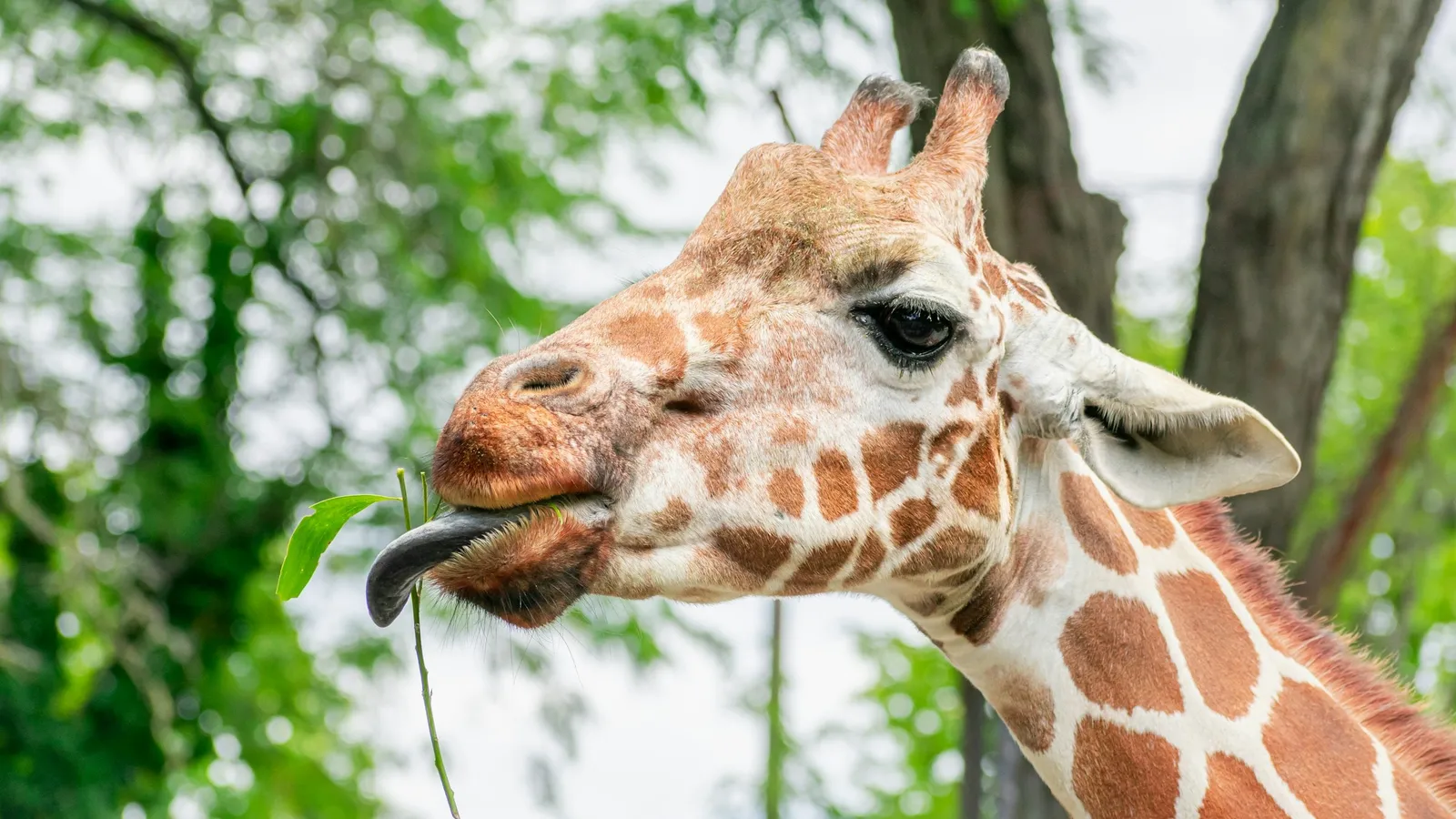
The NCERT Class 12 chapter on evolution gives the classic example. Giraffes stretching to reach leaves on tall trees elongated their necks, passed the longer necks on, and over many years came to have long necks. NCERT adds: "Nobody believes this conjecture any more."
What did Lamarck get right?
More than his reputation suggests. A 2018 article in PLOS Biology on the Sacred Ibis debate lists ideas in Philosophie zoologique that still stand: species change through time, the change is slow, it happens through adaptation to the environment, and species are related by common descent. He also held that the Earth is very old.
The UCMP page notes that he cited many of the same kinds of evidence Darwin later used: the variety of domestic breeds, vestigial structures and embryonic structures with no adult use. It quotes Darwin writing in 1861 that Lamarck "was the first man whose conclusions on the subject excited much attention".
What did Lamarck get wrong?
Three things.
Inheritance of acquired characters. A change to an animal's body during its life does not alter what it passes on. Our post on August Weismann and the germ plasm describes his test. In Weismann's own account, he cut the tails off mice for five generations, 901 young in all, and every one was born with a normal tail.
A built-in drive to progress. The UCMP page notes that Lamarck saw evolution as a climb towards greater complexity and "perfection", not as a process involving chance.
No extinction. Lamarck thought species that disappeared had changed into others. To keep simple life forms around, he had to assume they were constantly produced by spontaneous generation.
How did Lamarck defend his ideas against Cuvier?
His colleague Georges Cuvier measured mummified ibises brought back from Egypt and found them identical to living birds. If species changed, why had these not? The PLOS Biology article gives Lamarck's answer: three thousand years is too short, and Egypt's conditions had barely changed. "The position and climate of Egypt are still very nearly what they were in those times," he wrote, so the birds "could not possibly have been forced into a change of habits." On this point Lamarck's reasoning was sound. Our post on Georges Cuvier and extinction gives Cuvier's side.
Worked example: the giraffe, two ways
A common NEET and board question asks you to explain the giraffe's long neck by Lamarck and by Darwin. Here is a model answer.
Lamarck. Ancestral giraffes stretched their necks to reach high leaves. The stretching lengthened each neck a little during life. The longer neck was passed to offspring. Repeated over generations, necks became long.
Darwin. Ancestral giraffes varied in neck length, and the variation was heritable. In times of food shortage, longer-necked individuals reached more leaves, survived better and left more offspring. Over generations, the population's average neck length increased.
The key difference. In Lamarck's version, the variation is caused by use during life. In Darwin's, the variation already exists, and selection changes how common each type becomes.
Common mistakes
Writing that "Lamarck believed in natural selection". The UCMP page notes he mentioned the idea but gave it little importance. His mechanism was use, disuse and inheritance.
Calling every inherited trait "Lamarckian". Only traits acquired during life and then inherited fit the term.
Dropping Lamarck's real contributions. He coined "invertebrates" and argued for evolution before Darwin.
If the difference between the two mechanisms still feels slippery, the Fermi Concept Library covers every concept in physics, chemistry, biology, mathematics and computing, including natural selection, so you can revise it on its own.
Practice routine: write the two-way giraffe answer from memory, then repeat it for the loss of eyes in cave fish and the thick coat of a polar bear.
Next step: read the Lamarck paragraph in NCERT section 6.5 and underline the one sentence that states his mechanism.


