On this page
Today it is obvious that dinosaurs and mammoths no longer exist. In the late 1700s it was not. Some naturalists thought fossil elephants were the remains of Hannibal's war elephants; others thought mammoths might still be living somewhere unexplored. Georges Cuvier settled the question with careful comparison of bones. He then used the same care to reach a conclusion that turned out to be wrong. This post explains both, and what students can learn from the gap between them.
Who was Georges Cuvier?
The University of California Museum of Paleontology's biography of Cuvier says he was born on 23 August 1769 at Montbéliard, a French-speaking town then ruled by the Duke of Württemberg. He studied at the Carolinian Academy in Stuttgart from 1784 to 1788, then worked as a tutor in Normandy, where he began to make his name as a naturalist. In 1795 Geoffroy Saint-Hilaire invited him to Paris, and he soon became professor of animal anatomy at the National Museum of Natural History.
He held government posts under the Revolution, Napoleon and three kings, and was made a baron. A 2018 PLOS Biology article on the Sacred Ibis debate gives his dates as 1769 to 1832.
How did Cuvier prove that species go extinct?
The UCMP page sets out the problem. Fossils were already accepted as the remains of living things, but there was no agreement on whether any species had died out. Some fossil mammoths found in Italy were explained as Hannibal's elephants. Thomas Jefferson thought mammoths might yet be found alive in the American wilderness.
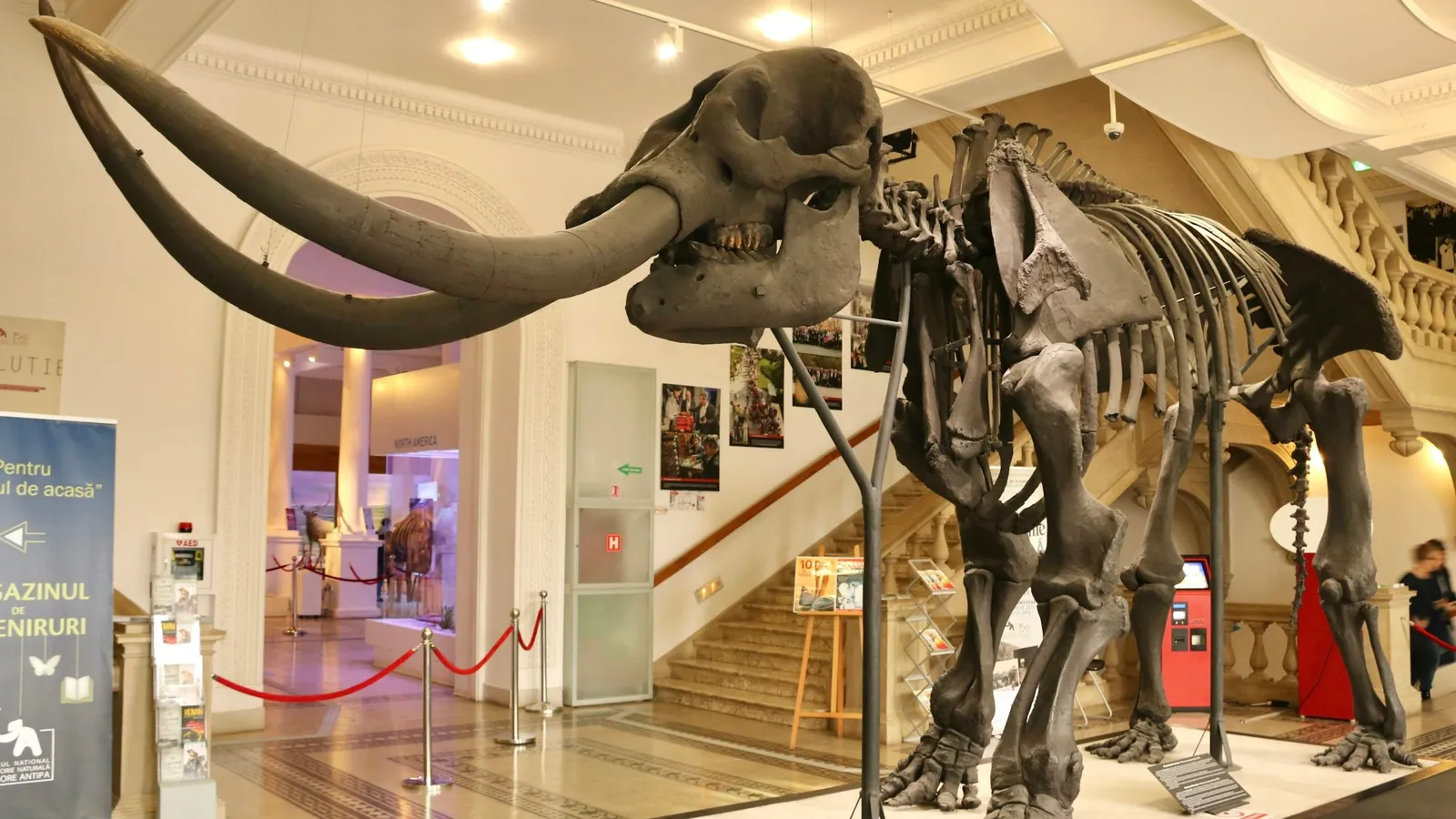
In 1796, speaking in Paris, Cuvier complained that published studies of elephant bones had so little detail that a scientist could not even say which living species they belonged to. So he made the detailed comparisons himself. He showed that African and Indian elephants are separate species, and that the fossil mammoths of Europe and Siberia differed from both. A figure in his 1798 paper compares the lower jaw of a mammoth with that of an Indian elephant.
He then documented one large animal after another that matched no living species, including the giant ground sloth, the Irish elk and the American mastodon. The UCMP page concludes that establishing extinction as a fact was perhaps his most important and longest-lasting contribution, and that with these studies he launched modern vertebrate palaeontology.
What was Cuvier's "correlation of parts"?
Cuvier saw each animal as an integrated whole. The PLOS Biology article explains his principle: an organism's parts are so linked that a change in one would make the whole animal unable to survive. Because every part reflects the whole, he claimed he could reconstruct an animal from a few bones. The UCMP page notes that many of his reconstructions turned out to be strikingly accurate, though in practice he relied more on his deep knowledge of living animals than on the principle itself.
The same idea led him to divide animals into four separate groups, or embranchements, which he believed could never be connected by evolution.
What killed off the species?
Cuvier believed the Earth was very old and that, every so often, a "revolution" had wiped out many species. He avoided the word "catastrophe". The UCMP page notes that he treated these events as natural, and that later geologists, especially Charles Lyell, replaced the idea with slow, uniform change. Yet catastrophes are again taken seriously as explanations for some great episodes of extinction, such as the one at the end of the Cretaceous. Our posts on Charles Lyell's geology and the Alvarez asteroid impact take that thread further.
Why did Cuvier think species never change?
Napoleon's expedition to Egypt brought back large numbers of animal mummies. The PLOS Biology article describes how Cuvier measured mummified ibises, compared them with modern specimens, and found them the same. "We certainly do not observe more differences between these creatures and those which we see today than between human mummies and today's human skeletons," he wrote. The article calls this the first test of evolution.
His colleague Lamarck replied that about three thousand years was far too short, and Egypt's climate had not changed. Cuvier argued that longer times simply add up shorter ones, so if nothing changed in three thousand years, nothing would change in more. That step was the flaw.
Worked example: why "no change in 3,000 years" proves little
Here is a made-up illustration, not real ibis data. Suppose a bird's bill grows longer by 0.01% every thousand years, and the bill starts at 15 cm.
After 3,000 years (three steps): 15 cm x 1.0001^3 = 15 x 1.0003 = about 15.0045 cm. The change is 0.045 mm, far too small to detect with a ruler.
After 3 million years (3,000 steps): 1.0001^3000 is about e^0.3, which is about 1.35. So 15 cm x 1.35 = about 20.2 cm, a bill roughly a third longer.
The same slow rate is invisible over Cuvier's timescale and large over a geological one. Lamarck's objection was correct in principle.
Common mistakes
Crediting Cuvier with evolution. He opposed it all his life. His contribution was extinction and comparative anatomy.
Saying he invented catastrophism as a religious idea. The UCMP page notes he saw his revolutions as natural events and did not tie them to the Biblical flood. Others did later.
Mixing up extinction and evolution. Cuvier accepted that species disappear but denied that they change into new ones.
If you find long timescales hard to picture, the Fermi Simulation Lab has interactive simulations for ideas that are easier to see than to read.
Practice routine: redo the worked example with a rate of 0.1% per thousand years and with 1 million years, then write one line on what each result shows.
Next step: read the evidence for evolution in NCERT Class 12 section 6.3 and mark which kinds of evidence Cuvier had in front of him.