On this page
Some science needs a particle accelerator. Some needs a notebook, a pair of binoculars and years of patience. Jane Goodall's work at Gombe showed how much careful watching can reveal, and her method is one you can practise this week. This post covers what she found, how she worked, and how to run a small observation study of your own.
Who was Jane Goodall?
The Jane Goodall Institute timeline records that she was born on 3 April 1934 in London. In 1960 she and her mother, Vanne, arrived at the Gombe Stream Chimpanzee Reserve, now Gombe National Park, in western Tanzania. The date, 14 July, is now marked as World Chimpanzee Day. She was 26.
She had no undergraduate degree. The Institute says she later earned a PhD in ethology, the science of animal behaviour, from the University of Cambridge, and that she was only the eighth person admitted to pursue a doctorate without an undergraduate degree. She founded the Jane Goodall Institute in 1977. The Institute reports that she died of natural causes on 1 October 2025, aged 91.
What did she see in 1960?
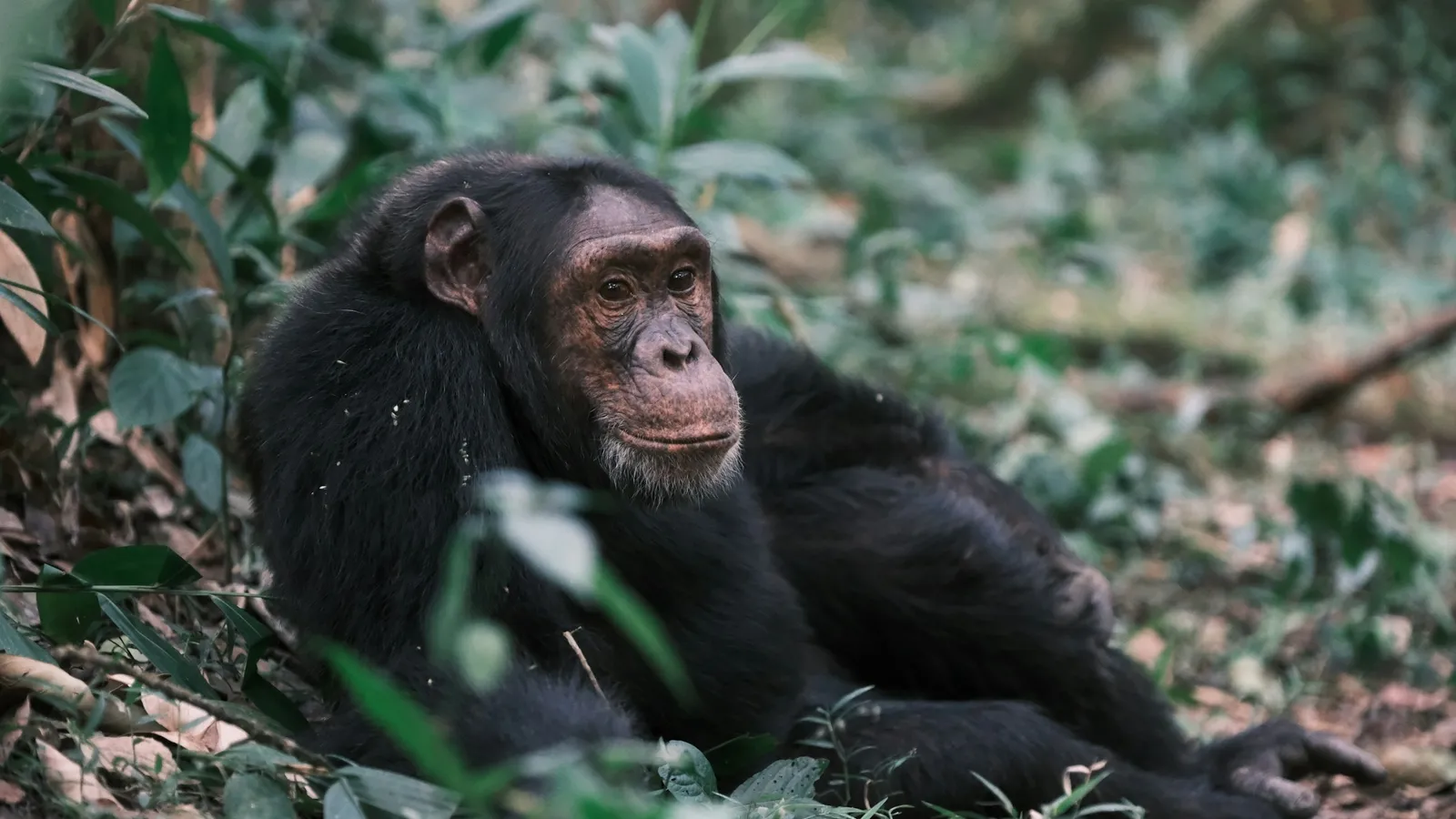
In her first year she watched chimpanzees she had named David Greybeard and Goliath strip leaves from twigs and push them into termite mounds to fish out the insects. The chimpanzees were not just using an object; they were changing it to suit the job. At the time, "Man the Toolmaker" was a common way to define humans. The Institute's Gombe research page says the discovery "shattered" that idea.
The same year she saw a group of chimpanzees eating a bushpig, when chimpanzees had been assumed to be vegetarian, and during her research she also watched them hunt red colobus monkeys. She published her tool-use observations in Nature in 1964, in a paper titled "Tool-using and aimed throwing in a community of free-living chimpanzees", written from Cambridge's Sub-Department of Animal Behaviour at Madingley.
How did her method work?
Goodall's approach was to know the animals as individuals and follow them over long periods. Researchers at Gombe still do "focal follows", which the Institute describes as using Jane's observational approach to follow selected chimpanzees daily, 365 days a year.
Watching individuals over years is what lets you see things a short visit cannot: who is related to whom, how a youngster learns a skill, how alliances change. Today the Institute lists more than 165,000 hours of observations of over 320 chimpanzees and more than 300 peer-reviewed papers from Gombe. Newer tools add to the notebooks. Since about 2001, genetic analysis of faecal samples has let researchers trace kinship without disturbing the animals.
How can you try field observation yourself?
You can practise the method on birds at a feeder, pigeons on a terrace or ants on a path. Use focal sampling: pick one individual and record what it does at fixed intervals.
Define behaviours first. For a bird, you might use: feeding, preening, calling, moving, resting. Write one-line definitions so you score them the same way each time.
Choose an interval. Every 30 seconds, write the behaviour the animal is doing at that instant.
Watch for a set time. Ten minutes at 30-second intervals gives 20 records.
Turn counts into proportions. If 8 of 20 records are feeding, the bird spent about 8/20 = 40% of the time feeding.
Repeat on different days. Compare morning and evening. One session is an anecdote; ten sessions are data.
Common mistakes: changing your definitions halfway through, watching only when something exciting happens (which inflates rare behaviours), and recording what you expect rather than what you see.
India has its own tradition of patient field naturalists. Read about one in our post on Salim Ali, the birdman of India.
What can a student take from Goodall's way of working?
Observe before you explain. She recorded what chimpanzees did before deciding what it meant.
Stay with a question for years. The deepest findings at Gombe came from decades, not weeks.
Let evidence overturn a definition. A twig in a termite mound was enough to make scientists rethink what makes humans different.
Publish carefully. Her observations became a peer-reviewed Nature paper, not just a story.
Biology exams test behaviour, ecology and evolution as separate chapters, but field work joins them. The Fermi Concept Library covers every concept in physics, chemistry, biology, mathematics and computing, so you can look up any term you meet in your observation notes.
This week, run one ten-minute focal sample on an animal near you and write the proportions in a table in your notebook.