On this page
Most students meet Salim Ali as a name on a stamp or a bird sanctuary. The more useful story is how he worked. He left college after a year, he was turned down for an ornithologist's post, and he still changed how India studies its birds. This post covers what he did, what made it science, and what you can borrow from his methods.
How did a sparrow start Salim Ali's career?
According to a profile in Hornbill, the magazine of the Bombay Natural History Society (BNHS), Salim Ali was born in Bombay (now Mumbai) on 12 November 1896. As a boy he shot birds with an air gun. One day he shot a sparrow with a yellow patch on its throat and took it to the BNHS. There W.S. Millard identified it as the Yellow-throated Sparrow, Petronia xanthocollis, showed the boy the Society's collection of stuffed birds and lent him books.
His route after that was not smooth. The same profile says he left college after the first year and went to Tavoy, Burma, in 1919 to manage a family wolfram (tungsten) mining and timber business. Forest walks there sharpened his natural history. Back in Bombay he graduated in zoology at St. Xavier's College, applied for the post of ornithologist in the Zoological Survey of India and was rejected. In 1926 he became a guide lecturer at the new natural history section of the Prince of Wales Museum, then trained under Erwin Stresemann at the Berlin Museum.
What made his work science and not a hobby?
When Ali joined the BNHS, the Hornbill profile notes, scientific ornithology in India focused mainly on taxonomy: collecting specimens, naming them and sorting them into species. He pushed for something different: watching living birds and recording what they did.
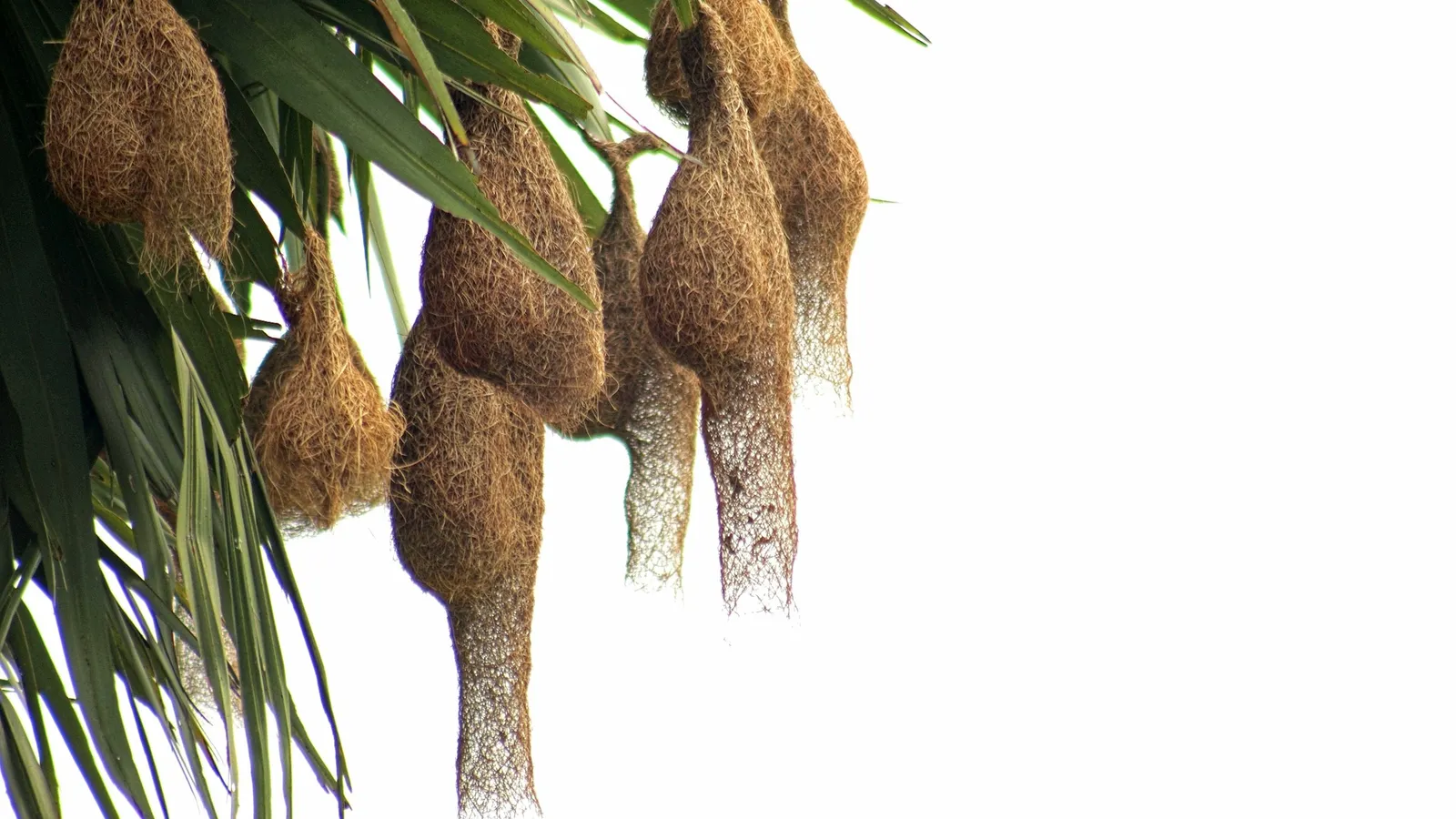
The first big example was his 1930 study of the polygamous breeding habits of the Baya Weaver at Kihim, which BNHS describes as the first serious study of bird behaviour in India. Weaver birds build hanging nests, and males and females play different roles. Working that out needed hours of patient, repeated observation, with notes taken on the spot.
He then carried out bird surveys of whole regions: Hyderabad (1931-32), Travancore and Cochin (1933), Central India (1938), Mysore (1939-40), Kutch (1943-44) and Gujarat (1944-48), published as series of articles in the Journal of the Bombay Natural History Society. A survey of this kind turns scattered sightings into data: which species live where, in which season, and in what numbers.
Which books made him famous?
Two books carry most of his reputation, according to the BNHS profile:
The Book of Indian Birds, first published in 1941, a field guide that made birdwatching possible for ordinary readers. It has gone through many editions and has been translated into Hindi.
The Handbook of the Birds of India and Pakistan (1968-75), written with S. Dillon Ripley of the Smithsonian Institution. With Ripley handling taxonomy and Ali the ecology, the 10 volumes took ten years to complete and are still used by scientists and birders.
Regional books followed his surveys, including The Birds of Kutch (1945), Indian Hill Birds (1949) and The Birds of Sikkim (1962).
How did he shape conservation in India?
Ali used his standing to protect habitats. The Hornbill profile credits him with helping get the Keoladeo National Park declared a protected area and with the campaign to save Silent Valley in Kerala. He was presented the Padma Vibhushan on 3 April 1976, and he gave the money from his 1975 Paul Getty Award to the BNHS to set up scholarship funds.
He also wanted a national institute for ornithology. That did not happen in his lifetime. The Salim Ali Centre for Ornithology and Natural History (SACON) says the Ministry of Environment and Forests and the BNHS carried the idea forward, and the centre was established in 1990, with its headquarters at Coimbatore. A SACON annual report gives his dates as 1896-1987.
What can a student take from how he worked?
His colleague J.C. Daniel, quoted in the same Hornbill profile, remembered Ali losing patience when someone forgot a task: "That is why I have been repeatedly asking you to note down things." Daniel described him as a perfectionist who could not bear shoddy work. Three habits follow from that:
Write it down while you see it. Ali's handbook rested on years of field notes. Memory edits what you saw; a note made on the spot does not.
Ask what it does, not just what it is. Naming a species, a reaction or a circuit element is the start. The interesting question is how it behaves and why.
Collect systematically. A survey works because it covers a whole region in a planned way. A revision plan or a lab practical works for the same reason.
You can try this at home. For one week, spend ten minutes a day watching birds from a window or a park, and record the time, place, species if you know it, and what each bird was doing. At the end of the week, look for one pattern, such as which birds feed at which time of day. Our guide to turning a question into a science project shows how to grow that into a proper project, and our NEET guide to biodiversity and conservation connects it to the syllabus.
If a term in your notes, such as niche or territory, is unclear, look it up properly. The Fermi Concept Library has every concept in biology with its own lesson, so you can check the idea and go back to your notebook.
Tomorrow morning, open a notebook, sit at a window for ten minutes, and write down every bird you see and what it is doing.