On this page
Every chemistry student learns Le Chatelier's principle in one line: disturb an equilibrium and it shifts to oppose the change. The original, published in November 1884, is longer, more careful and broader than that, and it grew out of research on cement. This post covers who Henry Le Chatelier was, what his 1884 note actually said, a worked example that shows exactly how much an equilibrium "opposes" a change, the usual mistakes, and what a student can learn from his way of working.
Who was Henry Le Chatelier?
A memorial biography by Léon Guillet, published in 1936 and kept by the Annales des Mines archive, gives his dates as 8 October 1850 in Paris to 17 September 1936 at Miribel-les-Échelles. He studied at the École Polytechnique and the École des Mines, and began teaching general chemistry at the École des Mines in 1877, aged 27. He later taught at the Collège de France from 1898 to 1907 and then at the Sorbonne, and was elected to the Academy of Sciences in 1907.
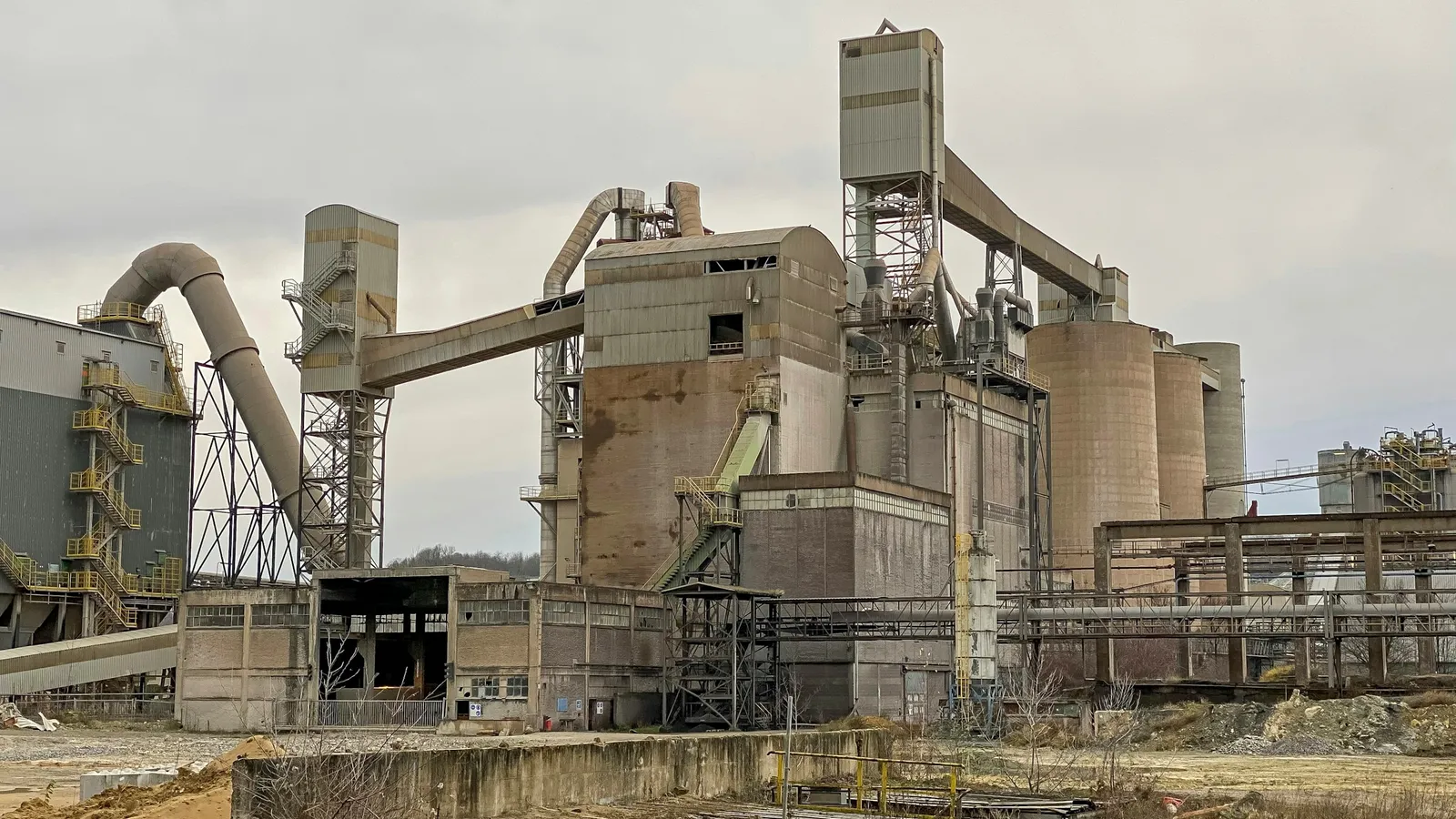
His research started in industry. His doctoral thesis, in 1887, was on hydraulic mortars, the chemistry of cement. Studying how these materials are fired and how limestone breaks down, he needed to measure high temperatures, and devised the thermocouple that spread quickly through industry. The same work brought him face to face with chemical equilibria, which he then studied for several years. Later, work on acetylene combustion led him to the oxy-acetylene torch used in welding.
What did the 1884 note actually say?
The note, "Sur un énoncé général des lois des équilibres chimiques" (on a general statement of the laws of chemical equilibrium), was presented to the Academy and printed in the Comptes rendus issue of 10 November 1884. It opens by crediting van 't Hoff, who had shown that lowering the temperature shifts an equilibrium towards the system whose formation releases heat. Le Chatelier set out to extend this from temperature to "condensation", by which he meant pressure, concentration or number of molecules per unit volume.
His statement, in our translation, reads: any system in stable chemical equilibrium, subjected to an outside cause that tends to change its temperature or its condensation, can undergo only internal changes which, if they happened alone, would produce a change of temperature or condensation of the opposite sign to the one caused from outside.
He then gave examples, many of them physical rather than chemical. Heating a whole system brings about changes that absorb heat, such as melting, evaporation and the decomposition of calcium carbonate. Compressing a system at constant temperature brings about changes that reduce the compression, such as ice melting and dissociated carbon dioxide recombining. He said the law covers melting, vaporisation and dissolving too, since in his view these cannot be told apart from chemical reactions proper.
NCERT's equilibrium unit states the modern version: a change in any factor that fixes the equilibrium makes the system change so as to reduce or counteract the effect.
Worked example: how much does the equilibrium push back?
Take N₂O₄(g) ⇌ 2NO₂(g), with Kp = p(NO₂)² / p(N₂O₄). Suppose, as an illustration, that at some temperature p(NO₂) = 0.40 bar and p(N₂O₄) = 0.20 bar at equilibrium.
Kp = 0.40² / 0.20 = 0.80 bar. Total pressure 0.60 bar.
Halve the volume at constant temperature. Every partial pressure doubles at once: p(NO₂) = 0.80 bar, p(N₂O₄) = 0.40 bar, total 1.20 bar.
Reaction quotient: Qp = 0.80² / 0.40 = 1.60 bar. Since Qp > Kp, the reaction runs backwards, towards fewer gas molecules.
Let x bar of N₂O₄ form. Then p(NO₂) = 0.80 − 2x and p(N₂O₄) = 0.40 + x, and (0.80 − 2x)² = 0.80(0.40 + x).
Expanding: 0.64 − 3.2x + 4x² = 0.32 + 0.80x, so 4x² − 4.0x + 0.32 = 0, and x = 0.0877 (the other root makes p(NO₂) negative).
New equilibrium: p(NO₂) = 0.625 bar, p(N₂O₄) = 0.488 bar, total 1.11 bar. Check: 0.625² / 0.488 = 0.80.
The pressure jumped from 0.60 to 1.20 bar and settled at 1.11 bar. The shift reduced the rise in pressure but did not undo it, exactly as the 1884 wording says.
What mistakes do students make with the principle?
Thinking K changes with pressure or concentration. Only temperature changes K. Pressure changes shift the position, not the constant.
Expecting the change to be cancelled. As the example shows, the new pressure lies between the old value and the disturbed one.
Adding an inert gas at constant volume and predicting a shift. Partial pressures of the reacting gases do not change, so nothing shifts.
Using the principle instead of calculating. When numbers are given, compare Q with K. The principle is a check on your answer.
What can a student take from how he worked?
Build on someone else's rule. He started from van 't Hoff's statement and asked how far it could be stretched.
Let practical problems lead to theory. Cement led to the thermocouple, and the thermocouple led to equilibrium.
Test a general rule on many cases. His note lists examples from melting ice to dissolving salts.
For practice, work through our guides to chemical equilibrium problems and equilibrium constant calculations. If you want to see an equilibrium shift rather than imagine it, the Fermi Simulation Lab has interactive simulations for ideas that are easier to see than read.
Try this now: start again from the original equilibrium and double the volume instead, then find the new partial pressures.