On this page
Puddles vanish, a cold glass gets wet on the outside, and water in a clay matka stays cool. Chapter 8 of Class 6 science explains all three with two processes: evaporation and condensation. This post covers the three states of water, what changes how fast water evaporates, a worked version of the chapter's weighing experiment, and the misunderstandings that cost marks.
Where is this chapter?
"A Journey through States of Water" is Chapter 8 of Curiosity, NCERT's Class 6 science book marked Reprint 2026-27. You can read the chapter free on the NCERT site.
What are the three states of water?
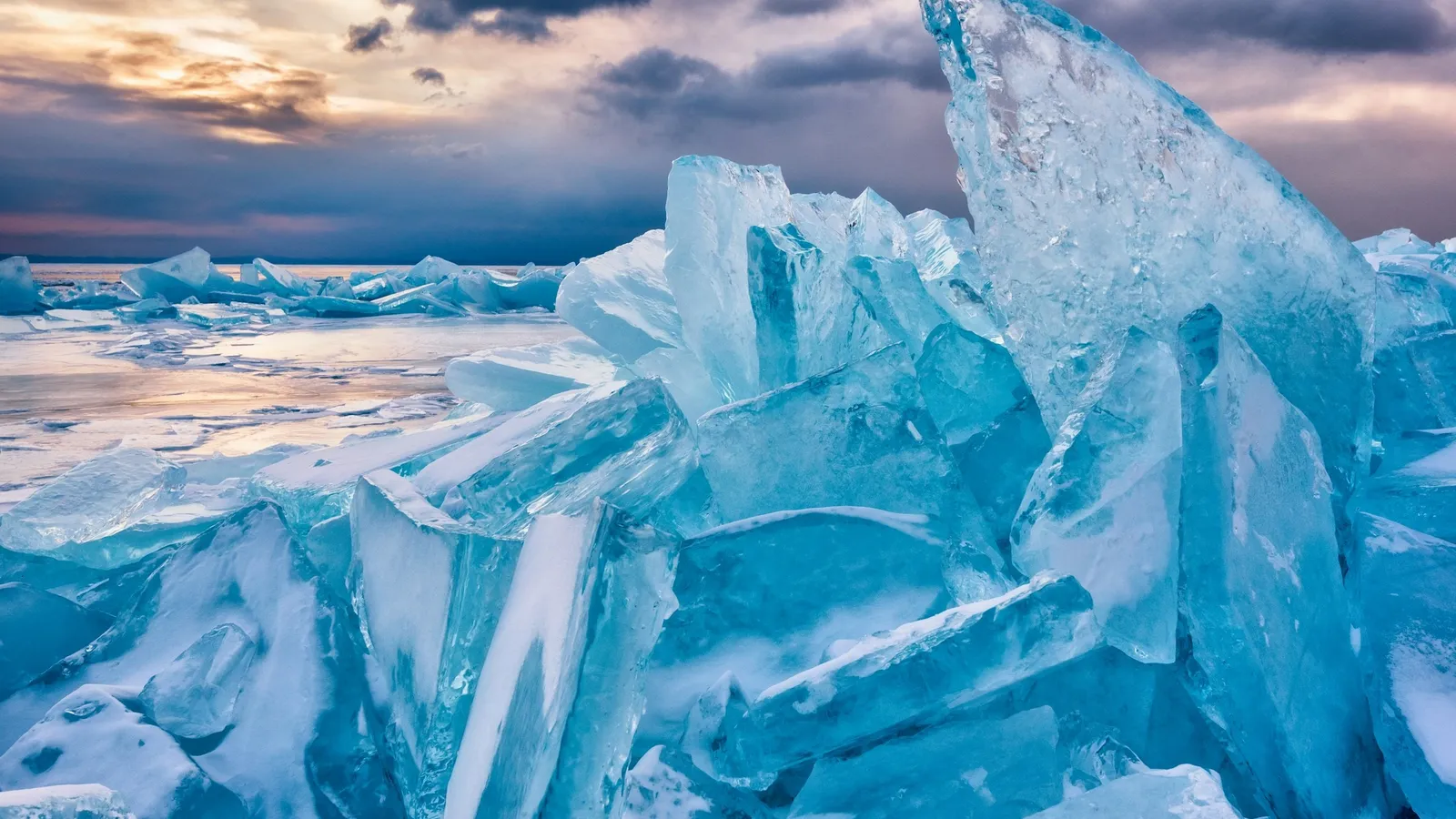
Ice (solid), water (liquid) and water vapour (gas) are the same substance. The chapter compares them:
Ice keeps its shape in any container and does not flow.
Water flows, takes the shape of its container and spreads, but its volume stays the same.
Water vapour spreads out to fill all the space available and has no fixed shape. It is invisible and is present in the air even at room temperature.
Heating changes ice to water (melting) and water to vapour. Cooling changes water to ice (freezing). Wax, ghee and coconut oil change state in the same way.
Where does the water in a puddle go?
Some may soak into the ground, but water also disappears from a steel plate, which it cannot soak through. It has turned into vapour. This is evaporation, and the book stresses it happens all the time, even at room temperature: wet clothes, a mopped floor and sweat all dry by evaporation.
The white "steam" above a hot pan is not the vapour itself. The book explains water vapour is invisible; what you see are tiny droplets that have already formed again.
Why does a cold glass get wet outside?
Put ice water in a glass and droplets appear on the outside. Is water seeping through the glass? The chapter answers this the way a scientist would, by measuring. When water vapour in the air touches a cold surface, it turns back into droplets. This is condensation, the same process behind dew on morning grass.
Worked example: what the balance shows
In Activity 8.4 you put a covered glass of ice water on a digital balance and note the reading every five minutes for 30 minutes, after marking the water level. Here is a sample set of readings to show how to reason (yours will differ):
0 min: 350.0 g
15 min: 350.6 g
30 min: 351.2 g
Gain over 30 minutes = 351.2 g - 350.0 g = 1.2 g. The water level inside has not fallen. If water were seeping out, the mass would stay the same (the water would only move to the outside) and the level would drop. Instead the mass rises, so extra water has arrived from somewhere outside the glass. The only source is water vapour in the air, condensing on the cold surface.
The book adds a caution: this one result does not prove there is no seeping at all. It suggests repeating the activity with water at room temperature as a comparison. That is a good habit: one experiment, then a check.
What makes water evaporate faster?
The chapter's activities show four conditions:
Larger exposed area: water spread on a plate dries faster than in a bottle cap.
Sunlight: a cap in the sun dries faster than one in shade.
Moving air: clothes dry faster on a windy day.
Low humidity: on rainy days the air already holds a lot of water vapour, so drying is slow.
Evaporation also cools. Water seeps through the walls of a matka and evaporates, cooling the water inside. The same effect is why a fan cools sweaty skin and the idea behind the book's pot-in-pot cooler for keeping vegetables fresh.
How do clouds give rain?
Air carrying water vapour rises and cools. High up, the vapour condenses into tiny droplets, usually around dust particles, forming clouds. Droplets join into drops heavy enough to fall as rain, and sometimes hail or snow. This circulation between the Earth's surface and the air is the water cycle.
Only a small share of Earth's water is usable directly. NOAA says about 97 percent of Earth's water is in the ocean and about 2 percent is frozen in glaciers and ice caps, which is why the chapter ends by asking you to use water carefully.
Which mistakes cost marks?
"Steam you can see is water vapour." Vapour is invisible; visible steam is droplets.
"Evaporation happens only when water boils." It happens at room temperature too.
"The droplets outside the glass came through the glass." They condensed from the air.
"Clouds are water vapour." Clouds are tiny droplets.
Forgetting humidity in the list of conditions.
A one-week practice routine
Day 1: Put equal spoons of water in a cap and on a plate. Predict which dries first, then time both. Predicting first matters; students who predicted a demonstration's result understood it significantly better than those who only watched.
Day 2: Repeat with one cap in sun and one in shade.
Day 4: Draw the water cycle from memory with all nine words from Activity 8.11, then check.
Day 7: Explain to someone at home why a matka cools water.
If you want to watch how a change in heating changes evaporation, the Fermi Simulation Lab has interactive simulations for ideas easier to see than read. This chapter builds on materials around us, and in Class 7 you meet heat transfer.
Today, put ice water in a glass, wait five minutes, and write down where you think the outside droplets came from and how you would test it.